A cozy bedroom works best when it feels settled rather than crowded. The room usually looks and feels better once the bed is anchored, the surfaces are edited, and the bedding, lighting, and window treatments all pull in the same direction.

Focus on a balanced layout, soft layering, and neutral bedding to make the room feel cozy and finished.
Start with balance, not extras
Cozy rooms often go wrong for a simple reason: too many small decisions competing for attention. A bedroom feels calmer when the bed is visually anchored, the furniture is scaled to the room, and the main surfaces have room to breathe. That does not mean empty. It means the eye can move through the space without stopping at cluttered corners or mismatched finishes.
Before adding more decor, look at the room as a whole. If one side of the bed feels heavier, if the dresser is too large for the wall, or if the window treatment stops at an awkward point, the room can feel unfinished even when the styling itself is nice. A balanced room usually starts with proportion and placement, then finishes with texture.
The bed, the dresser, and the window area should feel evenly considered. If one of them dominates, the room will often feel less restful.

Choose bedding that does the visual work
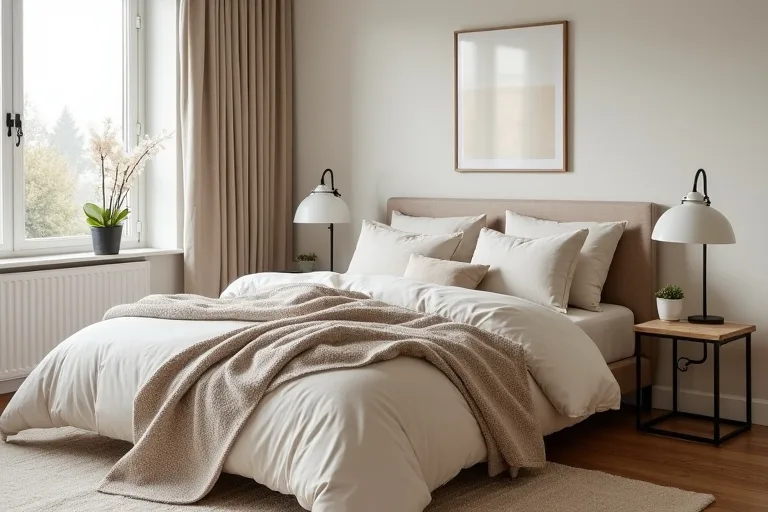
Bedding is usually the fastest way to make a bedroom feel more finished. A neutral linen-look duvet cover or a simple comforter set gives the room a steady base, which makes it easier to build softness elsewhere. The goal is not a perfect hotel look. It is to create a calm backdrop that works with the wall color, floor finish, and lighting in the room.
When the bed is the largest object in the room, the fabric choice matters more than most people expect. Linen-look bedding brings a slightly relaxed texture, while a neutral comforter set can make the bed feel smoother and more contained. Both work well if the rest of the room is already doing enough visually. If the bedroom has stronger patterns elsewhere, keep the bedding restrained so the whole space feels cohesive.
A linen look duvet cover set queen neutral or a neutral comforter set queen can give the room a quieter foundation without making the styling feel rigid.
For a room that needs to feel warmer, think about how the bedding reads in daylight and in the evening. A slightly textured cover can soften a bright room, while a smoother comforter can help a darker room look cleaner and more open. The right choice depends less on trend and more on the overall balance of the space.
Layer texture without crowding the room
Texture is what turns a plain bedroom into a cozy one, but too many finishes can quickly make the room feel busy. A better approach is to repeat a few soft materials in measured amounts. Think of one main bedding texture, one throw, and one or two smaller accents such as a woven lamp shade, a ceramic lamp base, or a simple upholstered headboard.
Window treatments matter here too. Curtains that end at the right place can make the room feel taller and more finished, especially if the bed is placed on the wall opposite the windows. If the curtains are too short, the whole room can feel visually chopped up. A quick planning step with the curtain length calculator helps avoid that problem before you buy.
When a bedroom feels flat, add texture before adding more decor. A throw, a pillow with a different weave, or better-fitting curtains usually does more than another accessory on the nightstand.
Lighting should also support the room rather than compete with it. Soft bedside lighting, a warm bulb tone, and a lamp with a simple shade can make a bedroom feel more settled at night. If the room has hard edges, a few softer surfaces help it read as calm instead of bare.
Make the layout feel more settled
The most comfortable bedrooms tend to have clear circulation. You should be able to move around the bed without squeezing past corners or bumping into furniture. If the room feels cramped, the issue is often layout rather than style. A smaller bedside table, fewer pieces at the foot of the bed, or a narrower dresser can make the entire room feel more open.
It also helps to be honest about storage. Cozy does not mean filled to the edges. If the bedroom is carrying too many open items, the room starts to feel unfinished instead of restful. Closed storage can improve the look immediately because it reduces visual interruption. If you are planning a more complete refresh, a simple layout and budget worksheet such as this Room Makeover Planner can help you prioritize what to buy first and what to leave for later.
For wall color, finish matters as much as the shade itself. A warmer neutral can make the bedroom feel more forgiving, especially if the room has cool light or little natural sun. Before choosing paint, it is worth checking the color in relation to the furniture and bedding, and the paint calculator can help you think through the coverage and planning side of the project.
Once the big pieces are settled, the room only needs a few finishing touches. One framed piece of art, a lamp with proper scale, and a tray or dish for small items are often enough. The aim is to reduce visual emptiness without filling every surface.

A simple checklist for a more finished bedroom
Before buying more decor, run through the room once with a practical eye.
- Does the bed feel like the clear anchor of the room?
- Do the bedding and window treatments work together in tone and texture?
- Is there enough space to move around the furniture comfortably?
- Are the largest pieces scaled correctly for the room?
- Do the finishes feel calm and repeated rather than mixed at random?
- Have you left enough open space for the room to breathe?
If the answer is yes to most of those questions, the room probably needs less styling than you think. A cozy bedroom usually comes from a few well-chosen decisions made in the right order. Start with the layout, then the bedding, then the softer layers that finish the space.
For more planning ideas across the home, the Bedroom Ideas hub is a useful place to compare room-by-room approaches and see how the same balance principles apply elsewhere.