Modern interior design works best when the room feels clear, calm, and easy to use. That usually comes down to a few careful decisions: a layout with breathing room, furniture that suits the scale of the space, and finishes that feel restrained rather than overworked. When those pieces are in place, even a simple room can look intentional.

Modern interior design favors clean lines, simple materials, open layouts, and carefully chosen decor.
What modern interior design really means
Modern interior design is often confused with minimalism or contemporary style, but the difference matters when you are making choices for a real room. Modern design has roots in a simpler, more architectural way of living: furniture sits lower and cleaner, materials are honest, and decoration is used with restraint. The result should feel ordered without becoming cold.
Compared with minimalism, modern design can feel slightly warmer and more layered. Compared with contemporary style, it tends to rely less on trend-led detail and more on proportion, structure, and functional clarity. That makes it a useful direction if you want a home that feels current but not overly styled.
If the layout is crowded or the furniture is oversized, no amount of decor will make the room feel modern. Use the space first, then style it.
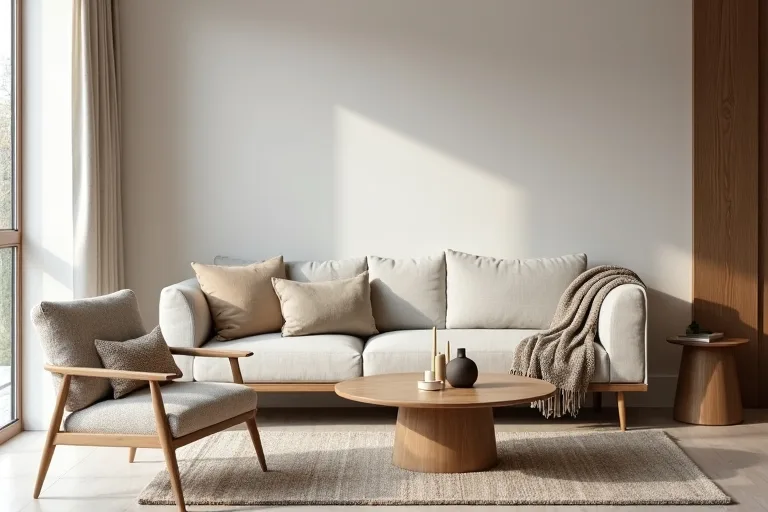
Layouts, scale, and room flow
Modern rooms usually work best when circulation is easy and sightlines stay open. That does not always mean a fully open plan. It means giving each zone a clear purpose and enough space around it to breathe. In a living room, for example, the sofa should anchor the room without blocking the path to a window, doorway, or adjacent area.
Scale matters just as much as the arrangement itself. A low-profile sofa can make a room feel wider, while a compact accent chair can add shape without adding bulk. If you are setting up a smaller room, keep larger furniture pieces simple and reduce the number of secondary items. A single side table and one well-sized chair often look better than several smaller pieces competing for attention.
For a practical starting point, the room layout planner can help you test furniture placement before you buy. It is especially useful if you are trying to balance seating, storage, and walking space in one room. If your space feels uncertain, the home style quiz can also help you confirm whether modern design is the right direction or whether you prefer a softer variation.
Furniture, lighting, and finishes
Furniture in a modern room should look deliberate rather than decorative for its own sake. Seek out simple silhouettes, visible structure, and finishes that do not compete with the room. A boucle accent chair can work well here because it adds texture without a heavy pattern, especially beside a plain sofa or a wood coffee table. Used well, it gives the room warmth while staying true to the style.
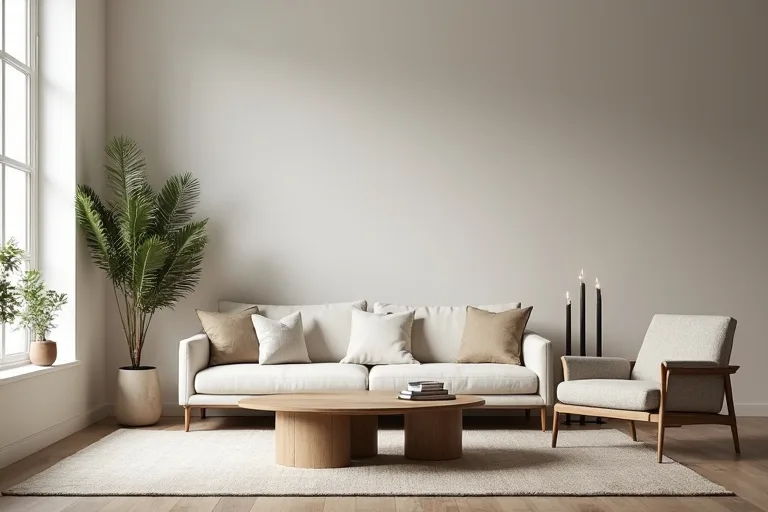
Lighting shapes the mood more than many people expect. A modern room usually benefits from layered light rather than a single overhead fixture doing all the work. Think in terms of ambient lighting for general brightness, task lighting where you read or work, and a smaller accent source to soften the room in the evening. Pendant lights, table lamps, and floor lamps can all fit this style when the forms stay simple.
Finishes should feel consistent from one item to the next. Wood tones do not need to match exactly, but they should belong to the same family. Metals work best when used sparingly and repeated with intention. In modern interiors, a few thoughtful finishes usually look better than a mix of too many competing ones. That is also why an understated accessory such as a modern candle holders set can be more effective than a shelf full of small decor items.
A modern room feels strongest when materials, shapes, and scale are doing the work. The decor should finish the room, not fill it.
Styling a room without clutter
The easiest way to lose the modern look is to add too many small objects at once. Instead, build a room in layers. Begin with the large furniture, then add one or two functional extras, and finish with a restrained set of decorative items. This approach keeps surfaces clear and makes the room easier to live in.
On a coffee table or console, choose one grounded composition rather than several scattered pieces. A tray, a book, and a pair of candle holders can be enough. On a shelf, leave open space between groups of objects so the eye has somewhere to rest. If you want a softer residential feel, textured pieces are useful because they introduce warmth without breaking the clean profile of the room.
For readers who like to plan rather than buy on impulse, the Home Planning System Bundle can be a helpful digital tool for mapping room changes, especially when you are working with a budget or a small space. Planning order matters in modern design: it is easier to choose a rug, sofa, and lamp sequence when the room plan is clear from the start. If budget is part of the decision, the remodel budget guide can help you decide where to spend first.
A simple checklist for a modern room
If you want a room to read as modern without overcomplicating the process, check the space against a few basics.
- Keep the layout open enough for easy movement.
- Use furniture with clean lines and balanced proportions.
- Limit materials to a calm, consistent palette.
- Choose lighting in layers rather than relying on one source.
- Style surfaces with a small number of useful, well-placed objects.
- Leave some empty space so the room can breathe.
That checklist works in living rooms, bedrooms, and even shared spaces where storage and function matter. If you want more ideas for room-specific planning, the living room ideas and bedroom ideas pages are useful next stops. The design styles hub is also a good place to compare modern design with other looks before you commit.