A small patio works best when every choice supports the same goal: a clear place to sit, easy movement around it, and enough visual order that the space feels calm rather than cramped. Once the main seating zone is defined, the rest of the patio becomes easier to plan, from furniture shape and rug size to storage, plants, and lighting.
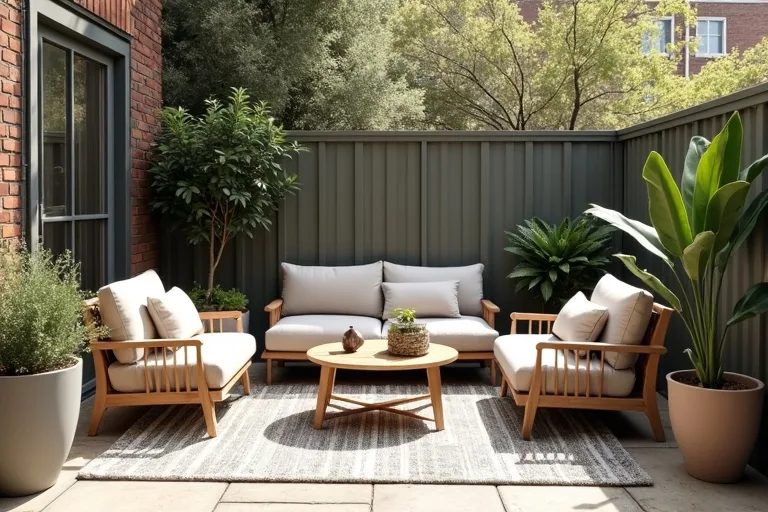
Start by defining one main seating zone, then build the rest of the patio around it.
Start with one seating zone
The easiest way to make a small patio feel intentional is to decide what it needs to do first. For most homes, that means one main seating area for coffee, reading, or relaxed conversation. Once that zone is clear, it is much easier to judge what belongs on the patio and what would crowd it.
Begin by looking at the patio as a rectangle or square of usable floor space, not as a place to fill. Leave a comfortable path for walking in and out, then place the seating zone where it can sit without blocking access. If the patio is narrow, keeping furniture to one side often works better than centering everything.
A small patio feels bigger when chairs can be pulled out without hitting a wall, door, or planter.
Choose furniture that fits the flow
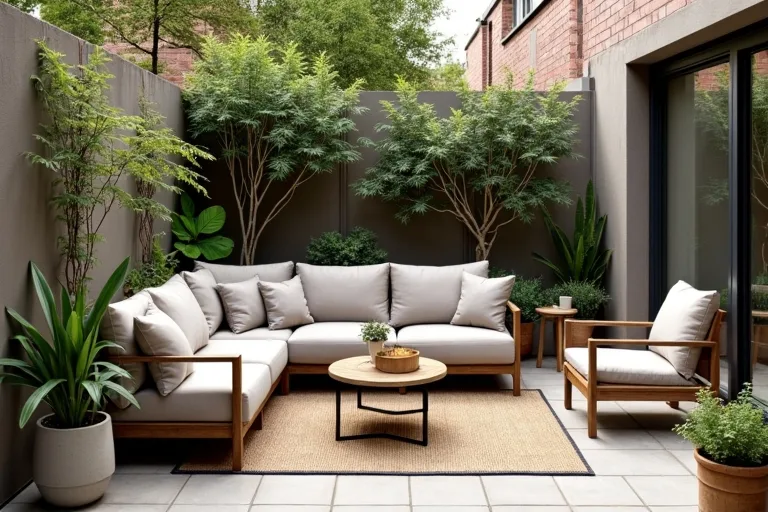
On a small patio, the best furniture is usually the simplest shape that does the job well. A compact conversation set often gives you enough seating without overpowering the space, especially if the pieces have open legs and a lighter visual profile. Rounded edges can also help a tight layout feel easier to move around.
Before buying, measure the usable footprint of the patio and think about how doors open, where people will walk, and whether the furniture needs to be moved often. A patio does not need a large sofa to feel finished. In many cases, two chairs, a small table, and an ottoman or bench create a more flexible setup than one oversized piece.
If you are comparing layouts indoors or out, the same planning habit helps everywhere. The room layout planner is useful when you want to test spacing before making a purchase.
Keep the silhouette low and open. Furniture that visually exposes more floor space usually works better than bulky pieces with solid sides.
What tends to work best
- Two slim chairs with a small table between them
- A compact four-piece set for a defined conversation area
- Pieces with visible legs and simple lines
- Folding or nesting items if the patio needs flexibility
Use a rug to define the layout
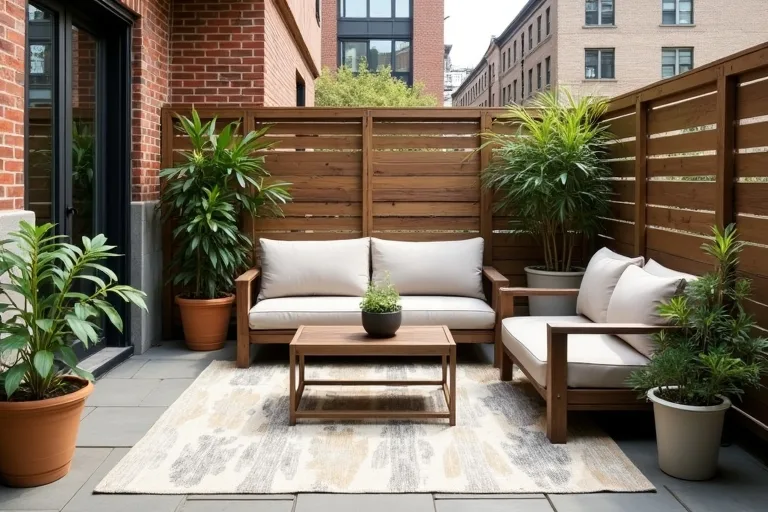
A rug gives a small patio structure. It marks out the main seating area, adds softness underfoot, and helps furniture feel grouped instead of scattered. The key is scale: a rug that is too small can make the patio look busier, while one that is too large can swallow the available space.
A weatherproof outdoor rug is especially helpful when the patio surface feels plain or when the seating area needs visual grounding. A waterproof outdoor rug 5×7 can work well for a compact layout, particularly when the furniture is arranged as one clear cluster rather than spread across the patio.
If you want a simple rule, keep the front legs of the main seating pieces on the rug so the grouping feels connected. That usually creates more balance than placing the rug too far away from the furniture.
For small patios, the rug is less about decoration and more about order.
When you are unsure about proportions, the rug size calculator can help you think through scale before you commit.
Choose a durable outdoor rug that supports the seating zone and is easy to clean after rain, dirt, or spills.
Add storage, lighting, and planting without crowding the space
Once the seating area is in place, the rest of the styling should stay light. Storage works best when it solves a real use case, such as keeping cushions dry or holding garden tools near the door. A narrow bench, a lidded box, or a small cabinet can be enough if the patio has only a few essentials.
Lighting should also stay restrained. One or two sources are usually enough for a small patio, especially when they create a soft edge to the seating area. A wall light, lantern, or string of subtle lights can make the space feel usable in the evening without adding clutter.
Plants are often the final layer, but they work best when they frame the patio instead of filling every corner. One larger pot, a pair of smaller planters, or a single grouping near the edge can bring life to the space without narrowing the walking route. If you want to keep planning simple, think in terms of one feature, one support element, and one accent rather than several competing decorations.
How to shop for a small patio in the right order
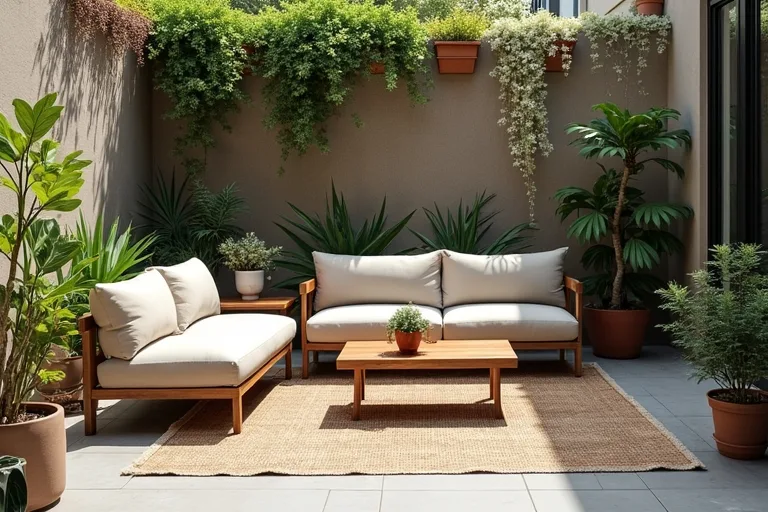
It is easier to shop well when you start with the layout instead of the decor. First define the seating zone, then choose the rug size, and only after that look at cushions, planters, and smaller accessories. That sequence helps prevent one common mistake: buying individual pieces that are attractive on their own but do not work together in the space.
If you want a ready-made starting point, a 4 piece outdoor patio conversation set can be a practical choice for a small patio because it gives the layout a clear center. For planning the budget and deciding what to buy first, a digital tool such as the Room Makeover Planner, Home Layout Budget Spreadsheet can help organize the decision process before spending starts.
If you are building a patio from scratch or updating an existing one, it is also worth browsing the broader Outdoor Living hub for related planning ideas and product directions.
Keeping the shopping list short is usually the best way to protect the flow of a small space. A well-sized seating set, a durable rug, and one or two practical support pieces are often enough.
Layout checklist before you buy
- Choose one main seating zone and keep it clear.
- Leave enough room to walk around chairs and table edges.
- Match the rug to the furniture group, not the full patio.
- Use storage only where it solves a real need.
- Limit styling to a few pieces with a clear purpose.
When the patio feels balanced, the space does not need much more. A small layout works best when it is easy to use, easy to maintain, and clear enough that the furniture arrangement makes sense at a glance.