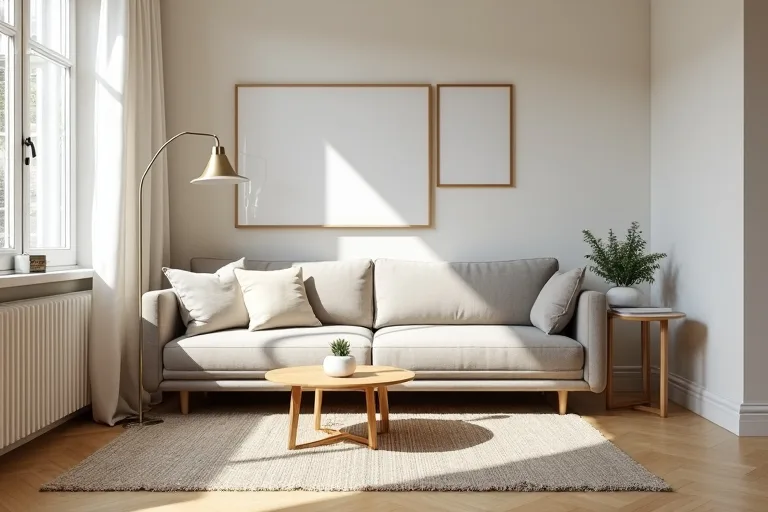
A small living room usually feels difficult for one simple reason: too many decisions are made in the wrong order. People shop for a sofa, then try to make it fit, and only afterwards notice the room has no clear walking path or focal point.
The calmer approach is to plan the layout first, then size the furniture, then use the rug and lighting to make everything feel intentional. That sequence keeps the room functional and usually saves money too.
Start with layout and sizing first, then choose furniture and decor that support the flow. In a small living room, the right proportions matter more than adding more pieces.
Start with the room plan before you buy anything
The first step is to understand how the room is used. Measure the walls, note door swings, windows, radiators, and any built-in features, then map the traffic path people naturally take through the space. If the walkway is blocked, the room will feel cramped even when the furniture itself is compact.
Once you know the path, mark the main seating zone and decide what the room needs to do. Some small living rooms need a TV wall and a sofa. Others work better with a pair of chairs, a small table, and a quieter conversation layout. The best plan is the one that leaves a clear route through the room without forcing people to squeeze past furniture.
For a simple planning starting point, use the room layout planner to test the arrangement before you commit to buying pieces.
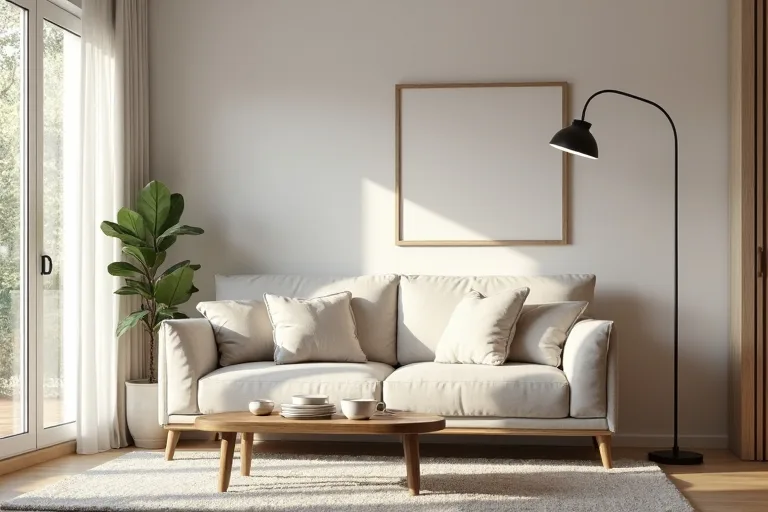
The real decision is not whether the room can hold more furniture. It is whether each piece improves the path, the seating comfort, and the way the room feels when you enter it. If a table, chair, or storage unit blocks movement, it is probably the wrong size even if it technically fits.
Choose furniture scale that works in a small room
Small living rooms usually look better with fewer, better-proportioned pieces. A slim sofa, a compact coffee table, and one clear side table often work better than a full matching furniture set. The goal is to keep visual weight low and leave enough open floor area so the room feels usable.
Watch the depth of every item, not just the width. A deep sofa can dominate a narrow room, and bulky accent chairs can make circulation awkward. Low-backed seating, visible legs, and lighter finishes tend to read as less heavy. That does not mean everything has to be minimal; it just means each piece should earn its place.
If you are choosing a sofa, it can help to compare the room against a dedicated size guide such as the sofa size calculator. For surfaces, a compact coffee table usually needs enough clearance to move around comfortably without crowding the seating area.
Use the rug as the anchor point
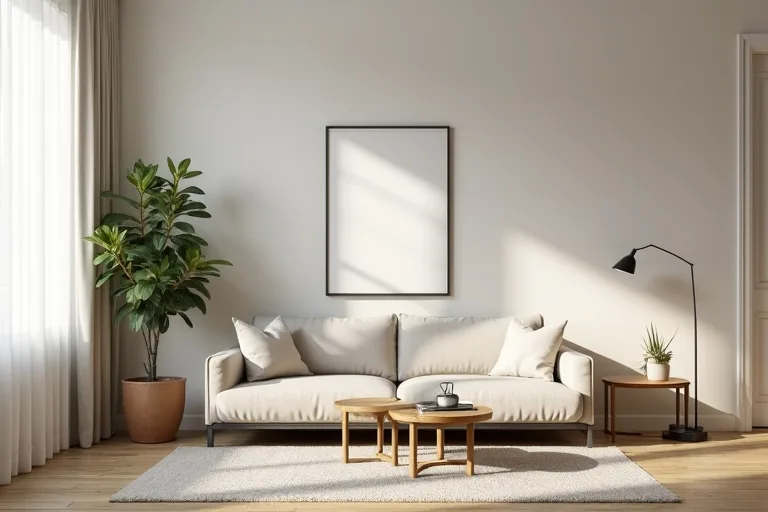
In a small living room, the rug does more than add softness. It defines the seating zone, ties the furniture together, and gives the room a clear visual center. A rug that is too small makes the furniture look scattered. A better-sized rug makes the room feel planned.
A common mistake is choosing a rug based on the open floor space rather than the furniture grouping. Instead, think about the front legs of the sofa and chairs, the edges of the coffee table, and how the seating zone should read as one composition. That is why rug sizing is often the easiest next decision after layout.
Use the rug size calculator to check the proportions before you shop. If you want a neutral option to support a calm plan, an 8×10 neutral living room area rug is often a practical starting point for anchoring a small seating area, depending on the room dimensions.
Keep the room open with light, storage, and simple styling
Once the layout and key pieces are set, the rest of the room should reduce clutter rather than add to it. Good lighting matters because a single overhead source can make a small room feel flat and boxy. A floor lamp near the seating area adds layers of light without taking much floor space.
Storage should be contained and honest. Closed storage usually works better than too many open shelves because it keeps the room visually quiet. If you need display pieces, keep them limited and repeat a small number of materials or colors so the room reads as one space instead of several competing corners.
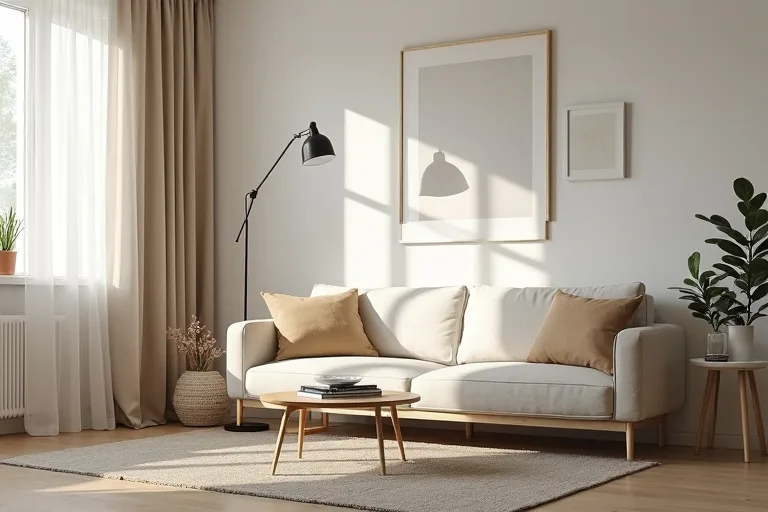
Simple styling is usually enough: one or two wall pieces, a throw, a cushion mix that stays within the same tone family, and a table surface with breathing room. If you want an easy lighting option that suits this approach, a modern arc floor lamp for living room can help define the seating area without adding bulk.
Best next step
If your room already feels better on paper, the smartest move is to lock in the rug size first. That one decision makes the seating zone easier to judge, and it helps every other choice feel more grounded.
- Buying a sofa before checking the traffic path.
- Choosing a rug that is too small for the seating group.
- Using too many separate pieces, which breaks up the room.
- Placing storage or chairs where people need to walk.
- Adding decor before the main layout feels settled.
A small living room works best when layout comes first, furniture scale comes second, and the rug sets the anchor for the seating area. If the room feels calm and easy to move through, it is usually doing its job well. From there, use lighting and storage to keep the space open rather than filling every corner.
Helpful next tools and planners
If you want to make the decision easier before you buy
These are the most useful next steps if you are still deciding on layout, size, or budget. Start with the planning tool that matches where you feel stuck.
FAQ
What is the first thing to plan in a small living room?
Start with the traffic path and the main seating arrangement. If those two things work, the rest of the room becomes much easier to size and style.
How do I make a small living room feel bigger?
Keep the layout open, use fewer pieces, choose furniture with lighter visual weight, and avoid a rug or coffee table that is too small for the seating zone.
Should the rug go under all furniture in a small living room?
Not always, but the rug should usually connect the main seating pieces so the arrangement feels like one group instead of separate objects.
What should I buy first for a small living room?
Buy in this order: layout plan, rug size, then the main seating pieces. That sequence reduces mistakes and helps the room stay balanced.
Three sensible next steps
Some links in this article may be affiliate links. Read more in the Affiliate Disclosure.