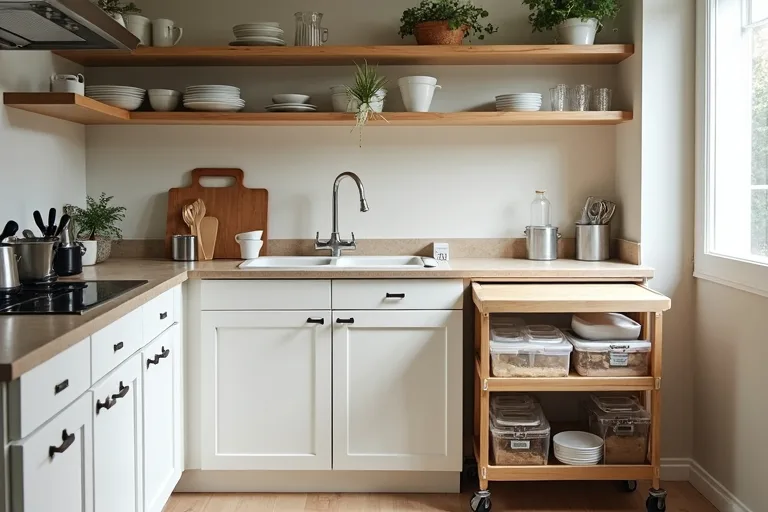
A small kitchen can feel busy for all the wrong reasons: not enough clear counter space, storage that works against you, and appliances or bins that keep getting in the way. The good news is that most of the stress usually comes from a few planning issues, not the size of the room itself.
If you focus on layout first, then storage, then the few products that solve a real problem, a compact kitchen becomes much easier to live with. You do not need a full remodel to make everyday cooking feel calmer.
Focus on layout, vertical storage, and clear prep zones before buying anything new. In a small kitchen, the biggest gains usually come from removing traffic bottlenecks, making one good prep area, and choosing flexible storage that earns its place.
Start with layout and traffic flow
The first step in any small kitchen is not shopping. It is understanding how the room actually works when someone is cooking, cleaning, or just passing through. If two people regularly collide near the sink, or if cabinet doors block a walkway, the kitchen will always feel tighter than it needs to.
Begin by looking at the main path through the room. The route from fridge to sink to cooktop should feel as direct as possible. When that path is interrupted by a bin, a chair, a cart, or an awkwardly placed appliance, the room loses useful movement space fast.
Think in terms of zones rather than decorating the whole room at once. A small kitchen usually needs one place to prep, one place to cook, and one place to store everyday items. Even if those zones overlap, the goal is to stop everything from competing for the same bit of counter.
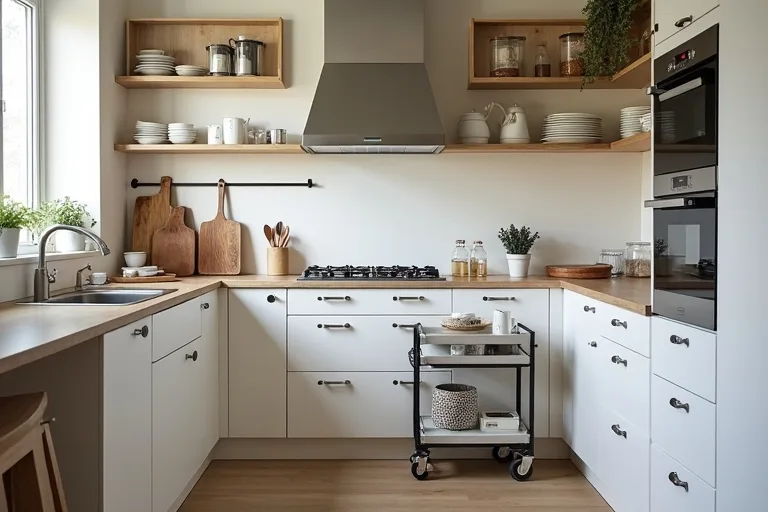
If you are unsure where to begin, use the room itself as your guide. Stand in the kitchen and notice where you naturally set down groceries, chop vegetables, and reach for plates. Those habits are more useful than a perfect floor plan you will never follow.
The real decision is not whether the kitchen is small. It is whether the current layout supports the way you cook and store things. If movement feels blocked, fix the path first. If movement is fine but surfaces are cluttered, focus on storage and zone planning next.
Create better prep, cook, and store zones
Once the traffic flow makes sense, the next job is to assign each part of the kitchen a purpose. This is where many small kitchens improve quickly, because a room that does several jobs in one area tends to look and feel crowded.
A simple zone setup can make daily use much smoother:
- Prep zone: Keep your cutting board, knife, mixing bowls, and a small clear surface together.
- Cook zone: Store the tools you need near the hob or oven so you are not crossing the kitchen mid-recipe.
- Store zone: Group dry goods, backups, and less-used items in one defined place instead of spreading them around.
- Clean zone: Keep dish soap, sponges, and bins together so cleanup does not take over the room.
This approach matters because it prevents one area from becoming a catch-all. If a small kitchen has to hold groceries, meal prep, appliances, paper waste, and serving ware all in one place, the counters start doing too much work.
Simple containers can help once the zones are clear. Airtight bins are useful when they make shelves easier to read and keep dry goods together. The point is not to decant everything for the sake of it. The point is to make storage quicker to use and easier to maintain.
Use vertical storage and flexible pieces
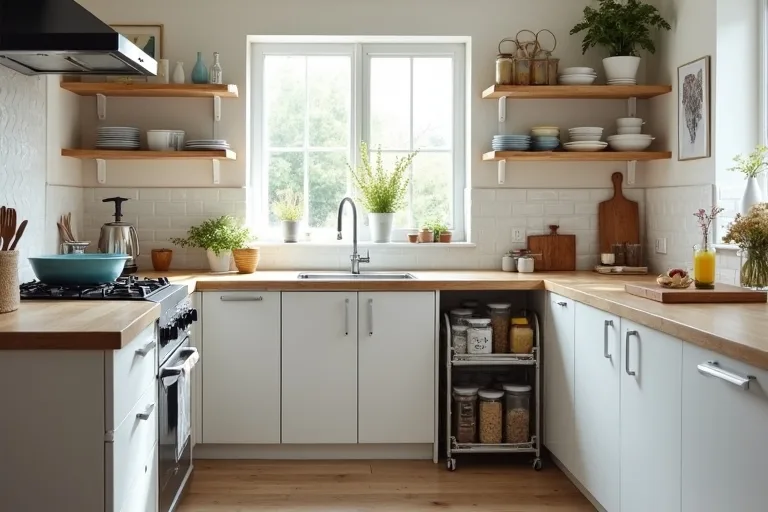
When floor space is limited, vertical space becomes one of the most valuable parts of the kitchen. Open shelving, wall hooks, narrow racks, and cabinet interiors can all carry more than people expect, as long as they are used with some restraint.
Open shelves work best when they hold the items you use regularly: mugs, plates, bowls, or a few pantry jars. If everything on the shelf needs constant rearranging, the shelf has become display, not storage. In a small kitchen, storage should reduce friction, not add another task.
Flexible pieces can also solve a temporary layout problem better than a fixed purchase. A rolling kitchen cart, for example, can add prep room, serve as a pantry extension, or hold small appliances that would otherwise crowd the counter. It is especially useful when the kitchen needs support now, but you are not ready for built-ins or a larger remodel.
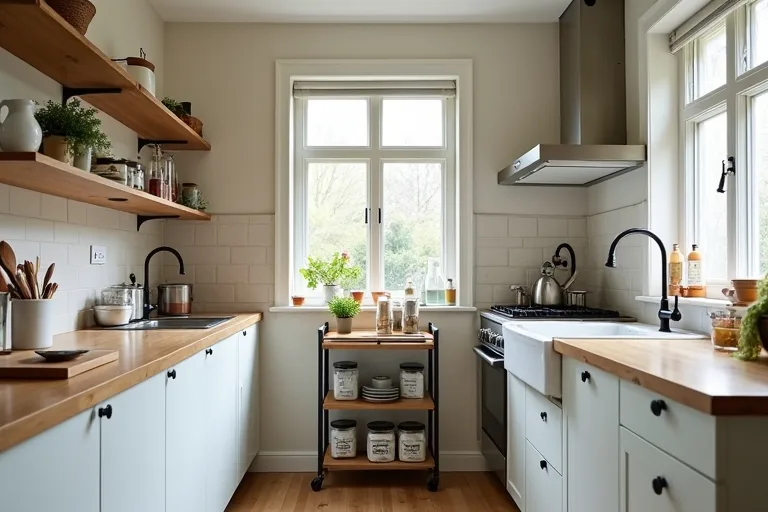
This is also where it helps to be selective. The best space-saving pieces are the ones that do more than one job without creating visual noise. If something takes up room, it should replace a problem, not become a new one.
If you want a simple, practical upgrade path, start with one flexible piece and one storage system, then see what still feels missing after a week or two of normal use.
Measure before you buy anything new
Small kitchens punish guesswork. A cart that is a little too deep, a container set that does not fit a shelf, or a drawer insert that blocks movement can turn a useful purchase into more clutter.
Before you buy, measure the parts of the kitchen that matter most: counter depth, clear walkway width, cabinet shelf height, and any narrow gaps that could fit a slim storage piece. If you are considering a cart, check not only the footprint, but also whether the door swing, handle clearance, and turning space still feel comfortable.
It also helps to write down what problem you are trying to solve. Do you need more prep space, better pantry visibility, or a place for small appliances? That answer will point you toward the right purchase much faster than browsing by category.
For readers who want a simple way to map the kitchen before buying, a layout planner can be useful. It keeps the decision focused on placement and capacity rather than impulse shopping.
Best next step
Before you spend money on storage pieces or layout changes, map the room zones and measure the space you actually have. That makes it much easier to choose only the items that solve a real problem.
- Buying storage before fixing the layout.
- Using too many small containers without a clear system.
- Leaving counters to do every job in the room.
- Choosing pieces that fit the style but not the measurements.
- Filling vertical space with items that are hard to reach or hard to keep tidy.
The best small kitchen ideas are usually the simplest ones: improve traffic flow, define a few clear zones, and use storage that makes the room easier to use every day. If you measure first and buy second, a small kitchen can feel much more relaxed without a full remodel.
Helpful next tools and planners
If you want to make the decision easier before you buy
These options are most useful when you are trying to turn planning into action. One helps you map the room, and the others are practical storage pieces that can support a small kitchen without major work.
FAQ
What should I fix first in a small kitchen?
Start with the layout and traffic flow. If the room is awkward to move through, storage alone will not solve the problem.
Are open shelves a good idea in a small kitchen?
Yes, if they hold everyday items and stay edited. They work best when they reduce cabinet crowding rather than add visual clutter.
Is a kitchen cart worth it in a small space?
It can be, especially if you need flexible prep space or extra storage without committing to a built-in change.
What is the easiest way to make a small kitchen feel calmer?
Clear the counters, group items by zone, and keep only the tools you use often within easy reach.
Three sensible next steps
Some links in this article may be affiliate links. Read more in the Affiliate Disclosure.