
Some rooms are asking for a new surface, better lighting, or a few practical updates. Others are quietly telling you that the layout no longer works, and no amount of new hardware will fix it.
The hard part is telling the difference before you spend money. A calm decision now can save you from a half-finished project, a blown budget, or a room that still feels wrong after the work is done.
Choose a refresh when the room works but looks tired; choose a remodel when layout, function, or major systems need to change.
What refresh and remodel really mean
A refresh is a lighter update. It keeps the basic structure of the room in place and focuses on visible improvements: paint, hardware, lighting, faucets, textiles, storage pieces, and other finish-level changes. A remodel goes deeper. It changes the room’s layout, fixtures, storage, or built-in systems in a way that affects how the space functions day to day.
That difference matters because many homeowners start with a style problem and end up with a layout problem. If the room already functions well, a refresh can make it feel cleaner and more current without turning the project into a full rebuild. If the room does not function well, cosmetic changes may only delay the real fix.
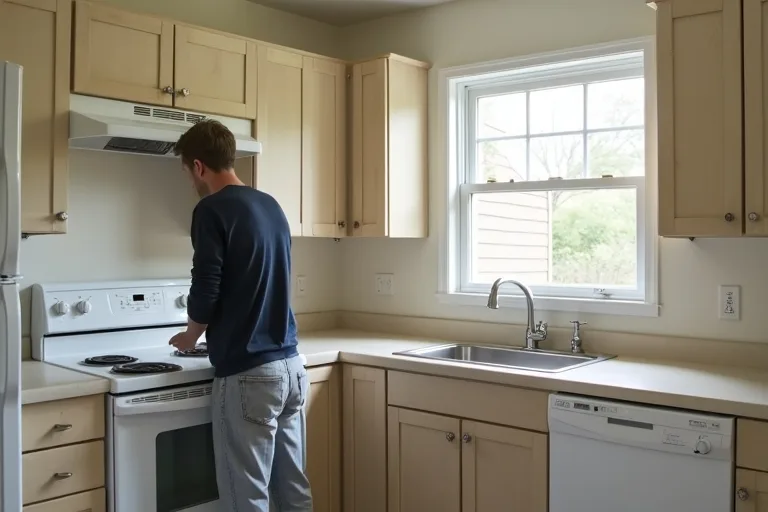
Ask yourself one simple question: if you changed nothing structural, would the room still meet your needs? If the answer is yes, you are probably looking at a refresh. If the answer is no, the problem is larger than finishes.
Signs a room only needs a refresh
Some spaces look dated without actually being broken. In those rooms, the smartest move is usually to update what you see before you touch what you use. A refresh often makes sense when the layout is fine, the storage is enough, and the room simply feels worn, dull, or out of sync with the rest of the home.
Common signs include:
- The room feels tired, but it still works well for daily use.
- Cabinets, counters, or floors are functional even if the finish is dated.
- You mainly want better color, cleaner lines, or a more cohesive look.
- Small fixes would remove the biggest frustrations, such as old hardware or weak lighting.
- You need to stay closer to a limited budget and avoid major disruption.
In a kitchen, for example, a brushed nickel kitchen faucet pull down can make a meaningful difference when the existing sink area works and only the surface details feel old. That kind of update is not a substitute for a failing layout, but it can be a sensible improvement when the room is structurally sound.
Signs a remodel is the better fit
A remodel becomes the right conversation when the room no longer supports how you live. Maybe the storage is awkward, the flow is cramped, or the fixtures are placed in ways that make routine tasks harder than they should be. Once you start moving walls, plumbing, electrical, or built-ins to solve those problems, you are beyond a refresh.
Look for these signals:
- The room feels cramped or poorly arranged, even when it is clean and organized.
- Storage is not just unattractive; it is genuinely insufficient.
- Appliances, fixtures, or major components are failing or outdated enough to justify replacement.
- You keep working around a layout problem instead of solving it.
- The space needs new plumbing, wiring, or structural changes to work properly.

If you find yourself moving through the room in a careful pattern just to avoid bumping into things, or if the room creates friction every day, that is usually a layout issue rather than a style issue. A remodel may cost more and take longer, but it can also remove the problem at its source.
How to decide with budget, timeline, and disruption
The easiest way to decide is to compare what changes the room needs with what you are prepared to spend and live through. A refresh usually stays lighter in all three areas: lower cost, shorter timeline, and less disruption. A remodel asks for more planning because it affects trades, materials, scheduling, and daily routines.
Use this simple order:
- Write down the one or two things that bother you most about the room.
- Separate cosmetic issues from functional issues.
- Note which changes would require new electrical, plumbing, or construction work.
- Estimate whether the room can improve without altering the layout.
- Decide whether your budget can support the real fix, not just the visible one.
If you are still unsure, compare the room against a practical budget tool before you buy anything. The Bathroom Remodel Cost Estimator is useful when you are trying to understand whether a bath project belongs in refresh territory or needs a bigger remodel budget. For paint-led updates, the Paint Calculator can help you plan a lighter update without guessing at materials.

For broader decision-making, the Remodel & Budget hub is a helpful place to step back and compare project types before you commit.
Best next step
If your room feels mostly functional, start with a budget check rather than a shopping list. If the layout is the problem, use a cost estimator to see whether the remodel path is realistic before you begin choosing finishes.
- Buying finishes before deciding whether the room’s layout still works.
- Treating a function problem like a style problem.
- Underestimating how much disruption a remodel brings to daily life.
- Skipping the budget check because the update seems small at first.
- Changing too many things at once and losing control of the plan.
Choose a refresh when the room still works and only needs a calmer, cleaner, more current look. Choose a remodel when the layout, storage, or systems are the real problem. The clearer you are about function first, the easier it is to spend in the right place.
Helpful next tools and planners
If you want to make the decision easier before you buy
A simple planner or a small hardware update can help you test the refresh path before you move into a bigger project. These options are most useful after you have decided whether the room needs light updating or deeper work.
FAQ
How do I know if my kitchen needs a refresh instead of a remodel?
If the kitchen layout works, storage is enough, and the main issue is that finishes look dated, a refresh is usually enough. If the room feels awkward to use, a remodel is more likely.
What is the biggest sign that I need a remodel?
The biggest sign is a function problem that cosmetic updates cannot solve. That can include cramped circulation, poor storage, or fixtures and systems that need to be moved or replaced.
Should I start with budget or design?
Start with budget and function. Once you know whether you are in refresh or remodel territory, design choices become much easier and much less risky.
What is a good first step if I am still unsure?
Use a cost estimator or planner before buying materials. For baths, the Bathroom Remodel Cost Estimator is a practical place to begin, and for lighter paint-led updates, the Paint Calculator can help you plan the smaller path.
Three sensible next steps
Some links in this article may be affiliate links. Read more in the Affiliate Disclosure.