
A small patio does not need more pieces. It usually needs a clearer plan. When the seating zone is defined first, the space starts to feel calmer, easier to move through, and more usable day to day.
The goal is not to make a compact patio look bigger in a tricked-up way. It is to give every item a job, keep circulation open, and avoid the scattered feel that happens when furniture is added before the layout is settled.
Start by defining one seating zone, then choose scaled furniture and a rug that keeps the patio feeling open. If the layout is clear before you shop, even a tight outdoor area can feel easier to use and less crowded.
Start with one clear seating zone
The most useful small patio idea is also the simplest: decide what the patio is for before you place anything. In a compact space, trying to create several tiny zones often makes the area feel busy and awkward. One strong seating area usually works better than two half-finished ones.
For most small patios, that means choosing a main conversation zone, a reading corner, or a coffee spot that can also handle everyday use. Once that decision is made, the rest of the layout becomes easier. You can place furniture with intention instead of trying to fit in every possible option.
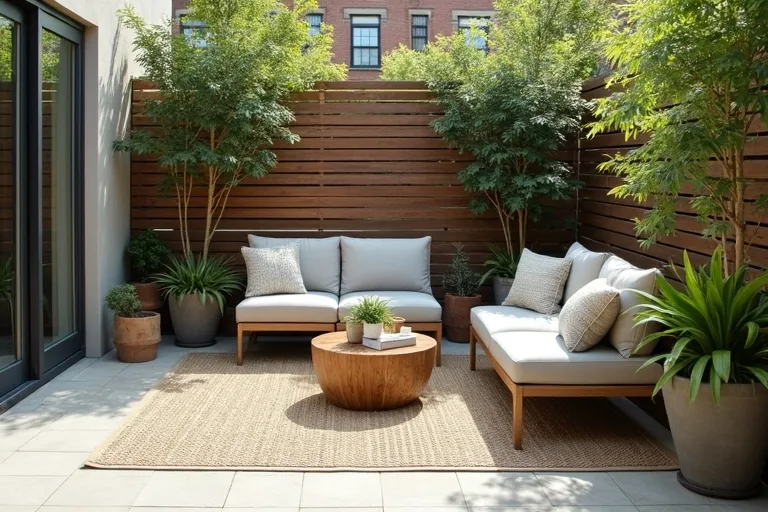
If you are not sure where to begin, think about how you actually use the patio most days. Do you want a place for morning coffee, a small dinner setup, or a simple seating area after work? The answer should guide the layout before style choices come in.
The real decision is not which chair set looks nicest. It is whether the patio has one obvious seating zone with enough clear walking room around it. If people need to step around furniture to cross the space, the layout is doing too much.
Measure the usable floor area and traffic paths
Small patios often feel smaller than they are because the usable space has not been separated from the awkward space. Measure the patio footprint, but pay extra attention to the part you can actually stand, walk, and sit in without bumping into doors, walls, or planters.
It helps to sketch the patio as a simple rectangle or shape and mark the route people take across it. That makes it easier to see where furniture can sit without blocking the natural path. If the patio connects to a door, that opening needs to stay comfortable and clear.
- Measure the full patio footprint.
- Mark doors, steps, railings, and fixed features.
- Trace the path you need for walking through the space.
- Reserve the largest open area for circulation before adding furniture.
Styling Homes’ room layout planner is a useful next step if you want to map the footprint before shopping. It is easier to make sensible buying decisions once the floor plan is clear.
Choose compact furniture and an anchored rug
In a small patio, furniture should support the layout instead of competing with it. Pieces with smaller visual weight, clean lines, and modest proportions usually work best because they leave more of the floor visible. That sense of openness matters more than trying to seat as many people as possible.
A simple 4 piece outdoor patio conversation set can be a sensible option when the patio needs a complete seating area without a lot of extra bulk. The key is to check the footprint against your plan, not to assume a set will fit just because it looks small in a photo.
An outdoor rug can help define the seating zone and stop the furniture from floating in the middle of the patio. A waterproof outdoor rug 5×7 is often a useful starting point for compact spaces, especially when you want a clear anchor without covering every inch of the floor. The rug should support the arrangement, not crowd it.

If you want a clearer sizing process, the rug size calculator can help you think through proportions before you buy. That is usually more useful than guessing from product photos alone.
Keep the edges open and finish with simple styling
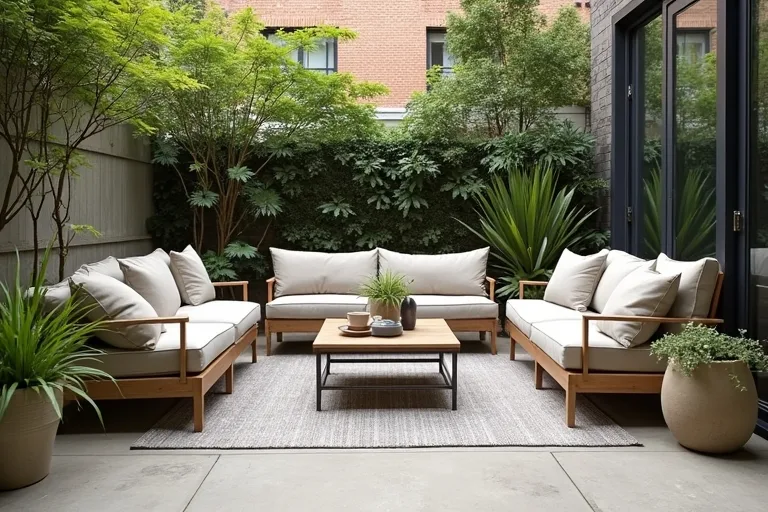
One of the easiest ways to make a small patio feel easier to use is to keep the perimeter as open as possible. When every edge is filled with a planter, stool, lantern, or extra side table, the space starts to feel boxed in. Leaving some breathing room around the furniture makes the patio feel more generous.
That does not mean the space should be bare. It means each extra item should earn its place. A small side table can be helpful. Storage can be helpful. A few potted plants at the edges can soften the layout. But each addition should support comfort or function, not just fill a gap.
If you like to plan before you buy, a simple budgeting and layout tool can help keep the project grounded. The Room Makeover Planner, Home Layout Budget Spreadsheet (Digital Download) is useful when you want to map the patio footprint, seating zone, and spending plan together rather than making separate decisions later.
Best next step
If you want the patio to feel easier to use, start with the layout before choosing furniture or accessories. A clear plan for the main seating zone will help you avoid clutter and buy only what fits the space.
- Adding furniture before deciding on one main seating zone.
- Using too many small pieces that break up the floor visually.
- Choosing a rug that is too large or too small for the seating area.
- Forgetting to leave a clear walking path through the patio.
- Filling every edge with decor instead of keeping some open space.
Small patio ideas work best when they make the layout simpler, not busier. Define one seating zone, measure the space you actually use, choose furniture that fits the footprint, and keep the edges open. That combination usually makes a compact patio feel calmer, more flexible, and easier to enjoy.
Helpful next tools and planners
If you want to make the decision easier before you buy
These are the most useful next steps if you are still mapping the patio or comparing a few layout options. Keep the plan clear first, then shop with more confidence.
FAQ
What is the best first step for a small patio?
Define the main use of the space first. Once you know whether the patio is mainly for seating, dining, or relaxing, the layout and furniture choices become much easier.
Should I use a rug on a small patio?
Yes, if the rug helps define one seating zone and does not crowd the floor. A properly sized outdoor rug can make the patio feel more organized.
How do I make a compact patio feel less crowded?
Keep one clear seating area, choose smaller-scale furniture, and leave some perimeter space open. Too many small items usually make the patio feel busier, not larger.
Do I need a full patio furniture set?
Not always. A full set can be useful if it fits the layout well, but two or three well-chosen pieces may be better in a very small space.
Three sensible next steps
Some links in this article may be affiliate links. Read more in the Affiliate Disclosure.