
Small bathrooms usually feel tight for one of three reasons: the layout is awkward, the storage is working against you, or the room is too visually busy. When that happens, every daily task feels harder than it should.
The good news is that you do not need a full remodel to make a compact bathroom feel easier to use. A few calm, practical changes can improve flow, reduce clutter, and make the room feel more open straight away.
Use a lighter palette, better storage, and a clearer layout to make the room feel larger and work better. In most small bathrooms, the biggest wins come from removing visual clutter, choosing storage that uses vertical space, and switching to softer, lighter finishes that do not break up the room.
Start with the layout problem, not the decor
If a small bathroom feels cramped, the first question is not what style to buy. It is what is making the room awkward to move through. A vanity that blocks the door, storage that sticks out too far, or a shower area that feels visually heavy can make even a clean room feel crowded.
Before shopping, stand in the doorway and look at the main path through the room. The best small bathroom ideas usually improve that path first. That might mean choosing a slimmer vanity, clearing the floor around the toilet, or replacing bulky accessories with items that sit closer to the wall.
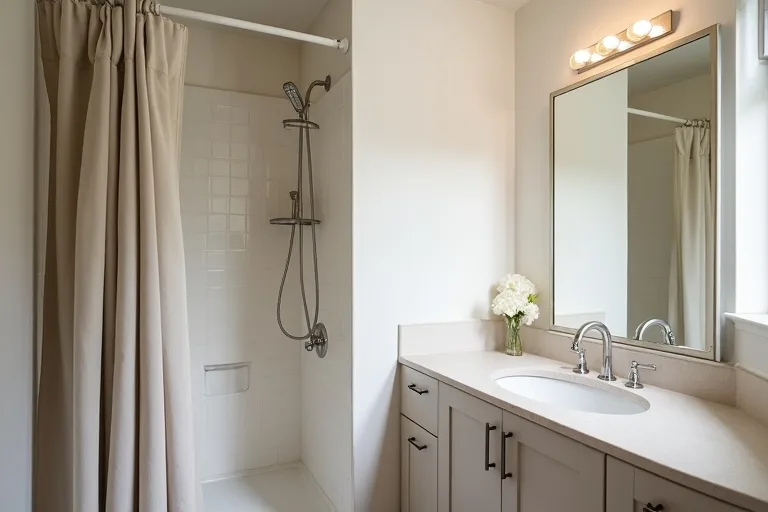
It also helps to think about what you use most often. If the things you reach for every day are stored deep in a cabinet or far from the sink, the room will feel more cluttered than it really is. A good layout puts the most-used items where they are easy to grab and easy to put back.
The real decision is usually not whether the bathroom is stylish enough. It is whether the room has a clear path, enough hidden storage, and enough visual calm to feel workable every day. If those three things are not in place, decor changes alone will not fix the problem.
Make storage work harder without taking over the room
Storage is where small bathrooms often get overloaded. Open shelves can look neat for a moment, but once towels, toiletries, and extra products build up, the room starts to feel busy again. The better approach is to use a few pieces that add function without adding bulk.
Vertical storage is often the most practical option in a compact room because it uses wall space instead of floor space. A shelf above the toilet, a shallow wall cabinet, or a narrow basket system can hold daily items without making the room feel closed in.

Keep the storage plan simple:
- Store daily-use items within easy reach.
- Move backup supplies higher or farther away.
- Keep the counter as clear as you reasonably can.
- Use closed storage for the things that make the room look busy.
If you are choosing one storage piece to add first, an over-toilet shelf can be a useful start because it works in many compact rooms without changing the floor plan. Browse the category from a layout-first point of view, not as a decorative add-on. The goal is to support movement, not fill every wall.
You can also use broader small-space guidance if you are deciding whether a bathroom is better served by shelving, closed storage, or a different layout altogether. That extra step often saves money later.
Use light, texture, and colour to make fixtures feel lighter
In a small bathroom, the eye notices contrast quickly. Heavy dark finishes, strong pattern, and too many separate colours can make the room feel chopped up. Softer choices tend to help the walls and fixtures feel calmer and less dominant.
That does not mean everything must be plain. It means choosing finishes that work together quietly. A neutral shower curtain, light wall colour, and simple accessories can make the room feel more connected. When the visual interruptions reduce, the bathroom often feels bigger even if nothing structural has changed.
Soft texture matters too. A fabric shower curtain usually reads as gentler than a shiny plastic one, especially in a compact room. It brings a bit of warmth without adding visual weight, which fits a small refresh where you want the bathroom to feel cleaner and less crowded, not overdecorated.
If you are unsure where to start, focus on the largest visible surfaces first. In most small bathrooms, that means the shower curtain, walls, vanity front, and floor. The fewer competing surfaces you have, the easier the room is on the eye.
A simple neutral shower curtain set can be a useful update if your current one is dark, busy, or worn. It is a small change, but in a tight space, small changes are often the ones you notice most.
Pick one small refresh and plan the next step before you buy
It is easy to overspend in a small bathroom because the room seems inexpensive to update. In reality, one unnecessary purchase can crowd the space faster than you expect. That is why it helps to decide whether your next move is a storage fix, a styling refresh, or a deeper layout change.
If the room works structurally but feels tired, a soft-texture refresh may be enough. If the room feels difficult to use, the priority should be planning. Before you shop, check what the room can actually hold and how much change the budget allows. That way, the first purchase supports the whole plan instead of creating a new problem.
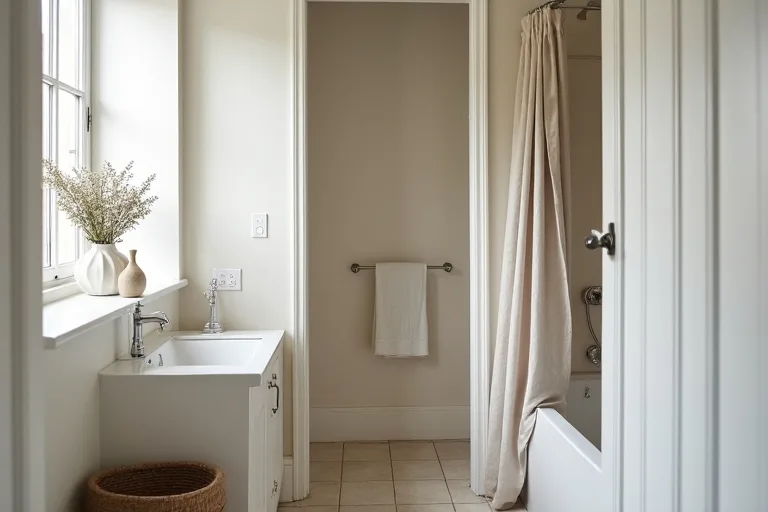
A room-planning tool is useful here because it slows the process down in a good way. It helps you compare what is possible in the room with what you want to spend, which is especially helpful when you are deciding between a minor refresh and a more meaningful change.
If you like to map out decisions before buying, a simple home layout budget sheet can also keep the project grounded. It is often easier to see where the money should go when the storage, layout, and styling choices are all written down together.
Best next step
If you are trying to work out what to change first, use the Bathroom Remodel Cost Estimator or the Room Layout Planner before you buy anything. It is the quickest way to see whether your bathroom needs a storage update, a layout rethink, or just a calmer refresh.
- Adding more storage before checking whether the current layout is the real problem.
- Using bulky shelves or accessories that take up valuable visual and physical space.
- Mixing too many finishes, colours, or patterns in a very small room.
- Buying decor before deciding whether the room needs planning, storage, or a layout change first.
- Leaving the counter full because there is no clear home for daily items.
The best small bathroom ideas are usually the least complicated ones: clear the layout, simplify the storage, and use lighter finishes that reduce visual clutter. When the room feels easier to move through and easier to keep tidy, it will also feel larger. Start with the practical problem, then choose the smallest change that improves it.
Helpful next tools and planners
If you want to make the decision easier before you buy
These options fit a small bathroom refresh where you want a simple update, clearer storage, and a better plan before spending more than necessary.
FAQ
What makes a small bathroom feel bigger quickly?
Start by reducing visual clutter, clearing the floor where possible, and using lighter, more connected finishes. A calmer shower curtain, simpler storage, and better use of wall space can change the feel fast.
Should I add storage or change the layout first?
If the room is hard to move through, look at the layout first. If the room functions well but feels messy, storage may be the better first step.
Do dark colours always make a small bathroom feel smaller?
Not always, but they can make a compact room feel heavier if they are used too widely. In a small bathroom, lighter surfaces usually make the space feel more open.
What is the safest small refresh if I do not want a remodel?
A neutral shower curtain, simpler accessories, and one vertical storage piece are usually low-risk changes that improve the room without locking you into a bigger project.
Three sensible next steps
Some links in this article may be affiliate links. Read more in the Affiliate Disclosure.