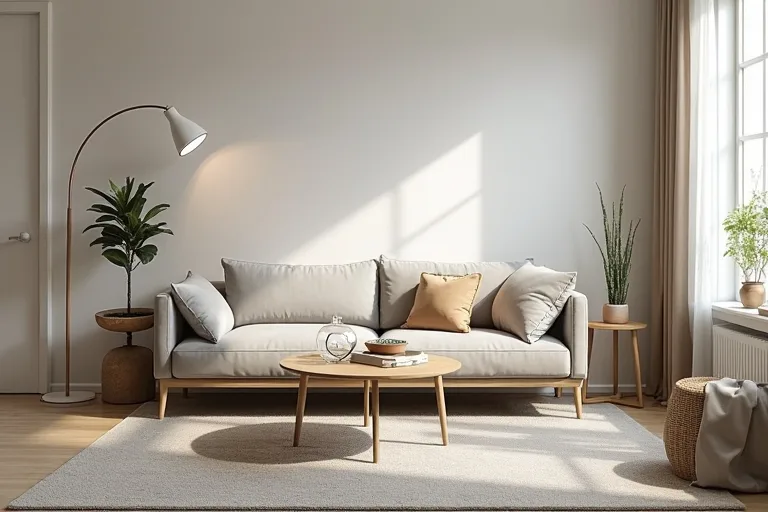
Small living rooms usually feel cramped for one of two reasons: the layout fights the room, or the room is carrying too many pieces for its size. When that happens, even a nice sofa or rug can make the space feel heavier instead of more inviting.
The good news is that a compact room usually gets better faster than people expect. A clearer layout, the right rug size, and a few calmer styling choices can make the room feel easier to move through before you buy a single extra decorative item.
Focus on layout, scale, and clear walkways first. Then use the right rug, lighting, and a few simple pieces to make the room feel larger. If you want the fastest improvement, choose the seating plan first, confirm the rug size, and keep surfaces and corners visually light.
Start with flow, not decor
The biggest mistake in a small living room is trying to decorate around a bad arrangement. A room does not feel bigger because it has more objects in it; it feels bigger when your eye can move across it without hitting unnecessary obstacles.
Begin by looking at the main path through the room. If you regularly step around the coffee table, edge past an oversized chair, or squeeze between the sofa and the wall, the room is telling you the layout needs work. That is usually more important than the color scheme or the accessories.
Once the walking path is clear, the room often feels calmer immediately. A compact space benefits from a seating plan that leaves breathing room around the edges and enough openness in the middle to make daily use easy.
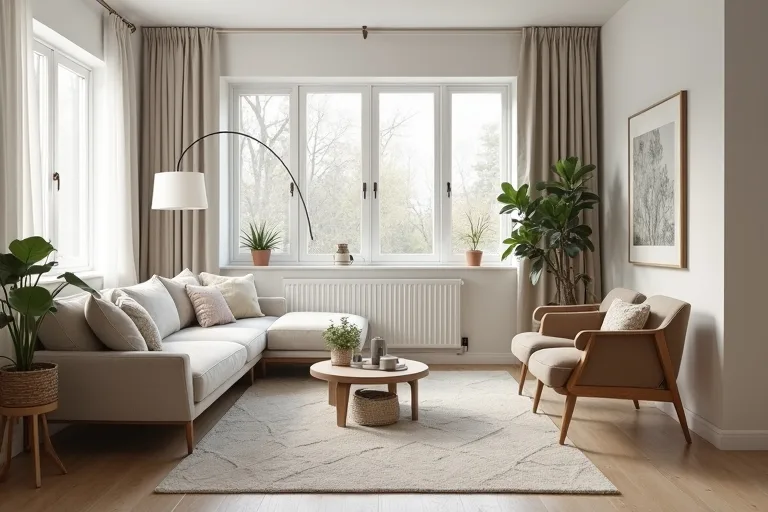
If the room has an awkward corner or a narrow footprint, resist the urge to fill every empty area. Negative space is useful in small rooms. It gives the eye a place to rest and helps the room feel intentional rather than crowded.
The real decision is not whether the room needs more styling. It is whether the current layout gives you clear movement, sensible furniture scale, and one obvious seating anchor. If those three things are wrong, decor will not solve the problem.
Choose the right rug and seating anchor
In a small living room, the rug does more than add softness. It helps define the seating area, keeps furniture from looking scattered, and gives the room a clear visual center. Without that anchor, compact rooms can feel like individual pieces floating around the floor.
A rug that is too small is one of the quickest ways to make a small room look even smaller. A larger rug often works better because it connects the sofa, coffee table, and chairs into one readable zone. That makes the room feel planned instead of pieced together.
For many compact living rooms, a neutral rug is the safest place to start because it supports the furniture without adding visual noise. If you are testing layout ideas, use the rug as the anchor and build around it rather than buying smaller accent pieces first.
- Choose the seating arrangement first.
- Decide where the rug should sit under the front legs of the main furniture.
- Confirm the size before you order so the room reads as one zone.
- Keep the pattern and color calm if the room already has a lot going on.
Use the rug size calculator after you have chosen your seating layout so you can confirm the right rug size before buying. If you want a simple, neutral option to compare against your plan, a 8×10 neutral living room area rug is often the kind of size people test when they want the seating area to feel grounded without shrinking the room.
Place furniture to protect walkways
Furniture placement in a small living room should make daily movement easier, not just look balanced from the doorway. The best arrangement is usually the one that lets you walk through the room naturally and sit down without shifting pieces every time you enter.
Start by deciding what the room needs to do most often. If it is a TV room, the sofa and screen should work together without forcing the seating too far into the path. If it is a conversation room, keep the main chairs close enough to feel connected but open enough to prevent the center from becoming a barrier.
A room layout planner is especially useful here because it lets you test options before you move heavy furniture. That matters in small rooms, where one awkward angle can throw off the entire flow.
If the room only works when you stand in one exact place, it is too tight. Good small-room planning usually means you can walk through the space, sit comfortably, and still see a clear center line or focal point.
When the room feels off, test the arrangement digitally first with the room layout planner. It is a simple way to compare a sofa-by-wall setup, a floating layout, or a corner-friendly arrangement before you commit.
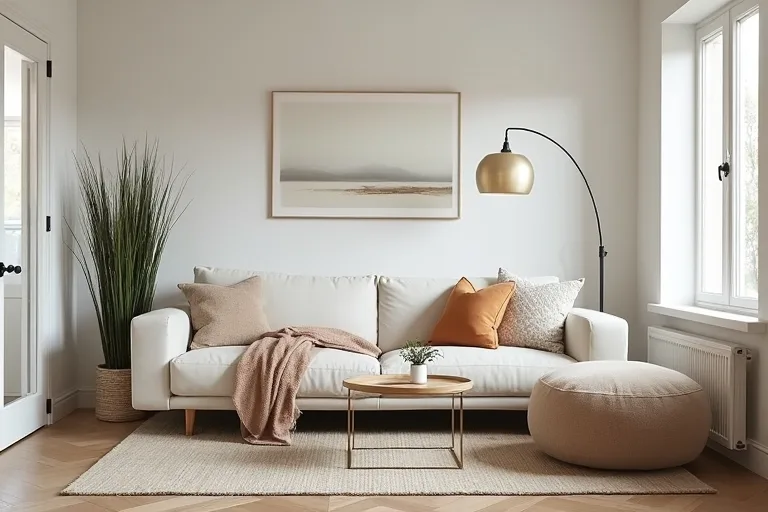
Use light, storage, and restraint to keep the room open
Once the layout is working, smaller choices start to matter more. Lighting can make a compact room feel less heavy by lifting dark corners and reducing the sense that the walls are pressing in. A floor lamp with an open shape, such as an arc lamp, is useful because it adds light without needing a large footprint.
Storage matters for the same reason. In a small room, every surface starts to compete for attention. If the coffee table, side tables, shelving, and ottomans all carry a lot of objects, the room will feel busier even when the furniture is well sized. Keep the number of visible items low and let a few pieces do the work.
Colors and textures should support that calm feel. Light neutrals, soft contrast, and a mix of simple materials usually make more sense than a high-contrast palette with lots of competing patterns. You do not need a blank room; you just need a room where the eye can travel without stopping every few inches.
If you are still refining the plan, a compact lamp like a modern arc floor lamp for living room can help open a corner without adding another bulky surface. For the full room update, some people also like keeping a digital plan beside the furniture layout, especially if they are tracking purchases and changes in one place, such as a Room Makeover Planner, Home Layout Budget Spreadsheet (Digital Download).
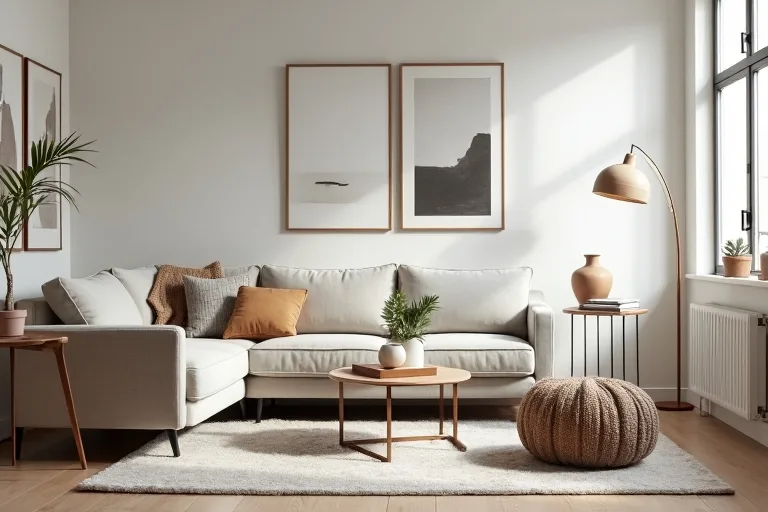
Best next step
If you already know where the sofa and main seating should go, confirm the rug size next so the room has one clear anchor. Then test the furniture placement in a layout planner before you buy or move anything major.
- Buying decor before the furniture arrangement is settled.
- Choosing a rug that is too small for the seating group.
- Blocking the natural walking path through the room.
- Using too many small accessories, which makes the room feel busy.
- Adding heavy lighting or dark finishes everywhere and then wondering why the room feels closed in.
A small living room feels bigger when the layout is clear, the rug fits the seating area, and the room is not overloaded with visual clutter. Start with flow, then confirm the anchor pieces, and only then add the finishing touches. If you want the simplest next step, use the rug size calculator after choosing your seating plan, then test the arrangement in the room layout planner.
Helpful next tools and planners
If you want to make the decision easier before you buy
These are the most useful next steps when a compact living room needs clearer planning. Start with sizing and layout, then use a simple planner if you want to keep your decisions in one place.
FAQ
What makes a small living room feel bigger?
Clear walkways, a sensible furniture scale, and one strong seating anchor usually matter more than adding more decor.
Is a large rug better in a small living room?
Often yes, as long as it fits the seating group properly. A rug that is too small can make the room feel chopped up.
Should furniture go against the wall in a small living room?
Not always. Sometimes floating furniture slightly away from the wall creates better flow and a more balanced room.
What is the easiest first change to make?
Start with the layout, then check rug size. Those two decisions usually create the biggest improvement fastest.
Three sensible next steps
Some links in this article may be affiliate links. Read more in the Affiliate Disclosure.