
A small patio gets easier to furnish when you stop thinking about pieces first and start with the space itself. The best choice is not the prettiest set on the screen; it is the one that leaves room to sit, walk, open the door, and live comfortably.
This checklist helps you make those decisions in the right order. Define the seating zone, measure what cannot move, and then choose furniture or storage that fits the real layout instead of fighting it.
Start by defining the main seating zone, then measure clearances before buying anything.
Start with how the patio will be used
Before you compare furniture sets, decide what the patio must do. A small space usually works best when it has one clear job. That might be morning coffee for two, a place for casual dinner, or a quiet reading corner with a side table.
Once the use is clear, the rest of the choices become simpler. A compact conversation set may make sense if the patio is mainly for sitting and talking. If you need a place to set drinks, a book, or a plant, a small table or storage bench may matter more than an extra chair.
Try to name the main seating zone in one sentence. For example: “This corner is for two chairs and a small table” or “This side of the patio needs one loveseat and storage.” That one sentence keeps shopping focused.
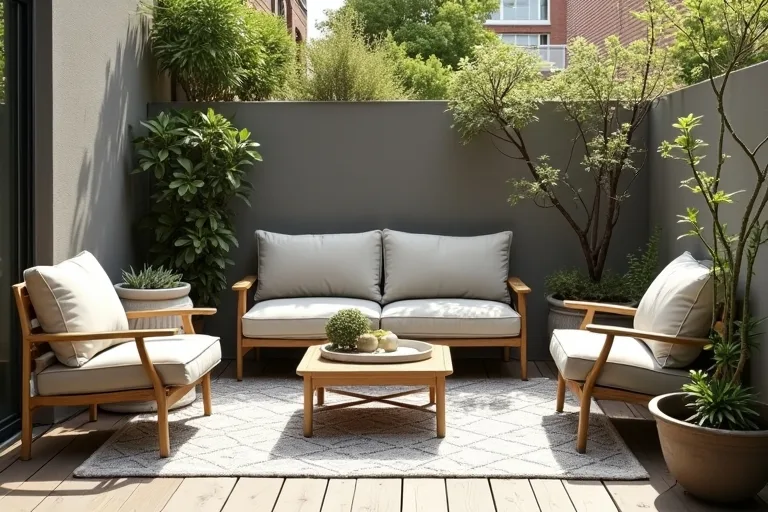
If you cannot describe the patio in one simple use, do not buy anything yet. The real decision is not which set looks best online; it is which layout leaves enough breathing room for the way you will actually use the space.
Measure the full space and note the fixed features
Measure the patio from wall to wall, fence to fence, or edge to edge, depending on the layout. Then mark the fixed features that will shape everything else: doors, steps, railings, drains, outdoor taps, posts, bins, and any built-in planter or grill area.
The important part is not just size. It is where movement happens. A patio can look large on paper and still feel tight if a door swings into the seating area or a path cuts through the middle of the space.
- Measure the usable floor area.
- Mark every fixed feature that cannot move.
- Note where people naturally enter and leave.
- Leave a clear path before placing furniture.
If you want a quicker way to test the layout before you shop, use the Styling Homes room layout planner to map the seating zone and see how the pieces work together.
Choose furniture, rug, and storage that fit the zone
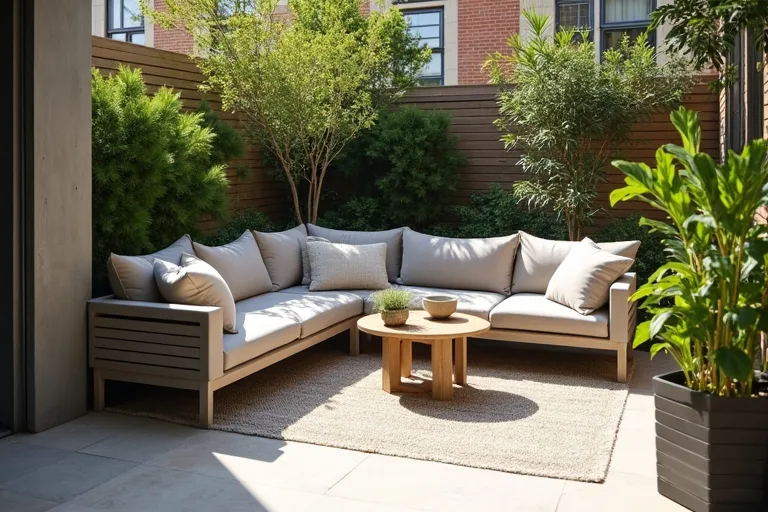
Once the usable area is clear, pick the furniture scale to match it. A small patio usually looks better with fewer pieces and cleaner movement than with a full set squeezed into every corner.
The item list should follow the layout, not the other way around. A 4 piece outdoor patio conversation set can work well if you have a defined sitting zone and enough room to move around it. A waterproof outdoor rug 5×7 can help anchor the zone, but only if it fits with visible space around the edges. Storage should be the smallest useful version possible: a bench, a box, or a side table with hidden storage if you truly need it.
Do not add storage just because there is room for it. First ask what needs to stay outside and what can live elsewhere. Many small patios need only a place for cushions, a lantern, or a watering can. In that case, a compact side table may be enough.
If you are still comparing layouts, a simple planning sheet can help. The Room Makeover Planner, Home Layout Budget Spreadsheet (Digital Download) is useful if you want to keep the seating zone, shopping list, and budget in one place.
Set the budget and make the final buy list
Before you click buy, decide what belongs in the first round and what can wait. That keeps the patio from turning into a collection of mismatched purchases. Start with the pieces that define function: seating, one table or surface, and only the storage you actually need.
A simple buy list might look like this:
- One seating group sized to the main zone.
- One rug if it improves the layout and does not crowd the edges.
- One storage piece only if you have a clear use for it.
- One or two extras, such as cushions or a plant, after the layout is settled.
Keep your budget tied to the plan. If the patio only needs a small seating corner, there is no benefit in spending on extra pieces that make the space harder to use.
Best next step
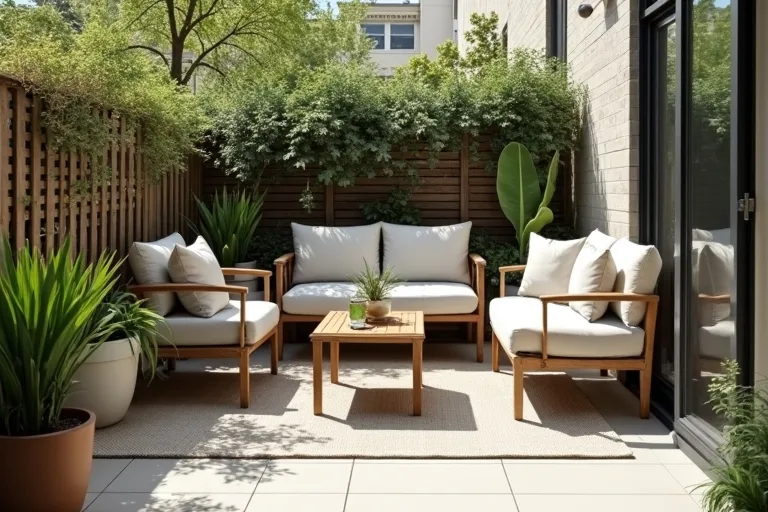
Map the patio before you shop so you can test the seating zone, clearances, and furniture scale with less guesswork. The room layout planner is the most practical place to start if you want a calmer buying decision.
- Buying a set before deciding the patio’s main use.
- Ignoring door swing, walkways, or fixed features.
- Choosing furniture that fills the space instead of framing it.
- Adding storage when a side table would do the job.
- Skipping the budget until after the shopping cart is full.
The smartest small patio plan is simple: define the seating zone first, measure the real clearances, and then buy only the pieces that support that layout. When the patio has one clear function, even a small footprint can feel calm, useful, and easy to live with.
Helpful next tools and planners
If you want to make the decision easier before you buy
These are the most useful follow-up options if you are still shaping the layout, comparing sizes, or keeping the budget under control.
FAQ
How do I know what size furniture belongs on a small patio?
Start with the usable floor area and the walking path. If the furniture blocks circulation or door swing, it is too large for the space even if it looks compact online.
Do I need a rug on a small patio?
Not always. A rug helps when it defines the seating zone clearly, but it should not crowd the edges or make the patio feel packed.
Should I buy storage first?
Only if you have a clear storage problem. If you mainly need a place to sit, a storage piece can wait until the seating plan is settled.
What is the safest first purchase for a small patio?
Usually the main seating piece or set, because it defines the whole layout. Once that is chosen, the rug and storage choices are easier to judge.
Three sensible next steps
Some links in this article may be affiliate links. Read more in the Affiliate Disclosure.