
A small bedroom can feel restful when the room plan is clear. The problem is usually not the size itself, but the mix of too much furniture, awkward circulation, and storage that spills into view.
The easiest way to improve it is to decide what the room needs to do first, then build around that. Once the layout is sensible, even a modest room can feel lighter and much easier to live with.
Focus on layout first, then add hidden storage and only the furniture you truly need. In a small bedroom, the best changes are usually the simplest ones: keep walking space clear, reduce visual clutter, and choose pieces that serve more than one purpose.
Start with layout, not shopping
The most useful small bedroom ideas begin with circulation. Before you buy anything, look at how the bed sits in the room and how you move around it each day. A room can hold a surprising amount if the main pathways stay open and the bed is placed with intention.
It helps to measure the room, the bed, and any existing wardrobe or dresser before making decisions. If you can open drawers, doors, and wardrobe fronts without bumping into the bed, you are already ahead. In a small room, that kind of clearance matters more than adding another decorative piece.
Start by identifying the fixed points: windows, radiators, built-ins, outlets, and the door swing. Then decide whether the bed should sit centered, offset, or against the most practical wall. A simple plan often feels better than trying to make the room symmetrical at all costs.
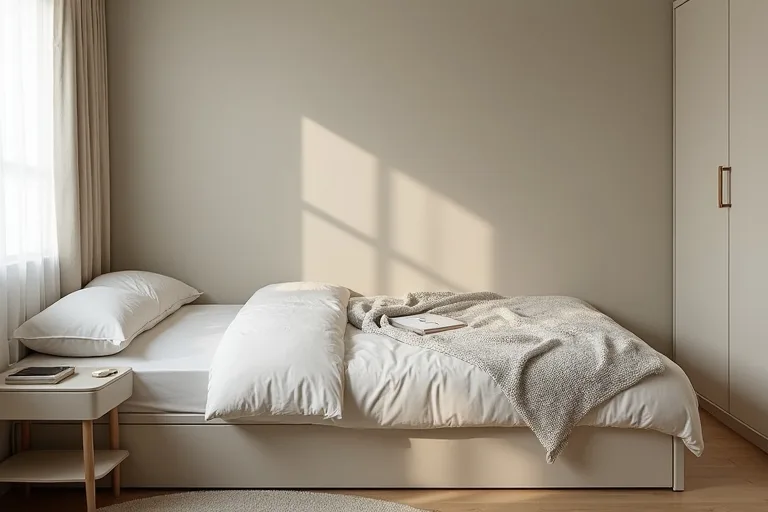
If you want a clearer way to map the room before moving furniture, use the Styling Homes Room Layout Planner. It is especially helpful when you are trying to compare a few possible arrangements before you commit.
The real decision is not whether the bedroom looks full or empty. It is whether the room supports everyday use without friction. If the bed, wardrobe, and bedside storage can all function without crowding the path through the room, the layout is doing its job.
Use hidden storage to clear visual clutter
In a small bedroom, hidden storage usually has more impact than adding another visible shelf or cabinet. The goal is not to store more for the sake of it. The goal is to keep everyday items close by without making the room feel busy.
Under-bed storage is often the easiest place to start because it uses space that would otherwise sit unused. Low-profile containers, wheeled boxes, or shallow bins can hold out-of-season bedding, spare linens, or items you do not need every day.
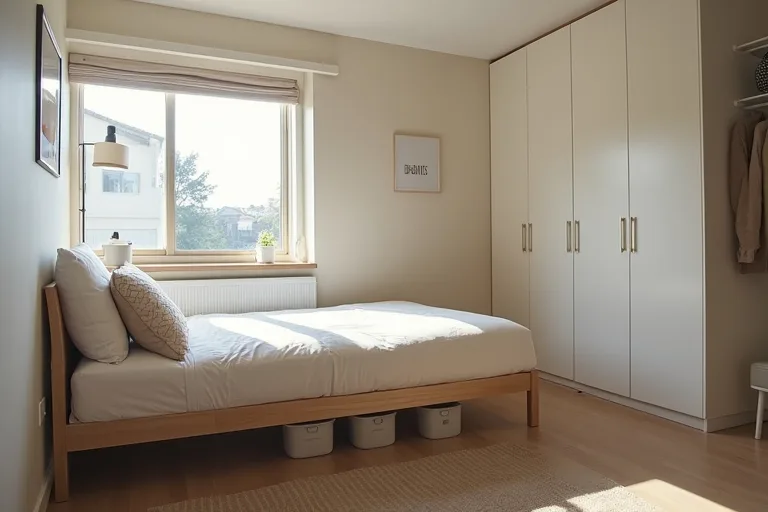
Other useful hidden storage ideas include:
- Nightstands with drawers instead of open shelves
- Storage beds with built-in lift or drawer space
- Wall-mounted lighting to free up surface space
- Closet organizers that divide shelves and hanging space more clearly
If you are looking for a practical place to start, the small spaces storage hub has more ideas that work well in compact rooms. For an easy shopping bridge, under bed storage containers with wheels can be a straightforward solution when the space under the bed is available. A pair of compact nightstands set of 2 bedroom may also help if you need matching storage on both sides of the bed without oversized furniture.
Choose furniture that earns its place
Small bedroom furniture should work hard. If a piece only looks nice but does not improve storage, lighting, or daily function, it may be taking up too much room. In a compact space, restraint usually gives a better result than trying to fit in every possible item.
Pick furniture with a clear job. A narrow nightstand can hold a lamp and essentials without pushing into the walking path. A dresser may be better than a bulky wardrobe if the room is low on width. A bench at the end of the bed only makes sense if it also stores items or helps with dressing.
When choosing between two pieces, ask which one gives you the cleaner floor plan. Open floor area matters because it gives the room a calmer feeling and makes cleaning easier. The same is true for visual height: lower, slimmer furniture usually reads as lighter than tall, heavy pieces.
If you are still planning the room from scratch, a simple budget and layout tracker can help you avoid buying the wrong size or too many items. The Room Makeover Planner, Home Layout Budget Spreadsheet (Digital Download) is useful if you want to compare layout choices and spending before ordering anything.
Avoid the choices that make the room feel tighter
The quickest way to make a small bedroom feel cramped is to fill it with too many separate pieces. A room does not need multiple small items competing for attention. It needs a few well-chosen pieces that leave breathing room around them.
Be careful with oversized headboards, deep wardrobes, and bulky bedside tables if the room is already tight. Heavy curtains, dark finishes everywhere, and extra decor on every surface can also make the room feel busier than it needs to be. That does not mean everything must be minimal; it means each item should justify the space it uses.
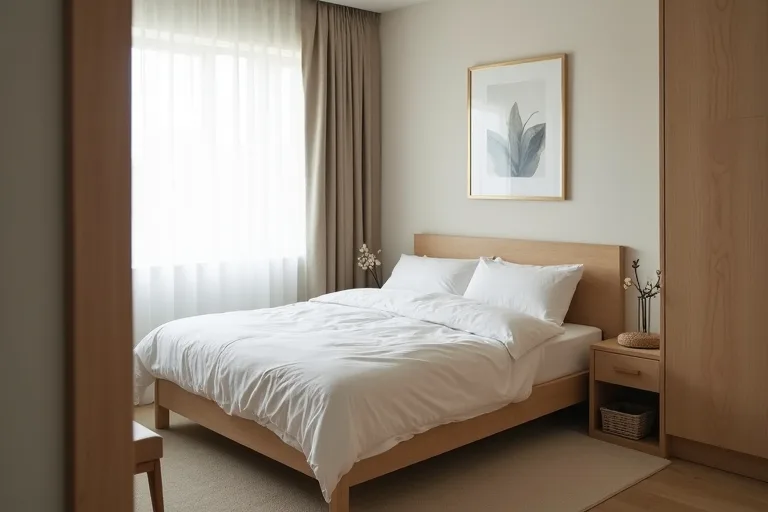
Light, calm styling works best when it supports the plan rather than fighting it. A small room often feels better with fewer decorative objects, one or two repeatable materials, and storage that is closed rather than exposed. The more clearly the room is organized, the easier it is to keep tidy.
For more room-planning guidance, return to the bedroom ideas hub. It is a useful next stop if you want to compare this guide with other bedroom layout and storage articles.
Best next step
If you want the room to feel calmer before you buy anything, start by planning the layout first. Then check the storage strategy and only after that decide which furniture actually deserves a place in the room.
- Buying furniture before measuring the room and checking circulation
- Using too many small pieces instead of a few functional ones
- Leaving storage visible when closed storage would calm the space
- Choosing oversized bedside tables that crowd the bed
- Adding decor before the bed, wardrobe, and walking path are sorted
The best small bedroom ideas are usually the least complicated ones. Get the layout right, keep the floor plan clear, and use hidden storage to reduce visual clutter. Once those basics are in place, the room feels larger without needing a full makeover.
Helpful next tools and planners
If you want to make the decision easier before you buy
These options are most useful when you are planning a small bedroom and want a simple way to compare storage, furniture, and budget choices before spending.
FAQ
How do I make a small bedroom feel bigger without renovating?
Start by clearing the layout, reducing furniture, and using closed storage. A room usually feels bigger when the walking path is open and surfaces are less cluttered.
What is the best furniture for a small bedroom?
Furniture that serves more than one purpose tends to work best, such as a bed with storage, a narrow nightstand, or a dresser that fits the wall properly.
Should I choose open or closed storage in a small bedroom?
Closed storage usually works better if you want the room to feel calmer. Open storage can still work, but only if it stays very tidy.
What should I buy first for a small bedroom?
Buy based on the plan, not the other way around. Measure the room first, decide where the bed should go, and then choose storage and bedside pieces that fit that layout.
Three sensible next steps
Some links in this article may be affiliate links. Read more in the Affiliate Disclosure.