
A balcony can feel finished without being full. The difference usually comes from making a few clear decisions in the right order: what the space is for, how people move through it, and which layers actually help the room feel usable.
If you start with furniture size and layout first, the styling becomes much easier. That is usually the point where a small balcony stops feeling random and starts feeling intentional.
Use a few defined layers—seating, lighting, and texture—while keeping clear floor space and one simple focal point.
Start with the balcony’s main use
The best balcony decorating ideas begin with a practical choice: do you want the space to work for sitting, dining, reading, or a mix of all three? That one decision shapes everything that follows, from the furniture footprint to the amount of styling you can comfortably add.
If the balcony is mainly for meals or coffee, a compact dining setup usually gives the space the strongest structure. If it is more of a quiet retreat, one chair with a small side table can be enough. Either way, the goal is not to fill the balcony. It is to give it a clear purpose so the rest of the styling has a reason to be there.
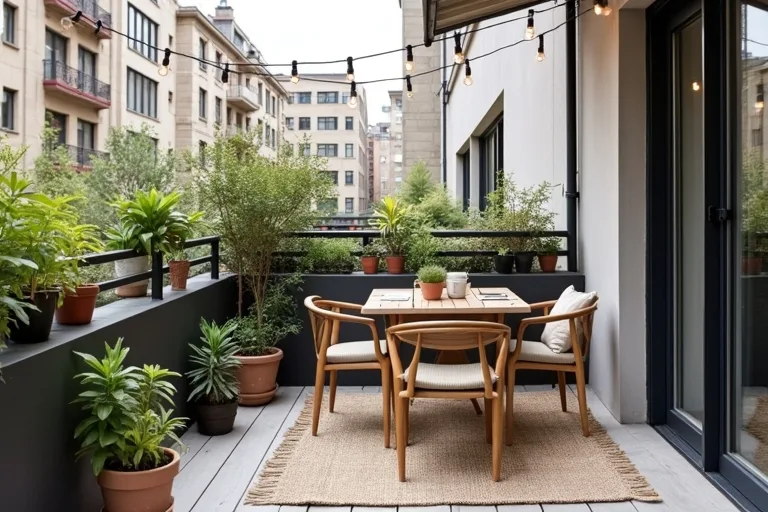
If you cannot explain the balcony’s main job in one sentence, it is usually too early to shop. Decide on the function first, then choose furniture that supports it rather than competing with it.
Choose one layout that keeps movement easy
On a small balcony, the layout matters more than the number of pieces. A layered space still needs a clear path, because a balcony that is hard to cross will never feel relaxing, no matter how carefully it is styled.
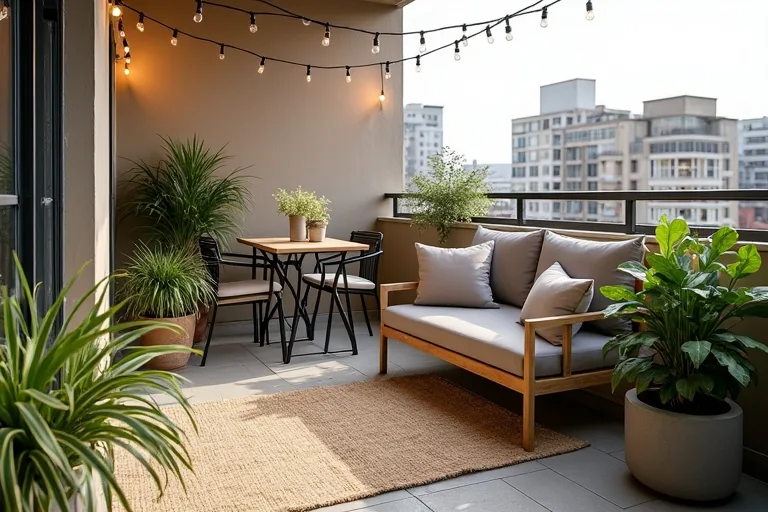
In most cases, one anchored arrangement works better than several loose objects. Place the largest piece first, then see what space remains for movement and smaller accents. If the balcony is narrow, keep furniture on one side and leave the walking line open. If it is deeper, a small dining zone or a pair of chairs can sit comfortably without blocking the entrance.
- Place the main seating or dining piece first.
- Check whether the door can open fully and the walkway still feels easy.
- Add only one secondary surface, such as a small table or plant stand.
- Stop when the room feels balanced, not when every corner is occupied.
Layer with the few elements that do the most work
Once the layout is settled, layering becomes a matter of restraint. You do not need many accessories to make a balcony feel complete. You need a few elements that add comfort, texture, and height without breaking up the space.
A rug can quietly define the seating area. Cushions can soften harder furniture lines. Two planters can add shape and make the balcony feel more lived in. If you want a warmer finish, use outdoor string lights overhead so the eye moves upward as well as across the floor. That vertical layer helps a small balcony feel more dimensional without making it busier.
A compact 5 piece outdoor dining set patio can work well here because it gives you one clear anchor instead of several mismatched pieces. Add it only if the table size and chair spacing still leave room to move comfortably.
Finish with a calm styling check
Before you decide the balcony is done, step back and check whether the layers are supporting the room or competing with it. A good balcony should feel easy to use first and styled second.
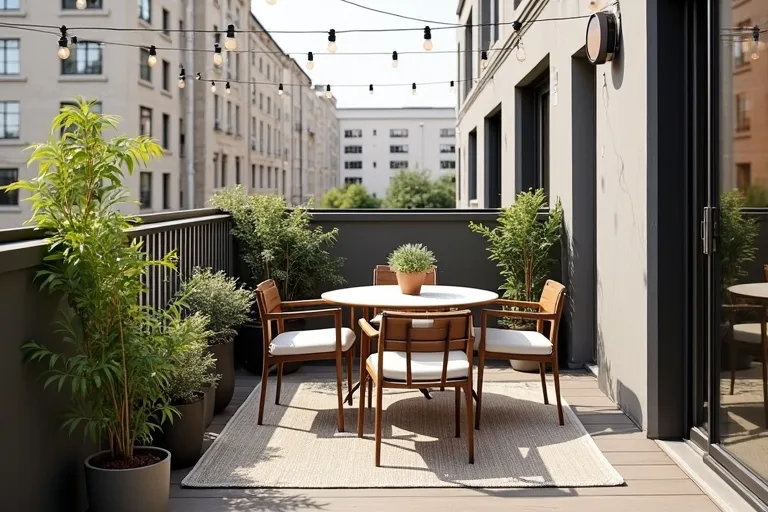
Look for repetition in the palette. Neutral cushions, a simple rug, and a small number of plants usually create more calm than a mix of many bright accents. Keep decorative objects to a minimum. If you add one lantern, tray, or small vase, it should have a purpose and a place, not just take up space.
Warm outdoor string lights waterproof are often the easiest finishing layer because they add height and softness without using floor area. They also help the balcony feel usable later in the day, which matters more than adding another object on the table.
Best next step
If you are still deciding what will fit, map the balcony first and test the spacing before you buy. The Room Layout Planner is the most useful place to start when you want to compare furniture placement, keep walking space clear, and avoid crowding a small outdoor area.
- Choosing furniture before deciding how the balcony will be used.
- Adding too many small accessories instead of one or two useful layers.
- Blocking the walking path with chairs, planters, or side tables.
- Using several competing colors, which makes a small space feel busier.
- Stopping at decor details before checking the actual layout.
The calmest balcony decorating ideas are the ones that start with function, protect open space, and add only a few layers that help the room feel finished. A clear layout, one strong anchor piece, soft texture, and simple lighting are usually enough to make a balcony feel intentional without looking crowded.
Helpful next tools and planners
If you want to make the decision easier before you buy
A few planning tools can help you avoid guesswork, especially when you are choosing between compact furniture, a small dining setup, or a better balcony layout.
FAQ
How do I make a small balcony look layered?
Use a clear base plan first, then add a rug, soft seating, and one source of overhead or vertical light. That gives the space depth without adding clutter.
What should I buy first for balcony decorating?
Start with the main furniture piece that supports the balcony’s actual use. Once that is set, it is easier to choose the rest of the styling.
How many decor items are enough on a balcony?
Usually fewer than you think. A useful rule is to keep one anchor piece, one or two texture layers, and a small number of accessories that do not block movement.
What is the easiest way to make a balcony feel finished?
Repeat a calm color palette and add warm lighting. That combination tends to make even a simple balcony feel intentional and comfortable.
Three sensible next steps
Some links in this article may be affiliate links. Read more in the Affiliate Disclosure.