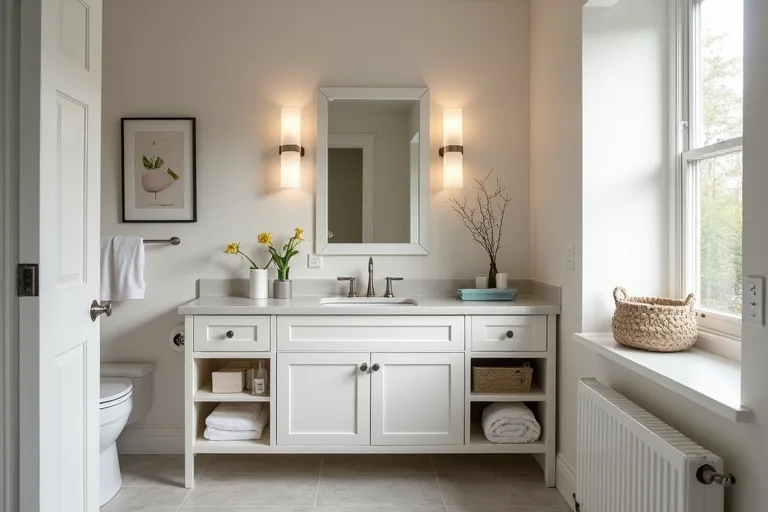
A bathroom vanity can look perfectly fine in a store and still be frustrating at home. If it takes too much floor space, crowds the door swing, or leaves nowhere to set down a toothbrush, the room will feel busy before the day even starts.
The best bathroom vanity ideas are not really about decoration first. They are about proportion, storage, and how the sink area works when life is moving quickly. When those pieces line up, the whole room feels calmer and easier to use.
Choose a vanity that fits the room size, adds useful storage, and leaves enough clear space to move comfortably. If you want the vanity area to feel more polished, focus on alignment, clean visual lines, and a mirror, faucet, and lighting setup that work together rather than competing for attention.
Start with the room size, not the style
The best vanity style depends on how much space the bathroom really has. A floating vanity can make a small room feel lighter because more floor stays visible. A compact single-sink vanity usually works best when the room needs one strong storage zone without blocking circulation. In a larger bathroom, a double-sink vanity may make sense if two people use the room at the same time and there is enough width for both the sink areas and the surrounding counter.
Built-in storage can help, but it should be chosen carefully. Deep drawers, under-sink organizers, and closed cabinets are useful when the bathroom holds more than daily essentials. The goal is not to add the most storage possible. It is to add storage that matches what the room actually needs, without making the vanity feel oversized.
For a broader planning view, it helps to keep the bathroom layout in mind while you compare vanity options. The bathroom ideas hub is a useful place to step back and look at the room as a whole before narrowing down the vanity.
Before you choose a vanity, ask one simple question: does this piece solve a daily problem in the room, or does it only change the look? If it improves storage, keeps the counter clearer, and still leaves an easy path through the bathroom, it is probably the right scale. If it makes the room feel tighter, the size is working against you.
Choose the mirror, faucet, and lighting as one system
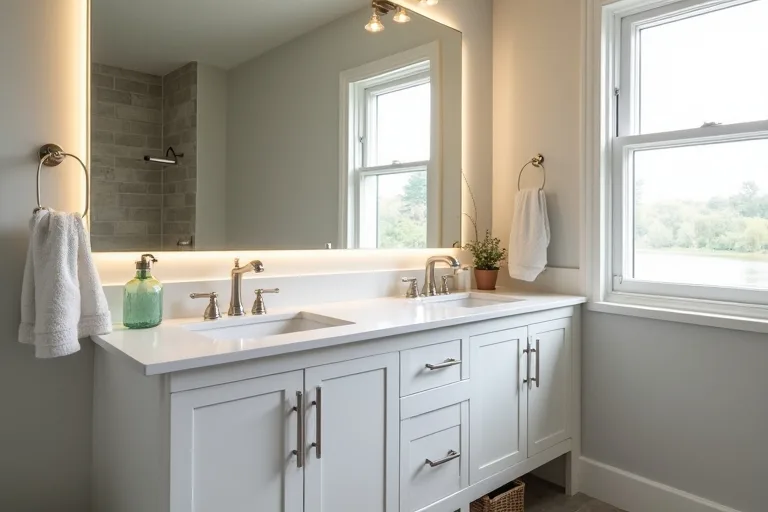
A vanity rarely feels polished because of the cabinet alone. It usually feels finished when the mirror, faucet, and light are aligned with the sink and with each other. A lighted vanity mirror for bathroom counter use can help in bathrooms where natural light is limited or where the vanity area needs more even light for getting ready. It is a practical choice when you want the mirror to do more than simply reflect the room.
The faucet matters too. A brushed nickel bathroom faucet tends to blend easily with many finishes and can help the sink area feel calmer than a mix of competing metals. That does not mean every bathroom needs brushed nickel, but it is a steady choice if you want the vanity zone to look consistent without becoming visually loud.
If the room has been feeling busy, the quickest improvement often comes from reducing the number of competing details at the sink. One mirror style, one faucet finish, and lighting that reaches the face evenly can do more for the room than extra decor ever will.
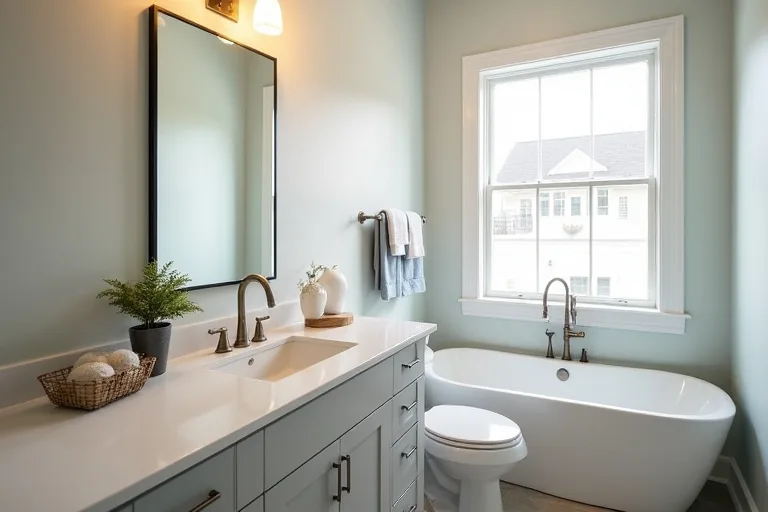
- Check that the mirror width suits the vanity and does not look too small or too wide.
- Make sure the faucet height and reach work with the sink basin.
- Look for lighting that reduces shadows at the face and countertop.
- Keep finishes consistent so the sink area feels intentional, not patched together.
Use storage and finish choices to quiet the countertop
Clutter usually starts when the vanity does not have a clear job. If every item has to live on the counter, the whole bathroom starts to feel smaller. Drawer dividers, pull-out trays, and simple baskets can reduce that problem without adding visual noise. Closed storage is especially helpful in family bathrooms, where the sink area often needs to hold more than one person’s routine.
Finish and color also shape how calm the room feels. Softer neutrals, matte or lightly textured surfaces, and a limited mix of materials tend to read as more settled than a room filled with sharp contrasts. That does not mean the vanity has to disappear. It just means the cabinet, counter, and fixtures should support one another instead of fighting for attention.
If budget is part of the decision, it is worth looking at the vanity in the context of the whole remodel rather than as a single isolated purchase. The bathroom remodel budgeting guide can help you confirm whether a better vanity, mirror, or storage upgrade belongs in the main plan now or in a later phase.
Do a few sizing checks before you buy
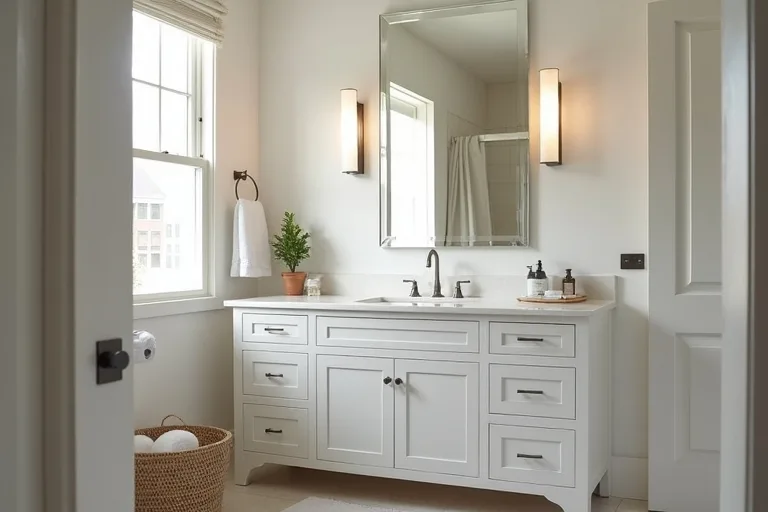
A vanity can be attractive and still fail the room if it blocks movement or feels too large for the wall. Before you order, check the door swing, nearby clearances, and where the sink will land relative to the wall and any existing plumbing. If the vanity is being replaced, make sure the new piece will not create a tight squeeze around the toilet, shower entry, or main walkway.
It also helps to think about daily use. If two people use the sink area at the same time, a little extra width can prevent constant crowding. If the room is small, a slimmer vanity with smart storage may feel better than forcing in a larger one. The best choice is usually the one that leaves the room easy to move through while still giving the sink area enough function.
For readers who like to map out room decisions before buying, a simple planning tool can make the next step easier. The room layout planner is a practical way to test whether the vanity size, clearances, and circulation all work together before money is spent.
Best next step
If you are still deciding on size, layout, and cost, start with the planning side before you shop. A vanity choice is easier when you already know how much room you have, what storage you actually need, and how the update fits your budget.
- Buying a vanity for storage alone and ignoring how much floor space it removes.
- Choosing a mirror that is too small, too decorative, or out of proportion with the cabinet.
- Mixing finishes at the sink until the vanity area feels visually scattered.
- Skipping clearance checks around the door, toilet, or shower entry.
- Adding countertop storage that solves clutter but makes the room feel crowded.
The most useful bathroom vanity ideas are the ones that make the room easier to live with every day. Keep the vanity proportionate to the room, choose a mirror and faucet that work as a set, and favor storage that reduces clutter instead of adding bulk. When the sink area is planned with size, flow, and budget in mind, the bathroom feels more polished without feeling overdesigned.
Helpful next tools and planners
If you want to make the decision easier before you buy
These are simple options for checking the vanity zone from more than one angle: layout, budget, and the smaller details that affect daily use.
FAQ
What size vanity works best in a small bathroom?
A smaller vanity usually works best if it leaves enough room to open the door, move past the sink, and keep the bathroom from feeling crowded. A compact single-sink or floating vanity is often easier to live with than a larger cabinet that takes over the wall.
Is a floating vanity practical for a family bathroom?
Yes, if you need the room to feel lighter and easier to clean. Just make sure it still provides enough closed storage for the items the bathroom actually holds each day.
Should the faucet match the mirror or the cabinet?
It does not need to match perfectly, but it should feel coordinated. A consistent finish choice usually makes the vanity area look more settled and easier to maintain.
What should I check before ordering a new vanity?
Measure the wall space, confirm clearances around doors and fixtures, check the sink placement, and think through storage needs. If any of those pieces feel uncertain, use a planning tool before you buy.
Three sensible next steps
Some links in this article may be affiliate links. Read more in the Affiliate Disclosure.