
A small living room gets cluttered quickly because storage, seating, and walk space all compete for the same few square feet. The hard part is not finding something to buy. It is deciding whether a simple storage fix will solve the problem or whether the room needs a smarter upgrade.
If you choose too quickly, you can end up with furniture that blocks circulation, holds less than you hoped, or makes the room feel heavier. A calmer approach is to start with what the room actually needs to store, then check how much floor space you can afford to give up.
Start with a cube organizer and bins; upgrade only if the layout still feels cramped.
What budget storage can solve first
For many small living rooms, the first problem is not a lack of style. It is a lack of a clear landing spot for the things that tend to spread across the room: throws, board games, chargers, books, toys, or extra media items. A budget storage piece can bring immediate order without forcing a bigger layout change.
An 8 cube storage organizer is useful because it gives you a simple structure. You can sort by category, keep visible clutter contained, and decide which items deserve open access versus closed storage. If you pair it with a fabric storage bins set for cube organizer, the room often looks calmer right away, even if you have not changed any other furniture.
This is usually the best starting point when the room already has workable seating and the main issue is surface clutter. It is also a low-risk way to learn what you actually need to store before you commit to something larger or more built in.
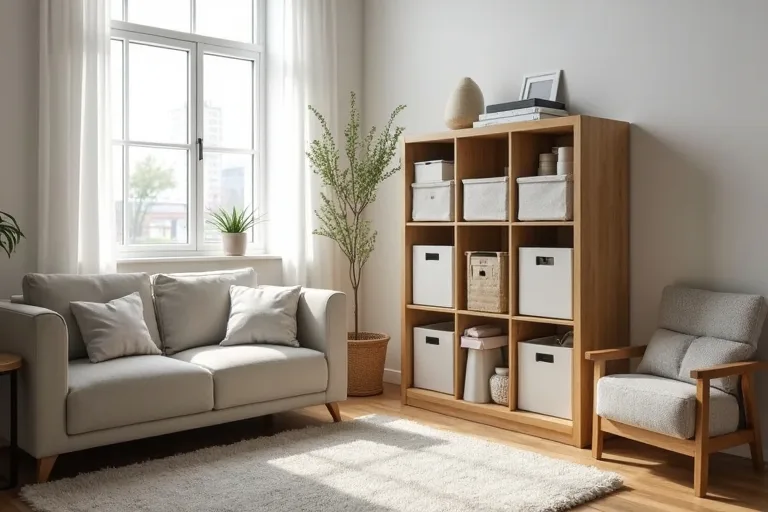
If the room feels messy but still moves well, start with storage that organizes what you own. If the room feels tight even when tidy, the issue is probably layout, not storage alone.
When an 8-cube organizer is enough
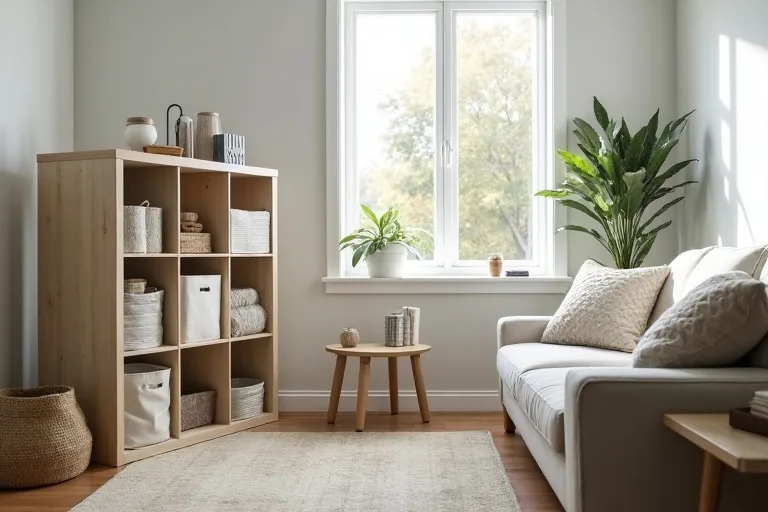
A cube organizer works best when the room needs flexible storage more than a custom solution. It suits renters, first apartments, family rooms with changing needs, and small living rooms that need one tidy zone without a full redesign.
Use a cube unit when:
- You need storage for mixed items that are easy to sort into categories.
- You want a piece that can sit against one wall without taking over the room.
- You are not ready to commit to built-ins or larger furniture.
- You want to use bins, baskets, or boxes to make the storage look calmer.
The advantage is flexibility. You can change how you use it as your needs change. One side can hold closed bins for visual calm, while another cube can stay open for books or items you reach for often. That makes it more forgiving than furniture that only works for one specific purpose.
For readers comparing storage ideas with broader room styling, the living room ideas hub is a useful place to step back and look at the room as a whole before buying more pieces.
When a bigger space-saving upgrade is worth it
A bigger upgrade makes sense when the room has a structural problem that small storage cannot solve. That usually means the sofa is too large, the path through the room is awkward, or the current arrangement forces storage to sit in the wrong place.
In that situation, buying another organizer may only hide the issue. The room may need furniture that does more than store things. It may need a piece that also defines the layout, creates a better circulation path, or replaces a bulky item that is taking up too much visual and physical space.
Before you move into a larger upgrade, check whether your current setup is doing any of these things:
- Blocking a natural walkway.
- Making the seating area feel crowded.
- Forcing storage into corners that are hard to use.
- Leaving no clear wall for the main storage piece.
If those problems are present, the answer is usually not more bins. It is a better plan. That is where a layout tool becomes more valuable than another purchase.
The room layout planner can help you test whether a larger storage upgrade will actually improve the room or just shift the clutter around. If you prefer a broader planning path first, the small spaces & storage hub is a good starting point.
How to decide before you spend money
The simplest decision rule is this: if you need organization, choose budget storage; if you need better flow, test the layout before you buy anything bigger. That one distinction saves a lot of trial and error.
A good planning sequence looks like this:
- List what the living room needs to store.
- Check which items can be hidden in bins and which need open access.
- Measure the wall and floor space available for storage.
- Test the placement of the sofa, organizer, and walking path.
- Decide whether a cube unit is enough or whether the room needs a stronger layout change.
If you want something more structured, the Small Space Furniture Planner, Room Layout Spreadsheet (Digital Download) is a practical next step. It is especially useful when you are trying to compare one affordable storage solution against a larger upgrade and want to see which option leaves the room easier to live in.
Best next step
Before you buy another organizer or move into a larger storage upgrade, test the room on paper first. A layout check can show whether the problem is storage capacity, circulation, or furniture size.
- Buying storage before checking how much walking space the room really has.
- Choosing a unit that fits the wall but makes the seating area feel tighter.
- Using open storage for too many visual items, which makes the room feel busier.
- Assuming a bigger upgrade will fix a layout problem that needs planning first.
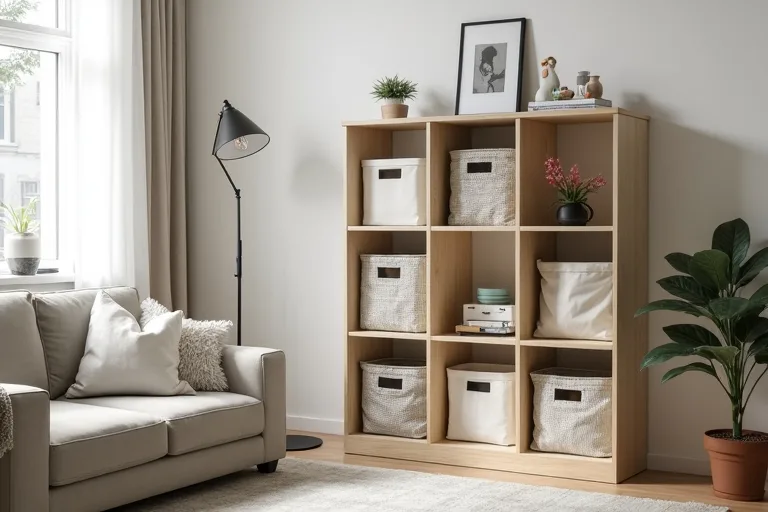
For most small living rooms, start with an 8 cube storage organizer and fabric bins. It is the easiest way to control clutter without overcommitting. If the room still feels awkward after that, the real issue is likely layout, not storage, and that is the point where a room planner or larger space-saving upgrade becomes worth considering.
Helpful next tools and planners
If you want to make the decision easier before you buy
These options fit the planning process that matters most here: test the layout, then choose the storage solution that actually suits the room.
FAQ
Is a cube organizer good for a small living room?
Yes, if the room needs straightforward storage and you want something flexible enough to fit against one wall. It is especially useful when clutter is the problem, not the overall layout.
Should I use open cubes or bins?
Use bins for items that look messy or are used less often, and keep open cubes for books or objects you want easy access to. A mix of both usually works best.
When should I skip budget storage and upgrade instead?
Skip the budget fix if the room already feels cramped, the walkway is awkward, or the furniture arrangement is causing the problem. In that case, layout needs to be improved first.
What is the best first step before buying storage?
Map the room layout and check circulation. Once you know how much space the furniture can really take, it is much easier to choose the right storage size.
Three sensible next steps
Some links in this article may be affiliate links. Read more in the Affiliate Disclosure.