
Small living room storage is easier to get right when you decide what the room needs to hold before you start shopping. Without that step, it is easy to buy furniture that looks fine online and then blocks walking space, hides awkward clutter, or simply does not store enough.
This checklist keeps the decision practical. It helps you measure the room, sort what needs to be stored, and choose a storage piece that supports the layout instead of working against it. If you want a clearer room plan before buying, the room layout planner is the best place to start.
Measure first, define what must be stored, then choose storage that fits the room flow. In a small living room, the best storage is usually the piece that solves the real clutter problem without making the room harder to use.
Start with what the room has to hold
The first step is not choosing a cabinet, basket, or shelf. It is naming the storage job. A small living room often needs to hold a mix of everyday items: remotes, blankets, books, chargers, toys, media equipment, and the things that otherwise drift onto the coffee table.
Make a short list of what must stay in the room and what can move elsewhere. If an item is used daily, it needs easy access. If it is used occasionally, it can go into deeper or lower storage. That distinction matters more than the style of the furniture you buy.
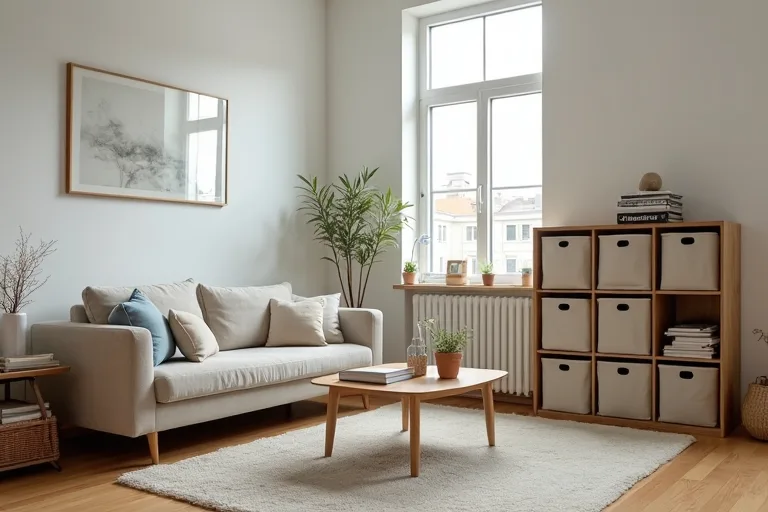
Once you know the load, the room becomes easier to plan. A cube storage organizer can work well when you need a simple way to group mixed items and keep them off open surfaces. It is especially useful when you want storage that can grow with the room instead of forcing a full built-in solution.
If you cannot clearly say what the storage piece will hold, wait before buying it. A storage purchase should answer a specific need, not just fill an empty wall.
Measure the space before you look at furniture
In a small room, a piece can seem compact in a product photo and still feel oversized once it arrives. That is why the next step is measuring floor space, wall space, and the clear path people actually use.
Check three things:
- How much wall width is available once doors, windows, radiators, and outlets are accounted for.
- How far any storage piece can project into the room without crowding circulation.
- Whether there is enough room to open drawers, lift lids, or pull out bins comfortably.
If you are comparing more than one layout option, the Small Space Furniture Planner, Room Layout Spreadsheet can help you map the room before you commit. It is especially helpful when you are deciding between a storage piece along the wall and another arrangement that keeps the center of the room clearer.
Choose storage that matches how you use the room
The best storage choice depends on access, not just capacity. A closed unit hides visual clutter, while open storage makes the room feel lighter and easier to scan. Most small living rooms need a mix of both.
Think through how often you reach for each category. Then match the storage type to the job.
- Use open cubes or shelves for books, baskets, and items you want close at hand.
- Use bins or fabric inserts for loose items that would otherwise look messy.
- Use closed storage for objects that are useful but not attractive to leave out.
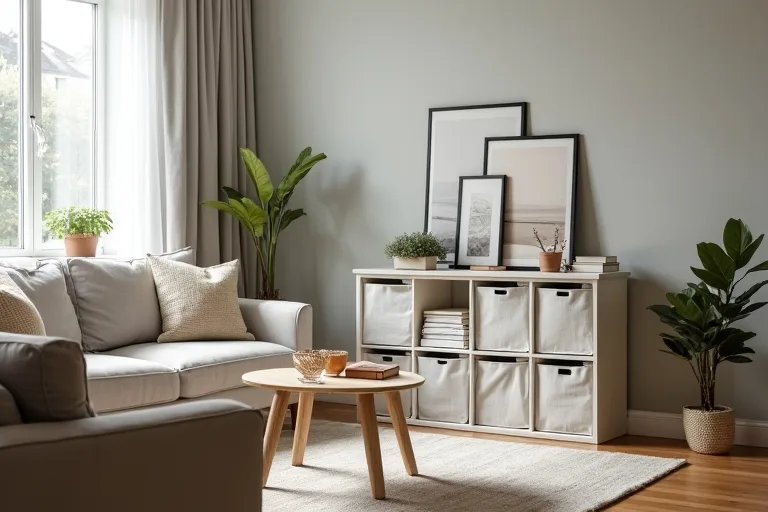
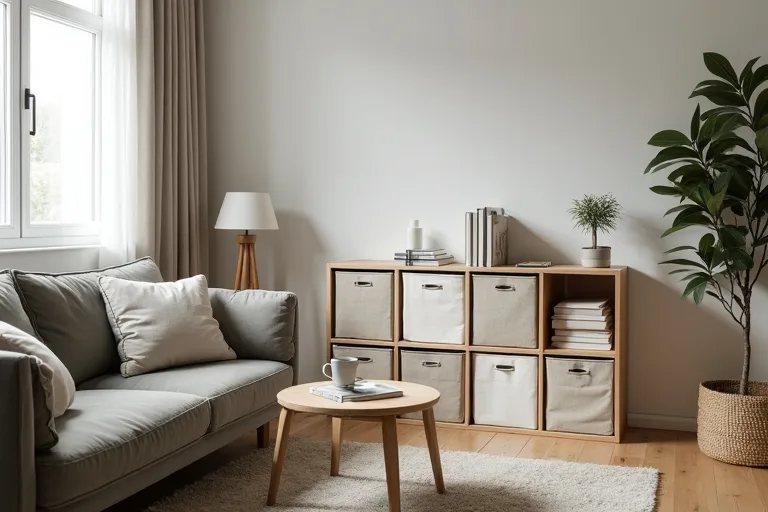
A simple 8 cube storage organizer can be a useful middle-ground when you need flexible storage without a large footprint. If the cubes are not enough on their own, a fabric storage bins set for cube organizer can make the system easier to live with day to day by keeping smaller items grouped.
Make the buy-or-wait decision
By this point, the decision should be much simpler. Buy when the storage piece solves a clear problem, fits the room, and leaves the layout feeling easy to move through. Wait when the room still feels unclear, the measurements are incomplete, or the furniture would only create temporary order.
It is also worth thinking about whether the room needs one flexible solution rather than several small purchases. One well-sized storage piece often works better than multiple smaller items that add visual clutter. If you need a quicker way to test that choice, a room layout planner is usually more useful than another shopping tab.
The goal is not to add more storage everywhere. It is to keep the room functional enough that it stays calm after real life moves back in.
Best next step
Before you buy anything, map the room and test your storage idea against the actual clearances. That will tell you whether a cube unit, a different piece, or no purchase at all is the right move.
- Buying storage before deciding what needs to be stored.
- Measuring the wall but forgetting to check walking space and door swing.
- Choosing a piece that looks neat but does not fit the room’s real traffic pattern.
- Adding too many small containers instead of one storage system that does the job well.
- Using open storage for items that need visual hiding, then wondering why the room still feels busy.
For a small living room, storage should follow the plan, not replace it. Measure first, define what the room actually needs to hold, and choose one flexible piece that fits the layout. If the storage solution still feels uncertain, wait and map the room properly before spending money.
Helpful next tools and planners
If you want to make the decision easier before you buy
A good next step is to test the layout, then choose the storage system that fits it. These links are most useful when you are still deciding what the room can realistically hold.
FAQ
How do I know if I need more storage or better editing?
If the room already has enough storage but still feels crowded, the issue is usually what is being kept, not how much furniture you own.
Is open storage a bad idea in a small living room?
No. Open storage works well for books, baskets, and regularly used items. It becomes a problem when it is asked to hide too many loose objects.
What if I only have space for one storage piece?
Choose the piece that handles the most common clutter first. One well-placed unit is usually more useful than several small items that split the job.
Should I buy bins before I buy the furniture?
Not usually. It is easier to buy bins after you know the dimensions and shelf layout of the storage piece.
Three sensible next steps
Some links in this article may be affiliate links. Read more in the Affiliate Disclosure.