
Small bedrooms get expensive when you start with shopping instead of planning. A bed, a pair of nightstands, and a storage solution can look sensible in a product photo and still leave you with no walking space at home.
This checklist keeps the decision simple. Measure the room, check how you need to move through it, then decide what has to be stored there before you choose furniture or storage that fits without adding clutter.
Measure first, plan storage second, and buy only pieces that fit the room’s layout and circulation. In a small bedroom, the best choice is usually the one that solves more than one problem without making the room feel crowded.
Start with the room’s exact measurements
Before you look at bed frames, nightstands, or baskets, write down the room’s usable dimensions. That means wall-to-wall measurements, but also the spots that affect layout: door swing, window placement, radiator cover, outlet locations, and any built-in features that change where furniture can sit.
If you skip this step, it becomes very easy to buy storage that blocks a socket or a bedside table that makes the room feel tighter than it should. A small bedroom does not need more things guessed into place. It needs a simple plan that respects the shape of the room.
Keep your notes focused on what will affect placement, not on decorating choices. That gives you a clear starting point for deciding which furniture sizes are realistic and which are not.
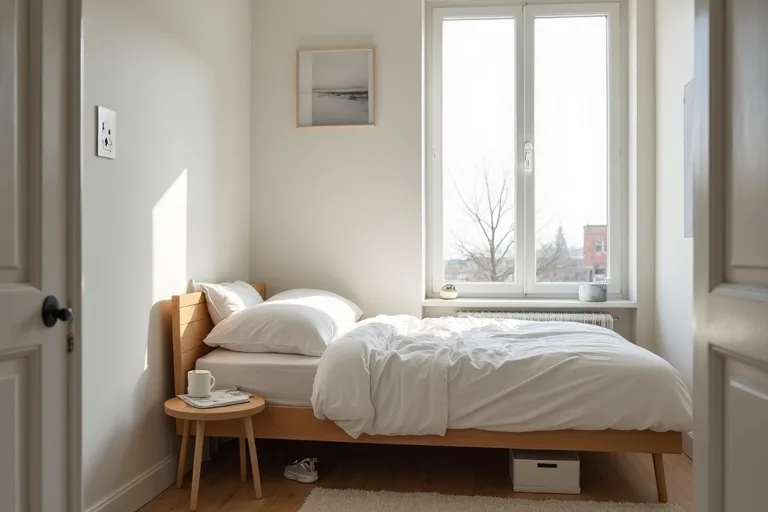
If a piece only fits when you ignore a door, outlet, or walking path, it is not a good fit for the room. The right choice should work with the layout, not around it.
Check bed size, clearance, and circulation
The bed usually sets the tone for everything else in a small bedroom. If it is too wide, the room will feel boxed in no matter how carefully you style the rest of it. If it is too small, you may gain floor space but lose comfort and balance.
Think about how you use the room, then size the bed around that reality. A room that needs storage, a bedside surface, and a clear walkway may work better with a simpler bed frame than with a heavy one that takes up extra visual weight.
- Confirm how much space the bed leaves on each side.
- Check whether you can still open drawers, doors, and windows fully.
- Make sure you can walk through the room without turning sideways.
- Decide whether one nightstand is enough or whether a matched pair is still practical.
Sometimes the best answer is not a larger bed or more furniture. It is choosing a piece that keeps the room calm while still doing the job you need it to do.
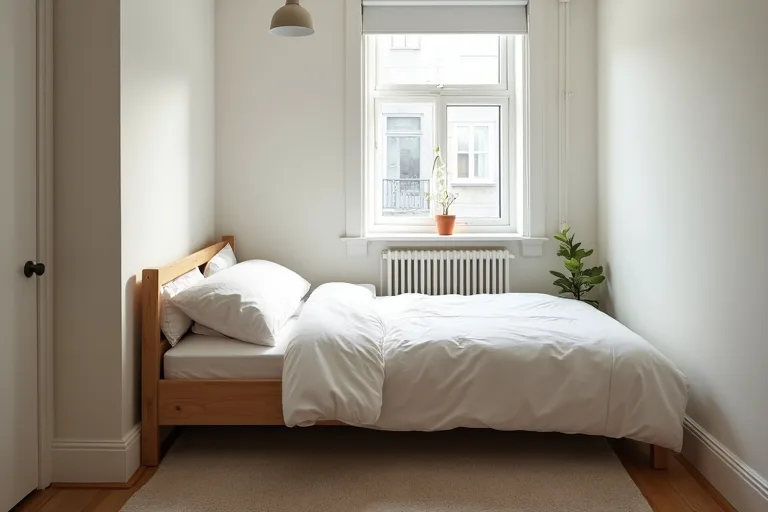
Plan storage that stays visually quiet
Hidden storage usually works better than open storage in a small bedroom because it reduces visual clutter. If the room already feels full, baskets, open shelves, and oversized storage pieces can make it feel busier without solving the real problem.
Start with what truly needs to stay in the bedroom: bedding, seasonal clothing, reading items, chargers, or a few everyday accessories. Then decide whether that storage belongs under the bed, inside the wardrobe, in bedside furniture, or in another room entirely. The goal is not to store everything in one place. The goal is to keep the bedroom easy to use and easy to see.
For many rooms, under-bed storage is one of the simplest ways to reclaim space without adding visual bulk. A compact set of nightstands with drawers can also reduce surface clutter better than an open side table.
Helpful next step: if you are trying to make hidden storage work in a small layout, see Small Spaces Storage for more planning ideas.
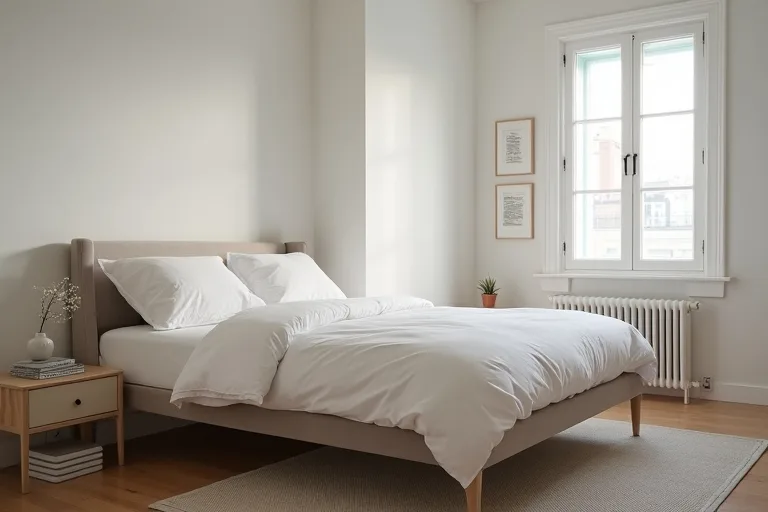
Choose furniture that fits the room’s real purpose
Once the measurements and storage needs are clear, choose furniture based on function, not on filling empty space. A small bedroom often works best with fewer pieces that each earn their place.
That might mean a bed with storage underneath, one compact bedside table instead of a large pair, or a layout that gives priority to clear floor space over matching furniture sets. If the room is mainly for sleeping and dressing, there is no need to force in extra pieces just because they look complete online.
This is also where a simple planning tool can save you from expensive mistakes. A room layout planner or budget spreadsheet helps you test furniture sizes before you order, so you can compare options without turning the bedroom into a crowded staging area.
If you want to go one step further, use the Room Layout Planner or browse the Styling Homes tools page before buying.
Best next step
Before you buy anything for a small bedroom, map the layout and test the furniture sizes. A planner makes it much easier to see whether a bed, storage piece, or pair of nightstands will actually fit without crowding the room.
- Buying furniture before checking door swings, outlets, and walking space.
- Choosing storage that adds clutter instead of hiding it.
- Using oversized nightstands or matching sets that overpower the room.
- Forgetting to decide what should stay in the bedroom and what should move elsewhere.
- Skipping a layout plan and hoping the room will work itself out after delivery.
Small bedroom ideas work best when they start with measurements, circulation, and storage needs. If you plan the layout first, you can buy fewer pieces, choose better sizes, and keep the room calmer. Hidden storage, compact furniture, and a simple plan will usually do more for the space than adding more items to it.
Helpful next tools and planners
If you want to make the decision easier before you buy
These are useful if you are still comparing sizes, storage ideas, and layout choices. They are best used after you have checked the room’s measurements and decided what the space actually needs.
FAQ
What should I measure before buying furniture for a small bedroom?
Measure the room’s length and width, plus door swings, window placement, outlet locations, and any built-ins. Those details matter as much as the floor area.
What is the best storage for a small bedroom?
Hidden storage usually works best because it reduces visual clutter. Under-bed storage, drawers, and closed bedside storage are often easier to live with than open shelving.
Should I buy a matching bedroom set for a small room?
Only if each piece earns its place. A matching set can be helpful, but smaller separate pieces often fit better and give you more control over circulation.
How do I know if a bed is too large?
If it blocks walking space, makes it hard to open doors or drawers, or leaves the room feeling crowded, it is probably too large for the layout.
Three sensible next steps
Some links in this article may be affiliate links. Read more in the Affiliate Disclosure.