
Patio planning gets easier when you stop thinking about furniture first and start with how the space needs to work. A good layout can make a small patio feel usable, a larger one feel calmer, and every purchase feel more intentional.
If you are deciding between seating, dining, storage, or simple circulation space, begin with the shape of the patio itself. Once the flow is clear, the shopping list becomes much shorter and much easier to trust.
Start with measurements, then plan clear traffic flow, seating zones, and a focal point before buying anything. If the layout feels uncertain, use a simple room layout planner to test how the main pieces fit before you spend.
Start with the patio’s main job
Every patio works better when it has one clear purpose. Some spaces need to support outdoor dining. Others are mainly for relaxed seating, a morning coffee spot, or a small extension of the garden. When a patio tries to do everything at once, it usually feels crowded and underused.
Start by asking what people should do there most often. If you want a place to eat outside, the table and chair clearance matter most. If you want a quiet seating area, comfort and circulation come first. If the patio connects directly to the house, the route in and out should stay open and obvious.
Once the main job is defined, you can let the rest of the plan support it instead of competing with it.
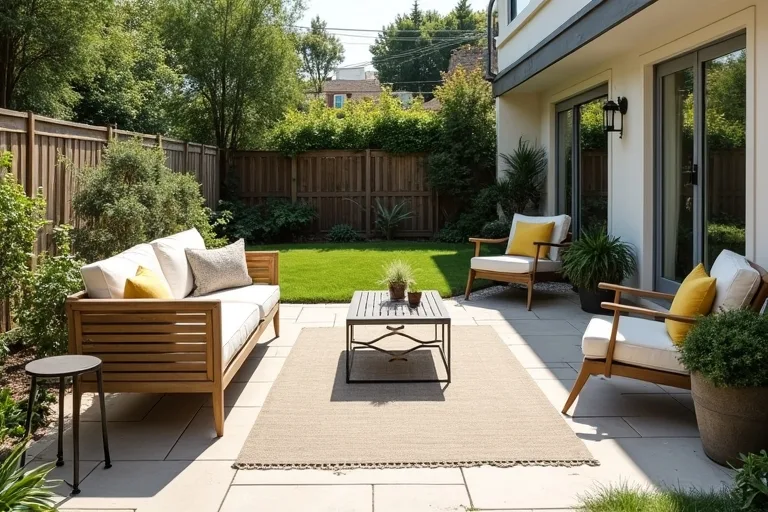
The real decision is usually not whether to buy more decor. It is whether the patio needs a dining zone, a lounge zone, or both. If you get that wrong, even well-chosen furniture can feel awkward.
Measure the space and map movement
Before you think about style, measure the full patio and note doors, steps, gates, drains, posts, and fixed walls. These details shape how the space can actually be used. A layout that looks fine on paper can fail quickly if it blocks a door or forces people to squeeze around a chair.
It helps to sketch the patio as a simple outline and then mark the routes people naturally take. That includes the path from the house to the garden, the route to the grill, and any walkways that should stay open for everyday use.
If you want a calmer process, use this order:
- Measure the whole patio, not just the open center.
- Mark fixed obstacles and door swings.
- Draw the main walking paths first.
- Place the largest furniture pieces next.
- Check that every seat still has room to move in and out comfortably.
This is where a simple planning tool can save money. The room layout planner is useful when you want to test the arrangement before committing to furniture.
Choose zones and anchor pieces
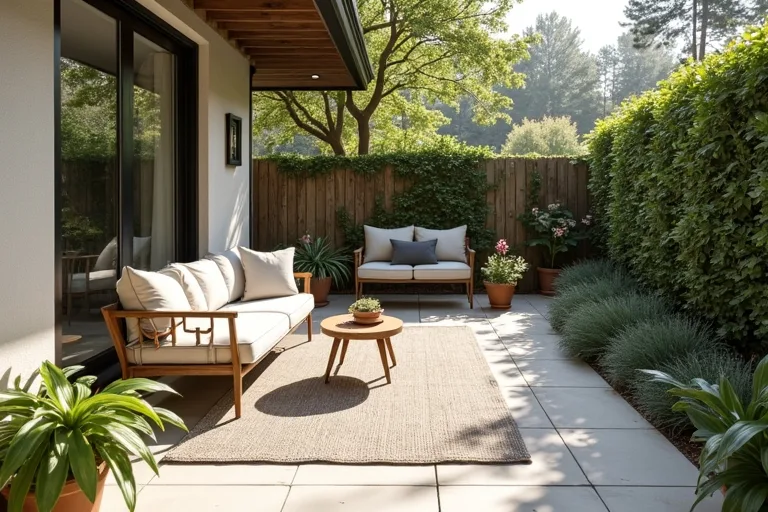
Once the movement around the patio makes sense, divide the space into zones. A zone does not need to be large or formal. It just needs to feel intentional. For example, a small dining table can sit closer to the house while a separate lounge chair or bench occupies a quieter corner.
Anchor pieces help the layout feel settled. A rug, planter grouping, or table can visually define a zone and stop the patio from feeling scattered. For many homes, a waterproof outdoor rug 5×7 is a practical way to shape a seating area without adding clutter. It can make the seating zone feel complete while also giving you a clearer sense of scale.
Large planters can work in a similar way. A large outdoor planters set can soften edges, guide movement, or help a larger patio feel less empty. The point is not to fill space. It is to give each part of the patio a clear role.
If you prefer to budget as you plan, a simple digital tracker can also help you keep layout decisions tied to spending. The Room Makeover Planner, Home Layout Budget Spreadsheet is useful when you want to compare ideas without losing sight of total cost.
Check scale before you shop
This is the step many people skip, and it is usually where patio plans go wrong. Furniture that is technically the right style can still feel too large, too small, or too many in number for the actual footprint.
Before buying, stand back and ask a few simple questions: Does the layout still allow easy movement? Can chairs slide out without catching on the wall or the edge of a rug? Does the table look balanced with the rest of the patio, or does it take over the whole space?
Good patio layout ideas are not about packing the space. They are about leaving enough room for the patio to breathe while still doing its job. A plan that looks slightly simpler often works better in daily use.
Best next step
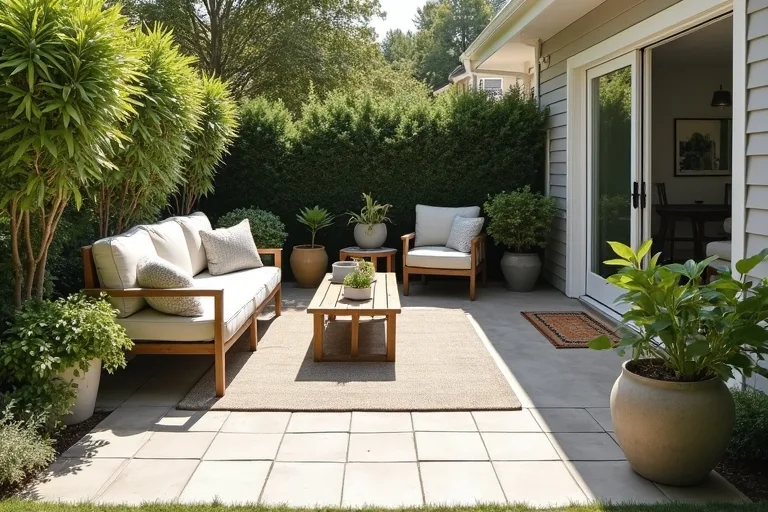
If you are still deciding between layouts, map the patio first and test the main furniture placement before buying. That makes it easier to see whether you need one clear seating zone, a dining setup, or a mixed arrangement with more open space than you expected.
For a more structured check, use the planning tool to compare options and keep your budget in view. If you want a simple anchor piece after the layout is set, a waterproof outdoor rug can help define the seating area without making the patio feel crowded.
- Buying furniture before measuring the full patio.
- Forgetting to leave a clear walking path from the house to the garden.
- Choosing too many zones for a small space.
- Using a rug or planter size that does not suit the furniture scale.
- Letting decor take priority over circulation and comfort.
The best patio layout starts with function, movement, and scale. Once you know how the space needs to work, it becomes much easier to choose furniture, define zones, and buy only what fits. A calm plan usually leads to a calmer patio.
Helpful next tools and planners
If you want to make the decision easier before you buy
These options are most useful after you have mapped the patio and want help turning the layout into a purchase plan.
FAQ
What should I plan first on a patio?
Start with the patio’s main purpose, then measure the space and map the paths people need to use most often.
How do I know if my patio is too small for a dining area?
If a table blocks movement or makes chairs hard to pull out, the layout may need a smaller table or a different zone priority.
Do I need a rug on a patio?
No, but a rug can help define a seating area and make the layout feel more intentional when the space needs structure.
What is the easiest way to avoid buying the wrong furniture?
Test the layout first with measurements or a planning tool, then buy pieces that fit the space instead of trying to force the space around the pieces.
Three sensible next steps
Some links in this article may be affiliate links. Read more in the Affiliate Disclosure.