
Most patio problems are not really shopping problems. They are flow problems: a chair blocks the path, a table sits too close to the door, or the space feels too scattered to use comfortably.
Before you buy anything new, it helps to slow down and decide how you want to move through the patio, where people will sit, and what needs to feel open. That one step usually makes every later decision easier.
Start by mapping walk paths, seating zones, and clear edges before buying anything new. If the patio feels awkward, a better layout is often enough to fix it. If it still feels incomplete after that, the next purchase is usually a waterproof outdoor rug, a set of large planters, or a piece of furniture sized to the space.
Start by reading the space you already have
Before you think about style, look at how the patio is actually used. Find the main doors, the route to the yard or gate, and the areas people naturally walk through. Those are the lines you should protect first.
If the patio already has furniture, leave it in place long enough to notice what feels wrong. Often the issue is not that you need more pieces. It is that the current arrangement blocks the most direct path or makes the seating area feel disconnected from the rest of the space.
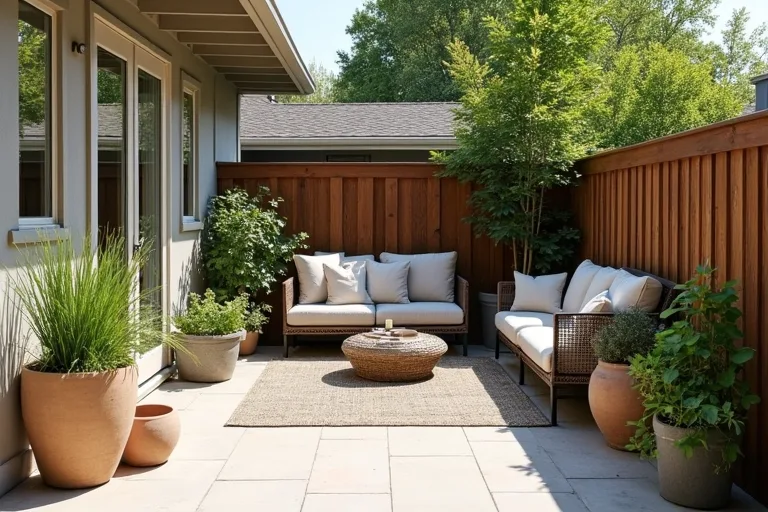
Ask one simple question: does the patio feel hard to move through, or does it just feel unfinished? If the movement is awkward, focus on layout first. If the flow is fine but the space feels bare, then you are probably choosing finishes rather than fixing the plan.
Choose one main seating zone first
A patio usually works better when it has one clear purpose. For many homes, that means one primary seating zone instead of several small areas competing for attention. A table-and-chair setup, a pair of lounge chairs, or a compact conversation grouping can all work, but one zone should be the anchor.
If the patio is small, keep that zone simple and allow breathing room around it. If the patio is larger, you can add a second function only when there is still a clear walking route between areas. More zones are not always better if they interrupt movement.
- Place the main seating area where people will naturally gather.
- Leave a clear path to doors, grills, or garden access.
- Check that chairs can be pulled out without hitting walls or planters.
- Only add a second zone if the first one still feels spacious.
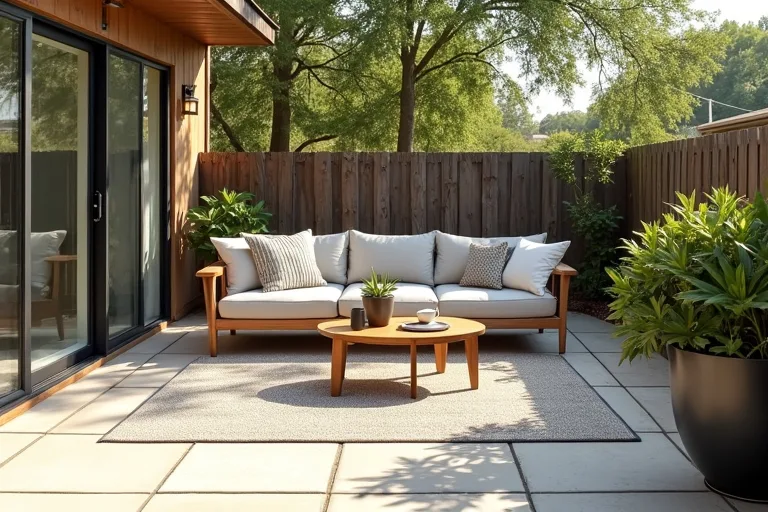
Use rugs and planters to guide movement
Once the main zone is in place, use visual edges to make the layout feel intentional. A waterproof outdoor rug can anchor the furniture so it reads as one area instead of a few loose items. That is especially helpful when the patio surface feels visually busy or the furniture is floating without a clear center.
Large planters can do a different kind of work. They soften hard edges, help define the outer boundary of the seating area, and gently guide movement without closing the space in. Used well, they make the patio feel calmer rather than more decorated.
If you are deciding between the two, think about the problem you are solving. A rug helps connect the furniture. Planters help shape the edge. Many patios benefit from both, but not always at the same time.
Check the plan before you shop
This is where a small planning step saves money. Measure the patio, sketch the available footprint, and test where the furniture would actually sit. If you can, use a room layout planner or a simple measuring checklist before you buy the rug, planters, or any new seating.
That step makes the real decision clearer. You are not just asking what looks nice. You are asking what fits, what improves flow, and what will still feel right once people start using the space every day.
Best next step
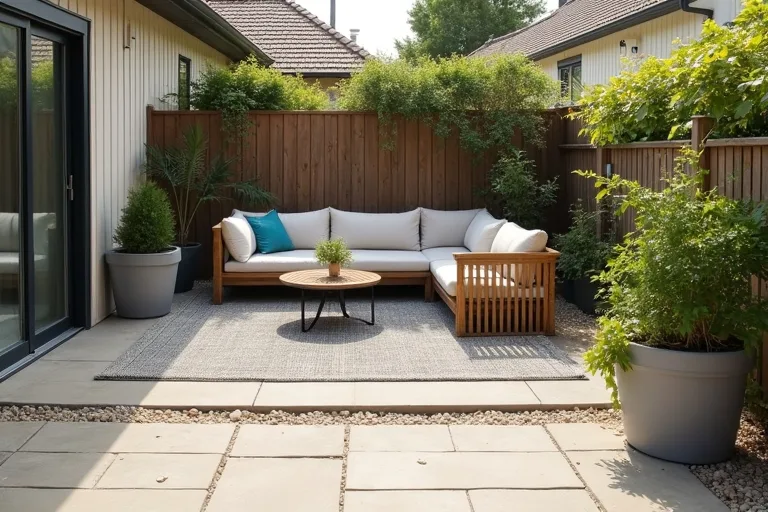
Before buying anything, test the layout on paper or in a planning tool. That gives you a better sense of spacing, traffic flow, and whether the patio really needs a rug, planters, or a different furniture arrangement first.
- Buying décor before deciding where people will walk.
- Adding too many small pieces instead of one clear seating zone.
- Choosing a rug that does not actually anchor the furniture.
- Pushing furniture to the edges and leaving no comfortable center.
- Using planters as decoration only, when they could also help define the layout.
- Skipping measurement and hoping the patio will feel better once it is filled.
A better patio usually starts with better flow, not more stuff. Map the walk paths, set one main seating zone, and use a rug or planters only after the layout makes sense. If the space still feels unfinished, then you will know what kind of purchase actually helps.
Helpful next tools and planners
If you want to make the decision easier before you buy
These are useful once you have a layout in mind. The goal is to match the purchase to the plan, not the other way around.
FAQ
How do I know if my patio problem is flow or styling?
If people keep squeezing around furniture, the issue is flow. If the patio moves well but feels bare or undefined, it is more likely a styling or finishing problem.
Should I buy a rug before I buy new patio furniture?
Only if the furniture already fits well and just needs anchoring. If the pieces are the wrong size or blocking movement, fix the layout first.
What do planters do in a patio layout?
They can soften edges, guide movement, and help define a zone without building a hard boundary.
What is the easiest first step before shopping?
Measure the patio and sketch where walk paths and seating will go. That gives you a clearer answer about what to buy, if anything.
Three sensible next steps
Some links in this article may be affiliate links. Read more in the Affiliate Disclosure.