
A bathroom mirror can do more than reflect the room. Around the vanity, it affects how the space feels, how well it works in the morning, and how easy it is to keep the countertop under control.
If the mirror is too small, too low, poorly lit, or visually heavy for the vanity beneath it, the whole area starts to feel slightly off. The good news is that a better choice is usually less about trend and more about proportion, light, and everyday use.
Choose a mirror that fits the vanity width, improves light, and supports daily use first. Once the size and placement feel right, the style can be simple. A well-scaled framed mirror, a clean frameless option, or a lighted vanity mirror can all work if they make the vanity zone easier to use.
Start with the vanity zone, not the mirror shape
The best bathroom mirror ideas usually begin with one question: what does this area need to do every day? If the vanity is crowded, dim, or visually unbalanced, the mirror should solve those problems before it adds decoration.
That means looking at the full vanity zone as one working area. The sink, faucet, lighting, counter depth, and mirror all need to relate to each other. A mirror that looks lovely on its own can still feel wrong if it fights the scale of the vanity or blocks useful wall space.
For a balanced result, aim for a mirror that feels connected to the vanity width instead of floating too wide or too narrow. In many bathrooms, the mirror should support the sink and faucet line rather than compete with them.
That is also why this is a practical place to think about the surrounding finishes. A brushed nickel bathroom faucet can make the vanity area feel more coordinated when the mirror frame, lighting, and metal details are chosen as a group rather than in isolation.
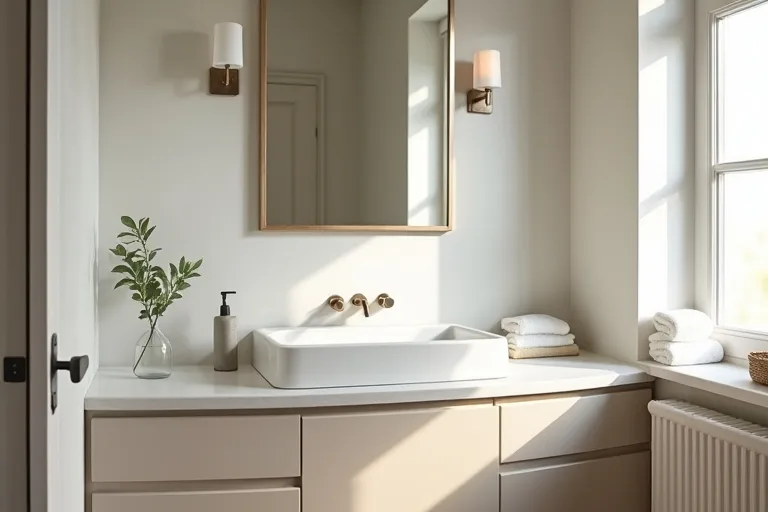
If your bathroom feels awkward, ask whether the mirror is the real issue or just the most visible one. A better mirror cannot fix a layout problem on its own, but it can make a good vanity setup feel calmer, brighter, and more finished.
Choose the mirror type that matches the way you use the room
Different mirror styles change both the look and the function of the vanity. The right choice depends on whether you need more visual softness, a cleaner line, or hidden storage.
Framed mirrors add definition and can help a plain vanity feel complete. Frameless mirrors keep the wall lighter and are often useful when the room already has a lot of visual activity. Round mirrors soften a boxy vanity, while arched mirrors can bring shape to a simple room without needing much else.
Medicine cabinets are worth considering when storage is limited. They are not as minimal as a flat mirror, but in a tight bathroom they can reduce counter clutter in a way that matters every single day.
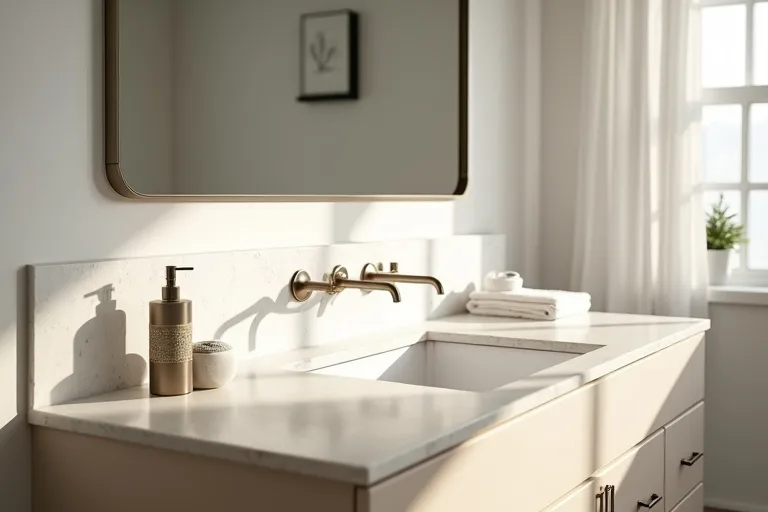
If you are choosing among the main options, this simple order can help:
- Decide whether storage is needed at the mirror.
- Check whether the vanity needs a softer or sharper visual line.
- Match the mirror width to the sink and vanity scale.
- Choose a frame or edge finish that works with the faucet and light fixtures.
That process keeps the choice grounded in use, not just style.
Use light and placement to make the mirror work harder
Even a good mirror will underperform if the lighting is poor. Bathrooms depend on reflected light, so the mirror should help spread brightness across the face and into the room instead of creating shadow.
Wall sconces, overhead lighting, and integrated lighting each affect the result differently. Side lighting is often more flattering for grooming, while a top light can still work if the mirror is sized and placed carefully. The key is to avoid placing the mirror where it reflects glare or leaves the sink area feeling dark.
Placement also matters for comfort. The mirror should be high enough to be useful for the people who use the room, but not so high that it feels detached from the vanity. Leave enough wall clearance around it so the frame or edge reads as intentional rather than cramped.
When the lighting needs to do double duty, a lighted vanity mirror for bathroom counter can be the more practical option. It is especially useful when the room has limited wall space, weak natural light, or no easy place for separate sconces.
If you are unsure whether to add a larger mirror or stronger lighting, think about the problem you are actually trying to solve. If the room feels dark, lighting may matter more. If it feels visually heavy, a cleaner mirror style or better proportion may help more.
Add the finishing details without cluttering the counter
The final layer of bathroom mirror styling should make the vanity feel easier to use, not busier. A small soap dispenser, a hand towel, and one or two daily items are usually enough to keep the area feeling lived in without drifting into clutter.
This is also the point where a mirror can help unify the rest of the vanity. Repeating the same metal tone in the faucet, mirror frame, and light fixture creates a quieter result than mixing too many finishes at once. The room does not need to be perfectly matched, but it does need to feel deliberate.
If you are planning a fuller bathroom update, it helps to write down the mirror choice alongside lighting, faucet finish, and any storage changes before you buy anything. A simple planning sheet can prevent small decisions from becoming expensive second guesses.
Best next step
If you are comparing mirror size, lighting, and vanity changes, use a planning tool before you start buying. It is easier to make the room feel polished when the layout and budget are clear first.
- Choosing a mirror style before checking vanity width and wall clearance.
- Using a decorative shape that looks nice but leaves the sink area awkward to use.
- Ignoring how the mirror reflects existing lighting, especially in a darker bathroom.
- Adding too many finishes at once, which makes the vanity zone feel busy instead of calm.
- Buying storage separately when a medicine cabinet or mirrored cabinet would solve clutter better.
The best bathroom mirror is the one that makes the vanity easier to use. Start with proportion, then check light, then choose the style that suits the room. When the mirror fits the vanity zone properly, the whole bathroom feels more polished without needing much else.
Helpful next tools and planners
If you want to make the decision easier before you buy
A simple planner can help you compare mirror, lighting, and vanity changes side by side. If you are also shopping, a few practical products can help finish the vanity zone without adding clutter.
FAQ
How wide should a bathroom mirror be above a vanity?
A mirror usually feels best when it relates to the vanity width instead of overpowering it. The exact size depends on the sink, wall space, and whether the mirror needs to share space with lighting or storage.
Is a round mirror practical in a bathroom?
Yes, if the room benefits from a softer shape and the mirror still covers the needs of the vanity. Round mirrors are often best when the vanity is simple and the wall does not need extra storage.
When is a medicine cabinet the better choice?
A medicine cabinet is useful when countertop clutter is the main problem and storage is limited. It is often the more practical choice in smaller bathrooms or shared spaces.
Do I need a lighted mirror if I already have overhead lighting?
Not always. If the room already has balanced lighting, a simple mirror may be enough. A lighted mirror becomes more useful when the space is dim, the wall options are limited, or the vanity needs stronger task lighting.
Three sensible next steps
Some links in this article may be affiliate links. Read more in the Affiliate Disclosure.