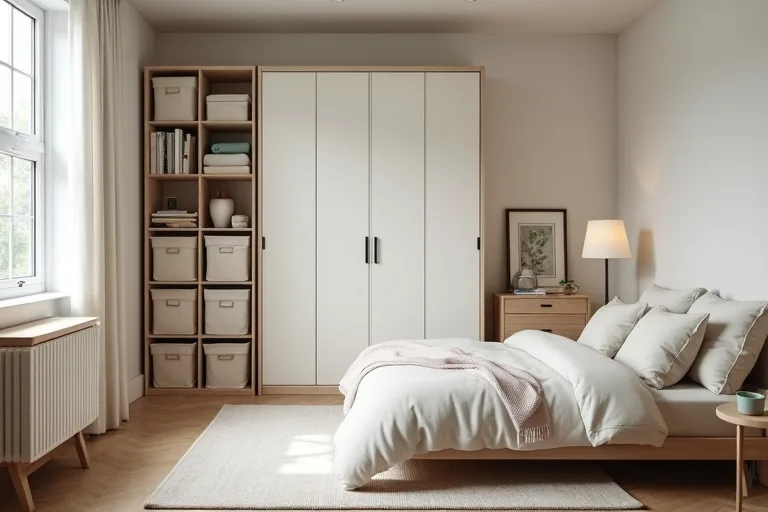
Small bedrooms usually feel cramped for one reason: storage gets added before the room layout is really understood. A wardrobe that is a little too deep, a box that blocks a drawer, or a bin set that spreads across every surface can quickly make the room harder to use.
The good news is that the fix is often not more storage. It is better placement, better sizing, and a clearer decision about what actually needs to live in the room. Once that part is settled, the bedroom usually feels calmer straight away.
The biggest mistake is adding storage without checking layout, clearance, and what the room actually needs to stay open and easy to use. In a small bedroom, storage should support movement first and organization second.
Why storage choices change the feel of the room
In a small bedroom, the room does not only feel smaller because of the furniture size. It also feels smaller when storage interrupts the natural path through the space. If you have to turn sideways to reach a closet, step around a basket, or squeeze past a cabinet door, the room starts to feel busy even when it is technically tidy.
That is why bedroom storage needs to be judged by more than capacity. A piece can hold a lot and still be the wrong choice if it blocks light, takes up too much floor area, or creates awkward access. The best small-bedroom storage usually looks almost unremarkable because it lets the room work without drawing attention to itself.
A compact system can help here, especially when it is used for one clear purpose. An 8 cube storage organizer can work well along one wall when the room needs vertical storage without a deep footprint. The key is to keep the area around it open and to use it for items that benefit from being sorted by category rather than scattered across the room.
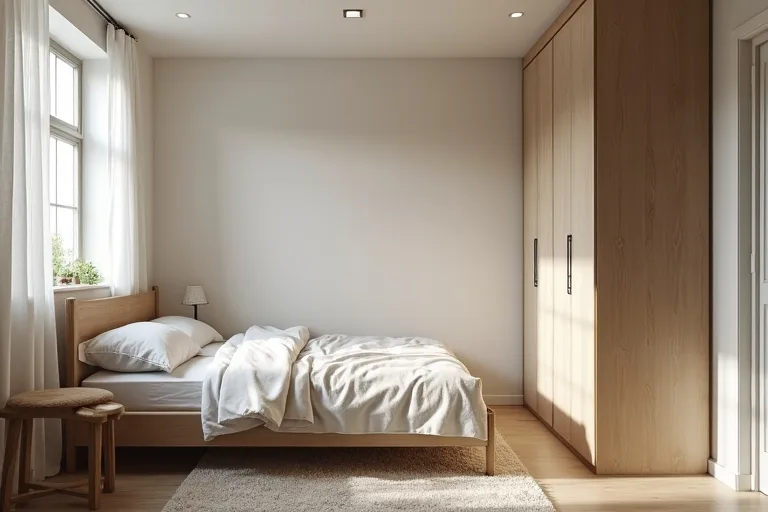
Before you buy anything, ask one simple question: will this storage make the room easier to move through, or will it just create a new place to pile things? If the answer is not obvious, the layout needs another look first.
The biggest space-draining mistakes
Most small bedroom storage problems come from a few common habits. The room may look organized at first, but the layout slowly becomes harder to live with.
One of the most common mistakes is choosing storage that is too bulky for the room. Deep wardrobes, wide chests, and oversized bedside units can take up more visual and physical space than the bedroom can comfortably handle. Another mistake is using too many open items at once. Open shelves, visible baskets, and surface storage can create a sense of clutter even when the room is clean.
A practical way to spot the issue is to look for anything that interrupts walking space or blocks the sightline when you enter the room. If the eye lands on stacked boxes, loose items, or a wall of mixed storage, the bedroom is likely carrying too much visual weight.
- Check whether the storage fits the room depth, not just the wall width.
- Look at how the piece affects door swing and drawer access.
- Limit the number of open storage zones visible from the bed.
- Keep the main walkway clear before adding extra containers.
For smaller bedrooms, a neat bin system can make a big difference. A fabric storage bins set for cube organizer is useful when you want soft, visually quiet storage that helps reduce visual clutter. It works best when the bins are sized for a specific shelf or cube system rather than used as random catch-alls.
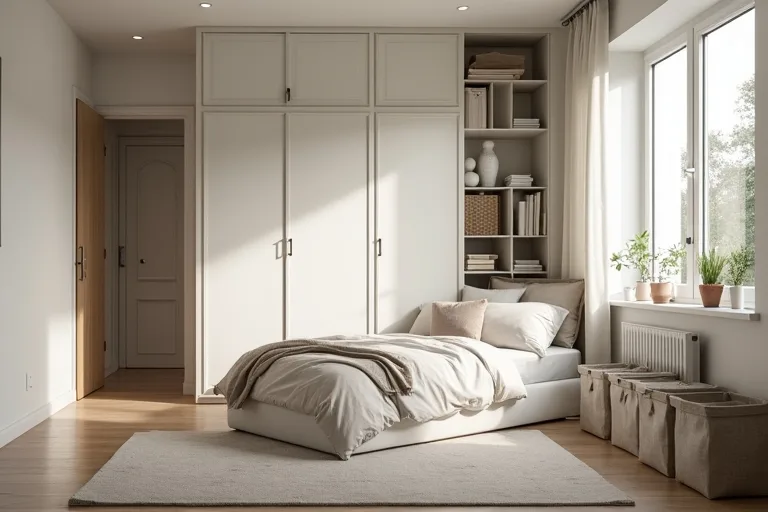
How to check fit before you buy
Small bedroom storage is easiest to get wrong when shopping happens before measuring. A piece may seem compact online and still feel oversized once it arrives, especially if the room already has a bed, nightstand, and closet to work around.
Start with the room’s practical movement zones. You need enough space to open doors, pull out drawers, and walk past furniture without sidestepping. If a storage piece will live near the bed, closet, or entry door, those clearances matter more than the item’s label or style name.
A simple sequence can help keep the decision grounded:
- Measure the wall where the storage will go.
- Check the path to the bed, closet, and door.
- Decide what the storage must hold, and nothing else.
- Choose the smallest piece that handles that job cleanly.
If the room still feels uncertain after measuring, a planning tool can save a lot of trial and error. The Room Layout Planner is a smart next step when you want to test fit and circulation before buying. For a more focused approach, the Small Space Furniture Planner, Room Layout Spreadsheet (Digital Download) can help you map the room and make sure storage choices do not crowd the floor plan.
Simple storage that works better in a small bedroom
The best storage in a small bedroom usually does one job well instead of trying to solve everything at once. That means separating daily-use items from seasonal items, keeping the most-used storage easy to reach, and putting less common items higher up or lower down.
Closets can do part of the work, but they are not always enough on their own. A wall unit, under-bed storage, or a compact open-and-closed mix can help if it stays consistent and easy to maintain. The goal is not to hide everything. It is to reduce friction so the bedroom feels usable every day.
One of the most reliable approaches is storage zoning. Keep bedtime items near the bed, clothing where you dress, and off-season items out of the main circulation zone. When storage is grouped by use, you usually need fewer containers and less visible clutter.
If you want more layout ideas beyond storage, the Bedroom Ideas hub is a useful place to compare calmer room setups. For a broader overview of space-saving options, the Small Spaces & Storage hub can help you think through the room before you start shopping.

Best next step
If the room feels tight, pause before buying more storage. Test the layout first, then decide what kind of storage actually fits the space and the way you use it.
- Buying a storage piece before checking walkways and door clearance.
- Using furniture that is deeper or wider than the room can comfortably hold.
- Leaving too many open bins, shelves, or surfaces visible at once.
- Mixing random storage solutions instead of grouping items by use.
- Choosing capacity over access, which makes daily use awkward.
Small bedroom storage works best when it protects the room’s flow. If you plan for clearance, limit visual clutter, and choose storage around what the room actually needs to do, the space usually feels larger and easier to live in without adding more furniture.
Helpful next tools and planners
If you want to make the decision easier before you buy
These options are most useful when you are comparing fit, function, and how much storage the room can realistically handle. They are meant to support the plan, not replace it.
FAQ
What storage mistake makes a small bedroom feel the tightest?
Usually it is adding a bulky piece without checking circulation. If the room is hard to walk through, even tidy storage will make it feel smaller.
Is open storage bad in a small bedroom?
Not always. Open storage can work if it is limited and organized, but too much of it creates visual noise very quickly.
Should I choose more storage or smaller furniture?
In most small bedrooms, smaller furniture wins. It is usually better to keep the room open and use only the storage that truly fits the layout.
What should I plan before buying bedroom storage?
Measure the room, check door and drawer clearance, and decide what the storage needs to hold. That gives you a clearer buying decision and reduces clutter later.
Three sensible next steps
Some links in this article may be affiliate links. Read more in the Affiliate Disclosure.