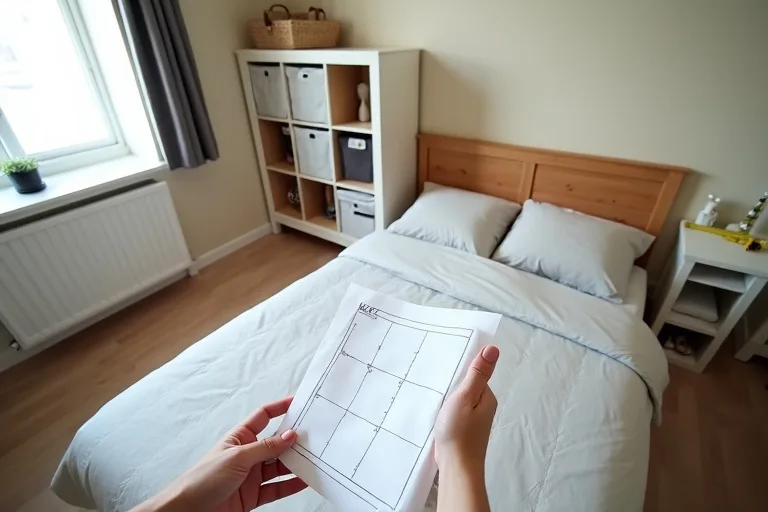
Small bedroom storage gets expensive when the room plan is vague. A piece can look right online and still block a door, crowd the bed, or leave you with nowhere practical to put daily items.
This checklist keeps the decision simple. Measure first, map the layout, then choose storage that fits the room and the way you actually use it.
Measure first, map the layout, then choose storage that fits the room and your daily use. In a small bedroom, the best buy is usually the one that solves a clear storage problem without blocking movement, doors, or drawer access.
Start with the space you actually have
Before you compare furniture, get a clear picture of the room as it is, not as you hope it will feel after shopping. Small bedrooms change quickly once a bed, wardrobe, and one or two storage pieces are inside them, so the empty room is only part of the story.
Measure the floor area, but also note wall lengths, window positions, radiator locations, and where the door opens. If you are working with a narrow room, pay close attention to walking space beside the bed and the path from the door to the closet.

If you want a calmer way to plan the room, use the room layout planner before you buy. It is easier to spot a bad fit on paper than after a delivery arrives.
The real question is not “Will this fit in the room?” It is “Will this fit while leaving the room usable every day?” A piece that technically fits can still make the bedroom awkward if it crowds the bed, cuts off door swing, or blocks access to drawers.
Work out what needs to be stored
Storage works best when it has a job. Start by sorting what must stay in the bedroom from what can be moved elsewhere or removed entirely. Clothes, bedding, books, chargers, accessories, and seasonal items often get mixed together, which makes it harder to choose the right storage shape.
A short list helps:
- Keep only the items you use in this room.
- Separate daily-use items from seasonal or occasional items.
- Decide what needs hidden storage and what can stay visible.
- Think about how often you will access each category.
Once you know the load, storage becomes much easier to size. For example, an 8 cube storage organizer can work well when you need flexible storage for folded clothes, baskets, or mixed bedroom items. If you want a more structured way to plan the purchase, a Small Space Furniture Planner, Room Layout Spreadsheet (Digital Download) can help you map what belongs where before you commit.
Choose the right type of storage for the room
In a small bedroom, storage usually falls into three useful categories: under-bed, closet-based, and freestanding. Each one solves a different problem, and the right answer depends on how much floor space you can spare.
Under-bed storage is useful when floor area is limited and you want to keep the room visually calm. Closet-based storage works well when the room already has enough hanging space and you need better internal organisation. Freestanding storage is the most flexible choice when the room needs both storage and a surface, but it also needs the most careful measuring.
Simple organisers make the final system easier to use. fabric storage bins set for cube organizer can help turn open shelving into something more practical, especially if you want to group small items and keep the room from looking cluttered. For more ideas on how to keep the overall room plan sensible, browse the small spaces and storage hub and the bedroom ideas section.
Check the final buy before you spend
Once you have a shortlist, check the details that often get overlooked. Depth matters in a narrow room. Height matters if you want to use wall space without making the room feel heavy. Drawer pull-out space matters if the piece sits close to the bed or a wall. And if the storage has doors, remember that the swing path needs room too.

Modular storage is often the safer choice because it can adapt later. If your needs change, a system you can add to or reconfigure is usually better than a fixed piece that only works in one setup. That is especially true in bedrooms where storage needs tend to grow quietly over time.
If you are unsure, compare the room plan with the product dimensions one more time before checkout. A few minutes of checking can save you from returning a piece that looked right but worked badly in the room.
Best next step
Use a room layout planner before you buy so you can confirm fit, flow, and placement. That is the easiest way to avoid storage that solves one problem but creates another.
- Buying storage before measuring the room properly.
- Choosing a piece that fits on paper but blocks a door, drawer, or walking path.
- Ignoring what actually needs to be stored and ending up with the wrong type of organiser.
- Picking bulky storage when a lighter modular system would be easier to live with.
- Adding bins and organisers before the main layout is settled.
A small bedroom storage plan should start with layout, not shopping. Measure the room, decide what needs to be stored, choose the storage type that suits the space, and check doors, depth, and clearance before you buy. If you want the calmest path, plan the room first and then add an 8 cube storage organizer, fabric bins, or another modular piece only after the layout makes sense.
Helpful next tools and planners
If you want to make the decision easier before you buy
These are the most useful next steps when you are planning small bedroom storage. Start with the room layout, then compare products only after the fit looks right.
FAQ
What should I measure first for small bedroom storage?
Start with the bed position, wall lengths, door swing, and the clear space you need to walk around the room. Those measurements usually matter more than the empty floor area.
Is a cube organizer a good choice for a small bedroom?
It can be, especially if you want flexible open storage that can work with bins. It is most useful when the room can handle the depth and you want a piece that can adapt later.
Should I buy bins before I buy the main storage furniture?
No. Choose the main furniture first, then add bins and organisers once you know the storage dimensions and the layout you are working with.
What is the safest next step if I am unsure?
Use a room layout planner and compare it with the product dimensions before ordering. That usually makes the decision much clearer.
Three sensible next steps
Some links in this article may be affiliate links. Read more in the Affiliate Disclosure.