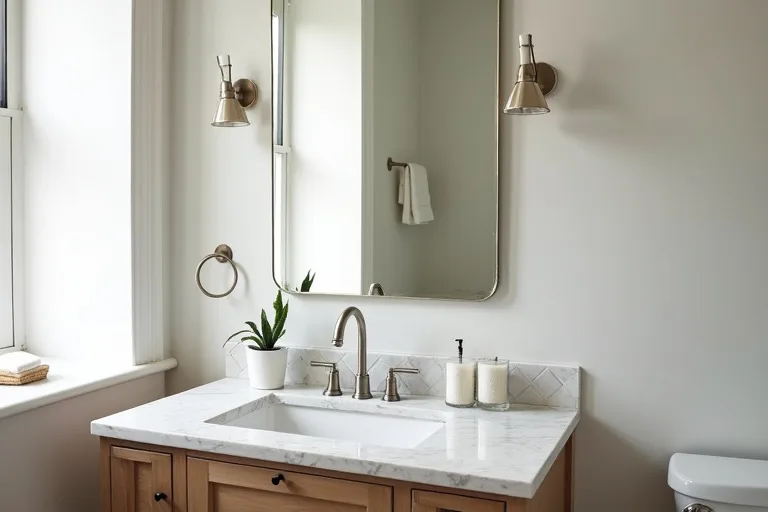
Before you buy a mirror, it helps to decide what the vanity wall actually needs. In many bathrooms, the mirror choice affects lighting, faucet finish, storage clearance, and how comfortable the sink area feels to use every day.
This checklist keeps the decision simple. Start with fit and function, then match the rest of the bathroom around it instead of buying accessories first and hoping they work together.
Start with mirror size, viewing height, lighting, and finish coordination before buying anything else.
Start with the mirror decision, not the decor
A bathroom mirror is one of the most visible parts of the vanity zone, but it is also a working surface. It affects how much of the wall feels open, how well the sink area is lit, and whether the faucet, sconces, or cabinet lines feel balanced.
If the bathroom is still in the planning stage, the mirror should come before decorative accessories. That gives you a cleaner way to decide whether the room needs a framed mirror, a frameless sheet, or a lighted model that can do some of the work normally handled by separate fixtures.
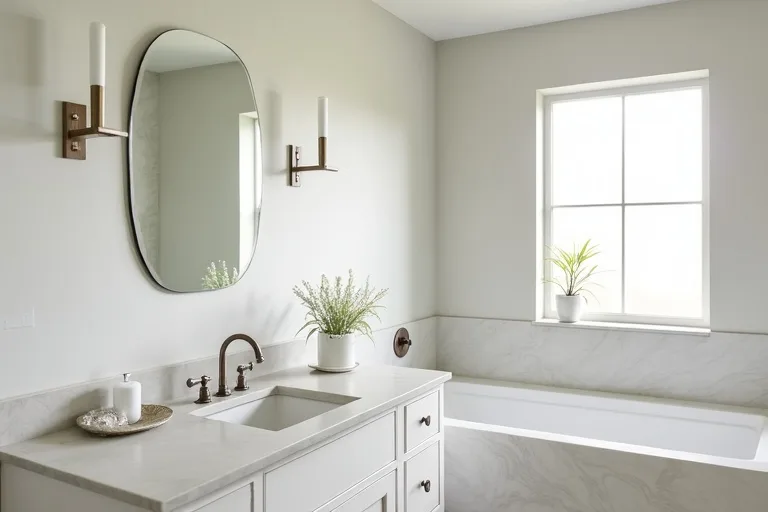
For a calm, practical update, think in this order: mirror first, then faucet, then lighting, then accessories. That sequence usually avoids the common problem of choosing hardware that looks good on its own but feels off once installed together.
The real decision is not just what style of mirror looks best. It is whether the mirror size, edge detail, and mounting height work with your vanity width, your daily view at the sink, and the finish of the hardware already in the room.
Measure the vanity, wall, and viewing height
Good mirror choices start with proportion. A mirror that is too wide can overpower the vanity wall, while one that is too narrow can make the sink area feel unfinished. The same is true for height: if the mirror sits too high or too low, everyday use becomes awkward.
Before buying, check the wall space above the vanity, the distance between the countertop and nearby features, and whether the mirror will sit comfortably above the faucet. If you are working with a smaller bath, a single larger mirror can sometimes feel calmer than several decorative pieces because it keeps the wall visually simple.
If your vanity layout is still flexible, the Room Layout Planner can help you map the wall before you commit to fixtures or accessories.

A simple order helps here:
- Measure the vanity width.
- Check the available wall space above it.
- Confirm the mirror will clear the faucet and any shelf or medicine cabinet.
- Stand at the sink and picture where your eyes naturally land.
- Choose the size that feels balanced, not crowded.
Match finishes, lighting, and nearby fixtures
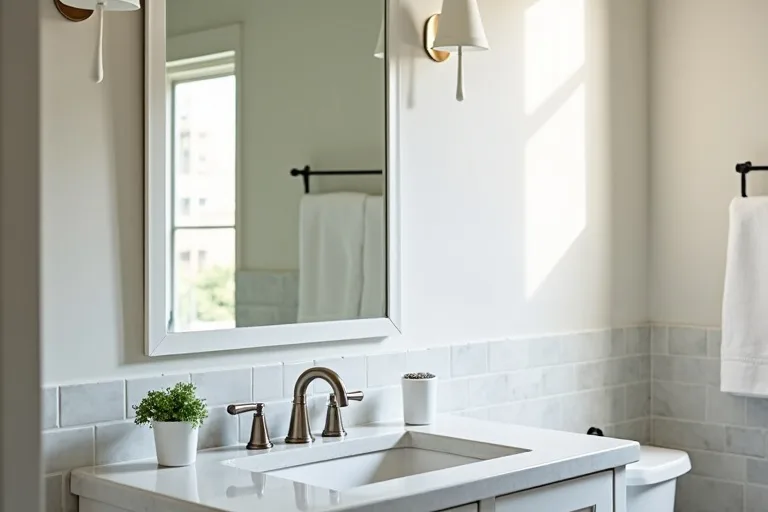
Once the mirror size makes sense, the next choice is how it relates to the rest of the vanity zone. This is where many bathroom updates either come together quietly or start to feel mismatched. A brushed nickel faucet, mirror frame, and hardware do not need to be identical, but they should feel like they belong in the same room.
Lighting matters just as much. A mirror with too much glare can make the sink area uncomfortable, while a mirror with too little reflectivity or poor placement can leave the room feeling dim. If you are using separate lighting, the mirror and light fixtures should work together rather than compete for the same visual space.
When the room is being updated in stages, it can help to compare the mirror against one finish you plan to keep. A brushed nickel bathroom faucet is a common anchor because it gives you a clear direction for matching or softening the rest of the hardware.
For people who want more task light at the vanity, a lighted vanity mirror for bathroom counter can be worth considering, especially when the existing lighting is weak or the room has limited wall space for separate sconces.
Use a simple buy order before you spend
A bathroom upgrade feels easier when you buy in the right order. That does not mean you need every item selected at once, but it does mean the main decisions should happen before the smaller ones.
For a vanity-zone update with daily impact, this is the calmer sequence:
- Set the mirror size and type.
- Confirm the faucet and hardware finish.
- Check the lighting plan.
- Choose only the accessories that fit the remaining space.
- Price the full update before you buy anything.
If you want to price the project before committing, the bathroom remodel cost estimator is the most useful next step. It helps you see whether the mirror change is a small refresh or part of a larger vanity-zone upgrade.
If you prefer to work with a budget and room plan together, the Room Makeover Planner, Home Layout Budget Spreadsheet (Digital Download) can help you keep the project structured without overbuying.
Best next step
Before you buy the mirror, faucet, or accessories, price the vanity zone as one project. That gives you a cleaner budget and makes it easier to choose the right finish and fixture combination without second-guessing every purchase.
- Buying the mirror before checking vanity width and wall clearance.
- Choosing a finish that does not sit naturally with the faucet and hardware.
- Ignoring lighting and then blaming the mirror for a dim sink area.
- Adding accessories before the main vanity decisions are settled.
- Picking a style that looks good alone but feels too busy in the room.
The best bathroom mirror choice is the one that fits the vanity wall, supports daily use, and works with the finishes you already plan to keep. If you start with size, viewing height, lighting, and finish coordination, the rest of the vanity-zone update becomes much easier to manage.
Helpful next tools and planners
If you want to make the decision easier before you buy
These picks fit a practical bathroom planning process. Use them only after you have the mirror size and finish direction clear.
FAQ
Should the bathroom mirror match the faucet exactly?
No. It only needs to work with the same visual family. A coordinated finish is usually better than forcing every piece to be identical.
Is a lighted mirror better than separate vanity lighting?
It depends on the room. A lighted mirror helps when wall space is limited or the existing lighting is weak, but separate lighting can still work well if the layout allows it.
What is the easiest mirror shape to use in a small bathroom?
A simple rectangular or round mirror usually keeps the wall feeling organized. The better choice is the one that fits the vanity width and leaves enough breathing room around it.
When should I buy accessories for the vanity area?
After the mirror, faucet, and lighting decisions are settled. Accessories should fill the remaining space, not drive the plan.
Three sensible next steps
Some links in this article may be affiliate links. Read more in the Affiliate Disclosure.