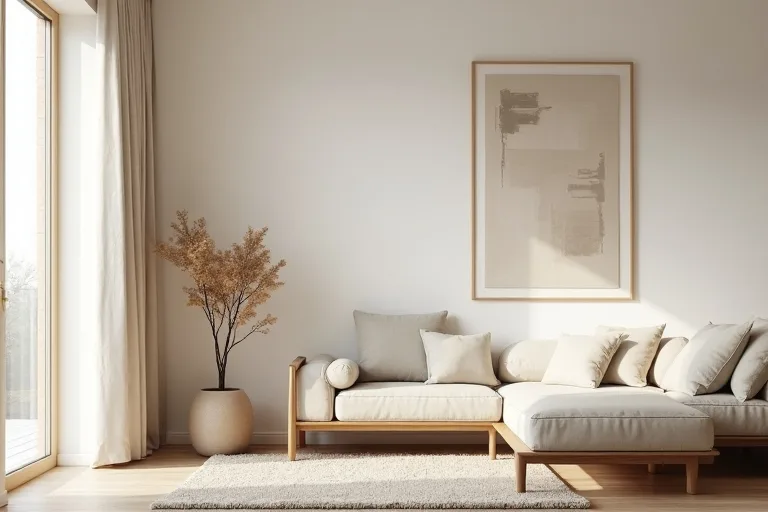
Japandi works best when the room is planned before the shopping starts. The style looks simple, but that simplicity depends on the right layout, the right proportions, and a restrained mix of materials.
If you buy the signature pieces too early, the room can feel colder, smaller, or oddly empty. This checklist helps you decide whether your space is ready for Japandi-style curtains, wall art, and other finishing pieces.
Check the room layout, color palette, materials, and scale first—then buy only the pieces that support the Japandi look.
What Japandi style should feel like before you shop
Japandi is not just a mix of Japanese and Scandinavian decor. In a practical sense, it is a room that feels calm, edited, and usable. You should be able to move through it easily, see where the eye rests, and understand why each piece is there.
That means the style is less about collecting matching objects and more about removing noise. If a room already feels crowded, busy, or unbalanced, the answer is usually not a new accent piece. It is a better plan.
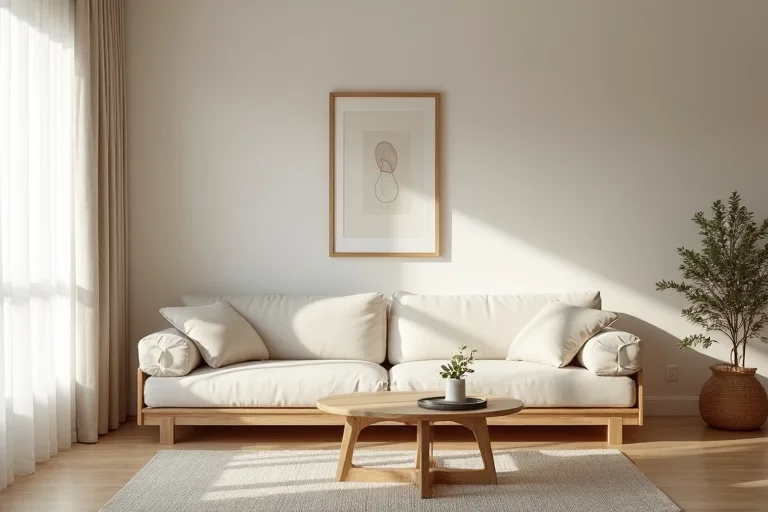
Before you buy anything, ask whether the room has enough breathing room for low-profile furniture, soft textures, and a small number of well-chosen accents. Japandi usually works best when the background is doing most of the work and the decor is supporting it, not competing with it.
If the room only feels stylish when it is completely staged, it is probably not ready for signature Japandi pieces yet. The room should still feel calm when one or two items are removed.
Check layout, flow, and negative space first
Japandi depends on clear circulation and careful spacing. Before you buy curtains, wall art, or a new chair, walk through the room and look at how the space functions. If furniture blocks a path, if corners feel overcrowded, or if every wall is already speaking at once, the style will feel forced.
Use this simple sequence:
- Confirm the main walking path is open.
- Check that the largest pieces are sized for the room, not just for the wall they sit near.
- Leave enough empty space for the eye to rest.
- Make sure every new item supports the room plan instead of filling a gap for the sake of it.
For a bedroom, this often matters even more. A Japandi bedroom needs enough clearance to feel quiet and practical, so it is worth checking your layout against a room-specific plan before you start adding decor. If that is your project, the bedroom ideas hub is a sensible place to continue.
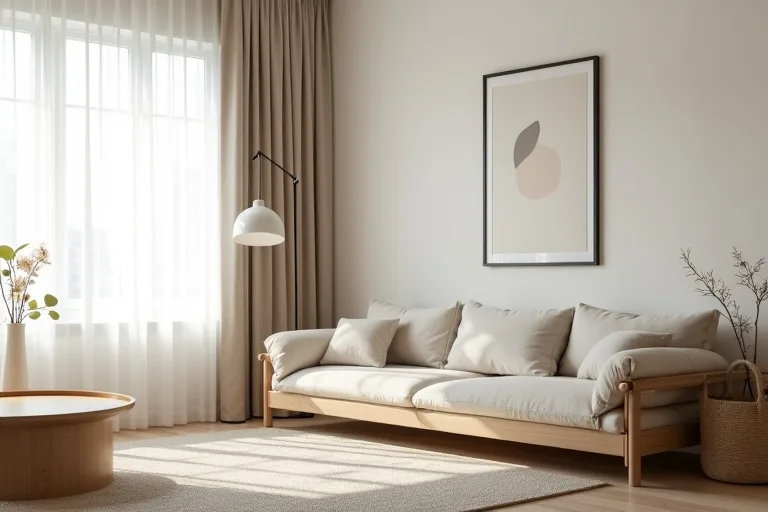
If you are not sure whether the room feels too full or simply unfinished, step back and judge the negative space. In Japandi, blank space is part of the design, not something to fix too quickly.
Match the materials, colors, and finishes to the room
Japandi usually relies on warm neutrals, natural wood, linen, matte finishes, and tactile surfaces that feel quiet rather than glossy. The aim is not sameness. It is coordination.
Look for a palette that sits comfortably with the permanent parts of the room: flooring, trim, cabinetry, and large furniture. If those elements are cool, shiny, or visually heavy, Japandi details may need to be more restrained to avoid a clash.
Use these checks before buying signature pieces:
- Do the walls and larger furniture already support warm neutral tones?
- Do the finishes feel soft and matte rather than reflective?
- Will wood, linen, and simple frames add texture without adding clutter?
- Is there enough contrast to keep the room from feeling flat?
Two pieces that often work well as finishing layers are linen curtain panels neutral and a neutral abstract wall art framed set. Both can support the style, but only if the room already has the right structure. Curtains should soften the window without adding weight, and wall art should quiet the wall rather than turn it into the focal point of the whole room.
If you are planning a room from scratch, it also helps to check the size and placement logic before you order decor. The curtain length calculator can help with window coverage, and the design styles hub gives you a broader view of how different styles behave in real homes.
Buy the pieces that finish the room, not the pieces that rescue it
In a Japandi room, signature decor should feel like the last layer, not the first fix. That usually means buying items that refine the space you already have rather than trying to create the whole mood from scratch.
A simple order of priority is often this:
1. Confirm layout and function.
2. Set the main palette and larger furniture.
3. Add textiles and wall treatment.
4. Choose one or two finishing pieces with restraint.
That is also why a planning tool can be more useful than another decor purchase. If your room still feels uncertain, a structured planner can help you see whether the space needs better sizing, a different arrangement, or a smaller shopping list. A practical option is the Home Planning System Bundle, Room Makeover, Small Space, Budget Tool (Digital Download), which is more useful for decision-making than for decorating alone.
For readers who want to test the style first, the Home Style Quiz is a good next step. If you are already planning room placement, the Room Layout Planner is the cleaner choice.

Best next step
If you are still deciding whether Japandi fits your room, start with the style quiz or the room layout planner before buying signature pieces. That keeps the decision tied to function, scale, and flow.
- Buying neutral decor before checking whether the layout already feels balanced.
- Using too many small accents, which makes Japandi feel busy instead of calm.
- Choosing cool, hard finishes that work against warm wood and linen.
- Picking wall art that is too large, too contrast-heavy, or too decorative for the room.
- Skipping the planning stage and expecting curtains or accessories to fix proportion problems.
Japandi looks best when the room is already calm in layout, color, and scale. Before you buy signature pieces, make sure the space has room to breathe, the materials feel warm and simple, and the decor will finish the plan rather than cover up a problem.
Helpful next tools and planners
If you want to make the decision easier before you buy
These links are most useful when you want to move from style idea to a room plan you can actually use. Start with the tool that matches where you are in the process.
FAQ
How do I know if Japandi will suit my room?
Check whether your room can support calm layout, warm neutrals, and a limited number of pieces. If it already feels crowded or visually noisy, start with the plan rather than the shopping list.
What should I buy first for a Japandi look?
Start with the pieces that affect the whole room: layout, main furniture, and window treatment. Only then add accents such as linen curtains or framed wall art.
Can I use Japandi in a small room?
Yes, but small rooms need extra restraint. Keep circulation open, reduce visual clutter, and choose fewer pieces with better proportions.
What if my room feels too cold?
Add warmth through texture, wood tone, and soft fabrics rather than extra decoration. In Japandi, a room usually feels warmer when the materials are better chosen, not when there are more of them.
Three sensible next steps
Some links in this article may be affiliate links. Read more in the Affiliate Disclosure.