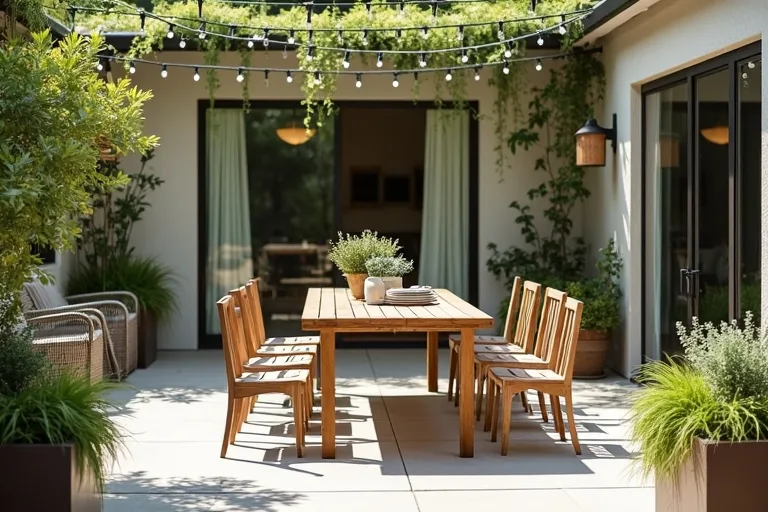
Outdoor dining works best when the layout is decided before the shopping starts. A comfortable setup is usually less about finding the prettiest table and more about giving people enough room to sit, move, and eat without constant rearranging.
If you are planning a patio, deck, balcony, or garden dining area, the most useful first step is to define the zone you actually have. Once that is clear, the rest becomes simpler: the table shape, the chair count, the lighting, and even the accessories all start to make more sense.
Start with clearance and seating size, then build the dining zone around the space you actually have.
Start with the dining zone, not the furniture
Before choosing a set, decide where outdoor dining should sit in relation to doors, paths, the grill, and any garden features you want to keep visible. A good dining zone feels connected to the house but does not block movement. If traffic has to cut through the table area every time someone comes outside, the space will feel cramped even if the furniture itself is small.
For many homes, the best location is the one that reduces carrying and crossing. That might be close to the kitchen or just off the back door. In other layouts, the better choice is a quieter corner that gives the table more room and keeps foot traffic away. The right answer depends on how the space is used, not just on where there is an empty patch of paving.

If you can walk naturally around the table, pull out a chair without hitting a wall or planter, and carry food from the kitchen without a detour, the layout is probably working. If any of those steps feel awkward, the space may need a smaller table, a different shape, or a new location.
Measure clearance and circulation before you shop
This is the point where outdoor dining becomes a planning decision instead of a style choice. Measure the available footprint first, then think through what needs to fit inside it. You are not only measuring the table; you are measuring the space around the table too.
A simple way to plan it is to consider the seated position, the pulled-out chair, and the walking route behind it. If you are choosing between a compact bistro setup and a larger family table, the difference is often less about taste and more about whether the chairs can move without forcing people to sidestep through the dining zone.
- Mark the area you actually have for dining.
- Check how much room is needed for the table and chairs together.
- Leave a clear path to doors, grills, and garden access points.
- Test whether the layout still feels easy when chairs are pulled out.
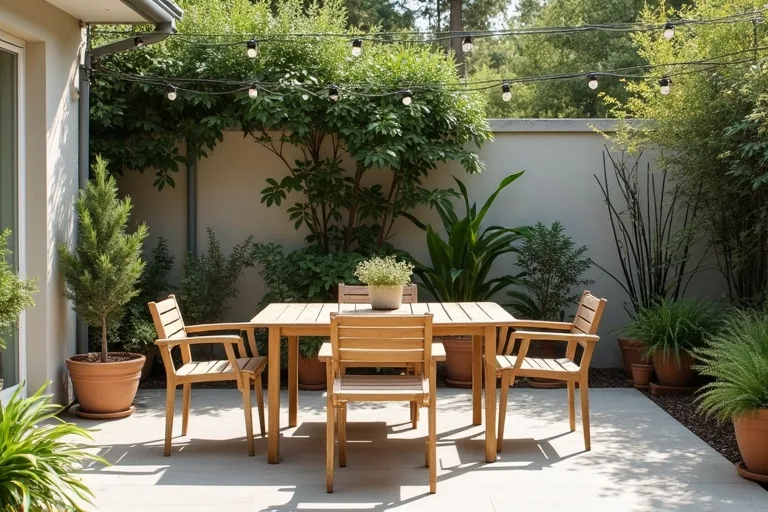
Choose a table, seating count, and materials that suit the weather
Once the footprint is clear, the next decision is the table itself. A round table can feel easier in tighter spaces because it softens corners and allows movement, while a rectangular table usually works better when the dining zone is longer and more defined. The right shape is the one that fits the room you have without making circulation awkward.
Seating count should follow how the space is used most often. If you usually host four people, buying for eight may sound practical, but it can make the area feel crowded the rest of the time. In outdoor dining, comfort often improves when the everyday setup is sized honestly and expandable pieces are only added when needed.
Material choice matters too. Outdoor furniture needs to handle sun, moisture, and frequent cleaning. That means looking for finishes and fabrics that are easier to maintain rather than choosing only on appearance. If you want a low-stress setup, choose pieces that can stay outside with minimal fuss and that still feel good to sit on for longer meals.
If you are still deciding between a full set and a simpler mix of pieces, the Amazon search for a 5 piece outdoor dining set patio is a useful starting point for comparing common configurations. For planning the room before you buy, a layout tool is even more helpful than a product list.
Add shade, lighting, and simple finishing touches
Comfort outdoors usually comes from a few practical layers. Shade helps the area stay usable through the day, while lighting extends the space into the evening. Without those two elements, even a well-sized dining zone can feel underused.
For many patios and decks, the simplest lighting choice is overhead string lighting. It gives the dining area a finished feel without making the setup complicated. If you want a small, reliable upgrade, look for outdoor string lights that are waterproof and meant for exterior use. That detail matters more than decorative style because the goal is to keep the space functional season after season.
Accessories should stay restrained. A planter, a durable table runner, a tray for carrying dishes, or a cushion set can be enough. The aim is to support the zone, not clutter it. If the dining area already feels compact, fewer accessories usually make it feel calmer and more intentional.

For planning help, a digital layout workbook can be a useful bridge between the space you have and the furniture you want. The Room Makeover Planner, Home Layout Budget Spreadsheet (Digital Download) is most useful when you want to compare options, keep the budget visible, and avoid buying before the dining zone is settled.
Best next step
If your dining area still feels uncertain, confirm the layout before ordering furniture. The safest move is to size the zone first, then compare table options against the space you have.
- Choosing a table before measuring how chairs will pull out.
- Forgetting to leave a clear path to doors, the grill, or garden access.
- Buying for occasional guests instead of the way the space is used most days.
- Using furniture that looks good but is difficult to maintain outdoors.
- Adding too many accessories before the layout feels settled.
The easiest way to plan outdoor dining is to start with clearance, then choose the table shape, seating count, and finish that fit the real space. When the zone is sized correctly, the whole area feels calmer, easier to use, and less expensive to get wrong.
Helpful next tools and planners
If you want to make the decision easier before you buy
Use these if you are still comparing layout, furniture, and lighting choices. They are most helpful once you know your clearance and want a practical next step.
FAQ
How much space do I need for outdoor dining?
It depends on the table size, chair style, and how people move through the area. Start by measuring the footprint of the table and chairs together, then check whether there is still a comfortable route around them.
Is a round or rectangular table better outdoors?
A round table can work well in tighter or more flexible spaces, while a rectangular table often suits longer, more defined patios. The better choice is the one that fits circulation without making the zone feel forced.
What is the easiest outdoor dining setup to maintain?
The easiest setup usually uses weather-friendly materials, simple fabrics, and a limited number of accessories. Pieces that are easy to clean and store tend to work best over time.
Should I buy the dining set first or plan the layout first?
Plan the layout first. Once you know the clearance and traffic flow, shopping becomes much simpler and you are less likely to end up with furniture that looks right but functions badly.
Three sensible next steps
Some links in this article may be affiliate links. Read more in the Affiliate Disclosure.