Bathroom lighting looks simple until you try to use the room every morning. A space can be bright enough in one corner and still feel dim at the mirror, harsh at the ceiling, or awkward in the shower.
The easiest way to get it right is to plan the light around how the bathroom is used. That usually means fixing shadows first, then choosing the right fixture placement, and only then thinking about style and finish.
Use layered lighting: ambient, task, and accent light placed to reduce shadows and improve daily use. In a bathroom, that usually means a ceiling light for general brightness, vanity lighting for the mirror, and moisture-safe fixtures where water and steam are present.
Start with the lighting problem, not the fixture
Before you choose a pendant, sconce, or recessed light, decide what is actually going wrong in the room. Most bathroom lighting problems come from one of three things: shadows at the mirror, an overly dark shower or toilet area, or a ceiling light that feels flat and unhelpful.
If the vanity is the main issue, the goal is clear face lighting with as little shadow as possible. If the room is small, you may need one strong general light plus a better mirror setup. If the bathroom has a separate shower or a longer layout, the room often needs more than a single central fitting.

The real decision is not whether the fixture looks good in a photo. It is whether the room will feel even, usable, and comfortable at the times you actually use it. A pretty light that creates face shadows or glare is the wrong choice, even if the finish matches the taps.
Use the three lighting layers together
Bathroom lighting works best when each layer has a clear job. You do not need a complicated scheme, but you do need the room to do more than one thing at a time.
- Ambient light: gives the room overall brightness so it feels safe and easy to move through.
- Task light: helps at the mirror for shaving, skincare, and makeup.
- Accent light: softens the room and can help a larger bathroom feel less plain.
A bathroom with only one ceiling fitting often feels efficient on paper but frustrating in use. Adding wall lights at the vanity or a better mirror light can make the room feel more balanced without changing the whole layout.
If you are planning a remodel, it helps to think about lighting at the same time as storage and plumbing. That keeps the room from becoming cluttered around the mirror or crowded with fixtures that do not work together.
Place vanity, shower, and ceiling lights with the room layout in mind
Placement matters more than buying a more expensive fixture. Light works best when it supports the room shape, mirror size, and daily movement through the space.
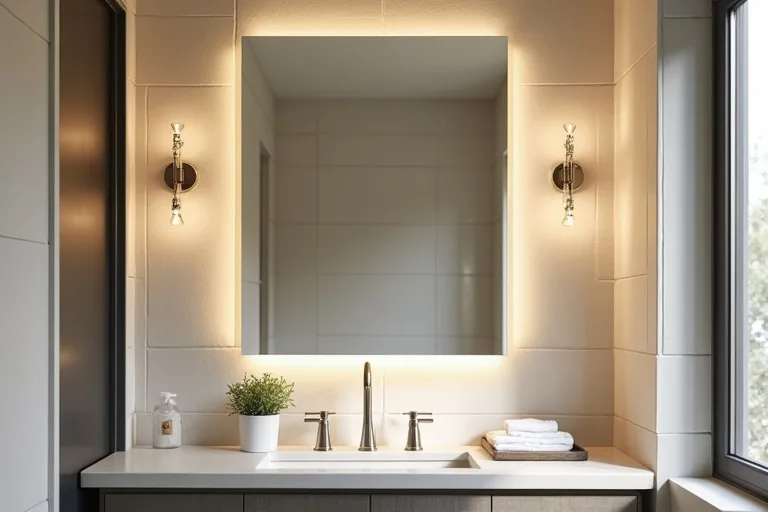
For the vanity, lights placed beside the mirror often give more even face lighting than a single fitting above it. Above-mirror lighting can still work, but it should be positioned to avoid strong downward shadows. In wider bathrooms, two wall lights can be more useful than one central feature fixture because they spread light more evenly across the sink area.
Ceiling lights should support the whole room, not fight the vanity lights. In a small bathroom, one well-placed overhead light may be enough if the mirror area is handled properly. In a longer room, you may need the ceiling light to cover the walk path while another fixture handles the sink zone.

Choose light temperature, finishes, and moisture-safe fixtures carefully
The finish and bulb choice can change how the bathroom feels just as much as the fixture style. Warm light usually feels softer in the evening, while cooler light can help a bathroom feel brighter and more alert in the morning. The right choice depends on how the room is used and how much natural light it gets.
Moisture-safe fittings are worth checking early, especially near showers or where steam collects. A fixture that is technically attractive but not suitable for the room conditions can become a maintenance problem later.
Finishes should also support the room rather than add visual noise. Brushed nickel, for example, is a steady choice in a bathroom because it usually feels calm alongside white tile, soft grey surfaces, and simple mirror frames. That makes it easier to coordinate the taps, light fittings, and other hardware without overthinking every detail.
If your bathroom also needs decluttering, a simple organizer can make the lighting feel better by clearing the sink area and letting the room read as cleaner and brighter. A rustproof shower caddy organizer can help reduce visual clutter in the shower, and a brushed nickel bathroom faucet can keep the finish palette more consistent if you are updating hardware at the same time.

Best next step
If you are changing bathroom lighting as part of a wider update, it helps to set the budget before you start choosing fixtures. That makes it easier to decide whether you need a simple lighting refresh, a vanity change, or a fuller remodel plan.
- Choosing a fixture style before deciding where the light needs to land.
- Using one overhead light and expecting it to solve the mirror, shower, and room-lighting problems at once.
- Ignoring glare and shadows when the mirror is used at different times of day.
- Mixing finishes without a clear plan, which can make the room feel visually busy.
- Skipping moisture-safe checks in areas that regularly deal with steam or splashes.
The best bathroom lighting is usually simple, layered, and placed for real use. Start with the task that matters most, then build in general light and a sensible finish plan. If the room is being updated on a budget, clear the clutter first and use the lighting plan to support the rest of the layout.
Helpful next tools and planners
If you want to make the decision easier before you buy
These options can help you keep the room plan clear before you spend on fixtures, hardware, or a full update.
FAQ
Should bathroom vanity lights go above or beside the mirror?
Beside the mirror is often better for even face lighting because it reduces shadows. Above the mirror can work too, but only if the placement is high enough and the beam is not too harsh.
What kind of light is best for a small bathroom?
A small bathroom usually works best with one strong ambient light and a careful vanity light. The room should feel bright enough to use comfortably without relying on a single fixture to do everything.
Do bathroom lights need to be moisture-safe?
Yes, especially near showers, tubs, and steamy areas. Moisture-safe fixtures are a sensible check before buying because they are part of long-term safety and durability, not just design.
How do I plan bathroom lighting on a tight budget?
Start by fixing the most annoying problem first, usually the mirror. Then use the budget to support the rest of the room instead of replacing every fitting at once.
Three sensible next steps
Some links in this article may be affiliate links. Read more in the Affiliate Disclosure.