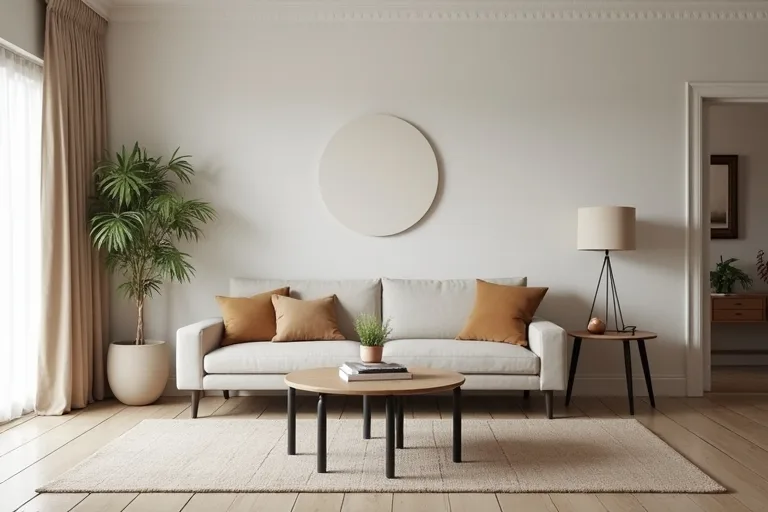
Choosing a sofa layout is usually less about style and more about making the room function. The best arrangement depends on how much space you actually have, where people walk, and what the room needs to do every day.
If you get those basics right first, shopping becomes easier. You can rule out layouts that look good in theory but crowd the room, and focus on a setup that feels open, usable, and calm.
The best sofa layout is the one that fits your room size, keeps clear traffic flow, and supports how you actually use the space.
Start with room use and sofa size
Before you think about style, decide what the sofa needs to do. A living room used for TV time, conversation, reading, or open-plan overflow will usually need a different layout. A sofa placed for one purpose but forced to serve another often becomes the thing that makes the room feel awkward.
Measure the room, then measure the sofa you are considering, or use a tool that does it for you. The goal is not to fill the room. It is to leave enough breathing space around the main seating area so the room still feels easy to move through.
As a rule of thumb, the sofa should relate to the room rather than dominate it. In smaller rooms, that often means choosing a simpler shape and allowing more visible floor around the edges. In larger rooms, it means making sure the seating group is anchored well enough that it does not look stranded in the middle.
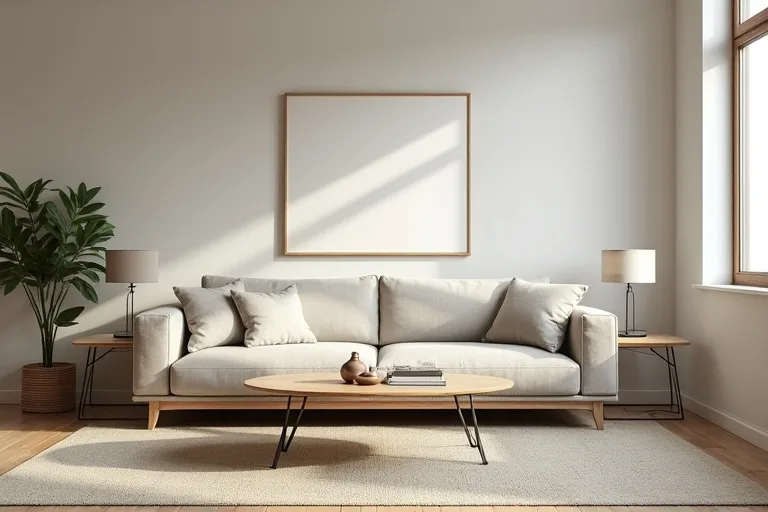
The real decision is not whether a sofa looks good on its own. It is whether the sofa size, the walking route, and the room’s purpose all work together without forcing compromises everywhere else.
Common sofa layouts that work in real rooms
There is no single best arrangement for every living room, but a few layouts solve most planning problems. The right one depends on whether you need a conversation setup, a TV-facing setup, or a flexible open-plan arrangement.
Use this simple way to sort through the most common options:
- Single sofa against one wall: often the simplest answer in smaller rooms or narrow layouts.
- Sofa floating in the room: useful when you need to define a seating area without blocking circulation.
- L-shaped sectional: works well when the room naturally supports one main corner of seating and you want to keep things contained.
- Two sofas facing each other: a good choice for conversation-focused rooms, provided the space is wide enough.
For many homes, the easiest choice is the one that reduces decisions elsewhere. A straightforward layout often leaves more room for side tables, lamps, and a better walking path. If you are still comparing sofa sizes, try the Sofa Size Calculator before you commit.

How traffic flow, rugs, and tables affect placement
A sofa can be the right size and still feel wrong if the paths around it are too tight. Traffic flow matters because people should be able to walk through the room without turning the seating area into an obstacle course. That is especially important near doorways, hallways, and open-plan connections.
Rugs and coffee tables also shape the layout. A rug should help hold the seating group together rather than sit awkwardly far away from it. A coffee table should feel reachable from the sofa without making the space cramped. If you are unsure about proportions, the Room Layout Planner can help you test the furniture arrangement before you buy.
In practical terms, the room should still feel easy to cross, sit in, and clean around. If the route from one side of the room to the other feels blocked, the layout probably needs more space, a smaller sofa, or a different orientation.
Planning awkward rooms, corners, and windows
Many living rooms are not simple rectangles, and that is where layout planning matters most. A corner, bay window, chimney breast, or open doorway can change how the sofa needs to sit in the room. Rather than forcing symmetry, it helps to work with the strongest natural feature in the space.
If the room has a focal point such as a TV or fireplace, place the sofa so that the viewing angle feels comfortable without cutting off circulation. If the room has strong daylight from a window, avoid placing the sofa in a way that blocks the light or creates glare where people sit most often.
For awkward rooms, it is often better to create one clear seating zone than to spread furniture thinly across every wall. A focused arrangement can make the room feel more settled, even if the shape is unusual.
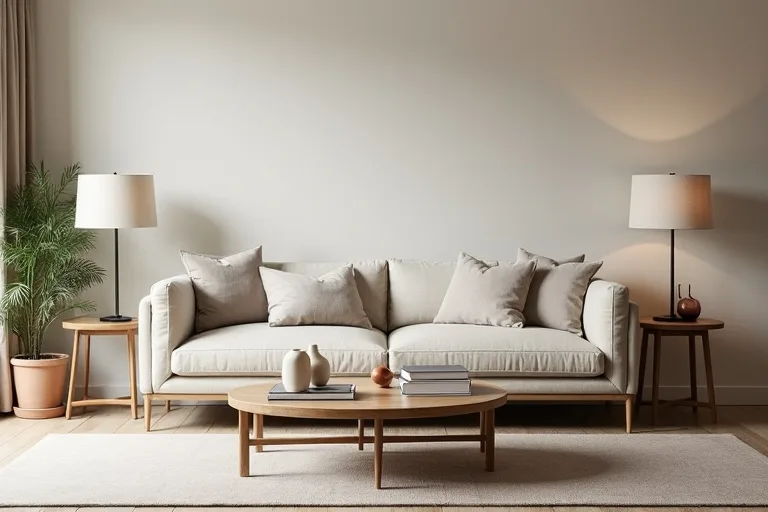
Once the layout is clear, the room becomes easier to finish in a calm way. A pair of table lamps can balance side lighting, and neutral throw pillow covers can soften the sofa without adding visual noise. If you want a small planning aid for that stage, the Room Makeover Planner, Home Layout Budget Spreadsheet (Digital Download) can help you keep the update organised.
Best next step
Before you buy anything else, test the room with a sizing tool or layout planner. That will tell you whether your chosen sofa leaves enough space for circulation, tables, and everyday use.
- Choosing a sofa before checking the room measurements.
- Leaving too little space for walkways around the seating area.
- Ignoring the room’s focal point and forcing the sofa to face the wrong direction.
- Using a rug or coffee table that is too large for the layout.
- Trying to use every wall instead of creating one clear seating zone.
The best sofa layout is the one that fits the room you actually have, not the room you wish you had. Measure first, protect the walkways, and choose the arrangement that supports everyday use. Once the layout feels right, styling choices like lamps and pillows become much easier to make.
Helpful next tools and planners
If you want to make the decision easier before you buy
These are most useful after you have settled the layout. Start with sizing and planning, then move to a few calm finishing pieces that support the room rather than crowd it.
FAQ
How far should a sofa sit from a coffee table?
Keep it close enough to use comfortably, but not so close that knees and walkways feel crowded. The right distance depends on the room, the table shape, and how people move through the space.
Is it better to float a sofa or push it against the wall?
Both can work. Pushing it against a wall often helps in smaller rooms, while floating it can improve flow in larger or open-plan spaces.
What sofa layout works best in a small living room?
A simple layout usually works best: one sofa, one clear focal point, and enough open space to move around it. Avoid oversized sectionals unless the room can truly support them.
Should the sofa face the TV or the fireplace?
Usually it should face whichever focal point matters most for daily use. In many homes, that is the TV, but if the room is mainly for conversation, the fireplace or seating group may be the better anchor.
Three sensible next steps
Some links in this article may be affiliate links. Read more in the Affiliate Disclosure.