Whole home renovation budgets rarely fall apart because of one big mistake. More often, they grow too fast because the early planning was incomplete, the decisions were made in the wrong order, or the scope kept shifting after work had already started.
If you are trying to keep a renovation calm and controlled, the best move is to slow down before shopping and focus on scope, layout, and costs first. That gives every later choice a clearer budget limit.
Quick answer
The biggest budget problems usually come from unclear scope, weak planning, and late changes. A whole home renovation stays steadier when you define what is included, check measurements and layout early, choose finishes after the main decisions, and keep a contingency for hidden work.
Start with the full scope, not the first room that feels urgent
One of the fastest ways to overspend is to begin with isolated ideas instead of a complete renovation map. A kitchen may feel like the priority, but once demolition starts, it often affects flooring, trim, lighting, wall finishes, and nearby rooms. If those connections are not planned upfront, each new decision can create another cost.
Before you request quotes or buy anything, write down what the renovation truly covers. That includes rooms, surfaces, systems, and the level of finish you want to reach. The goal is not a perfect design document. The goal is a clear boundary around the work so you do not keep adding pieces later.

A useful test is to ask whether a decision changes the scope or simply changes the style. Changing paint color is usually a style choice. Moving plumbing, replacing flooring across several rooms, or opening a wall is a scope choice. Scope changes are the ones that can affect labor, timing, and the budget far more than expected.
Practical check
If a choice affects structure, plumbing, electrical, flooring, or multiple rooms, treat it as a budget decision first and a design decision second. If it only changes appearance, it can usually wait until the main plan is settled.
Check measurements before you lock in finishes
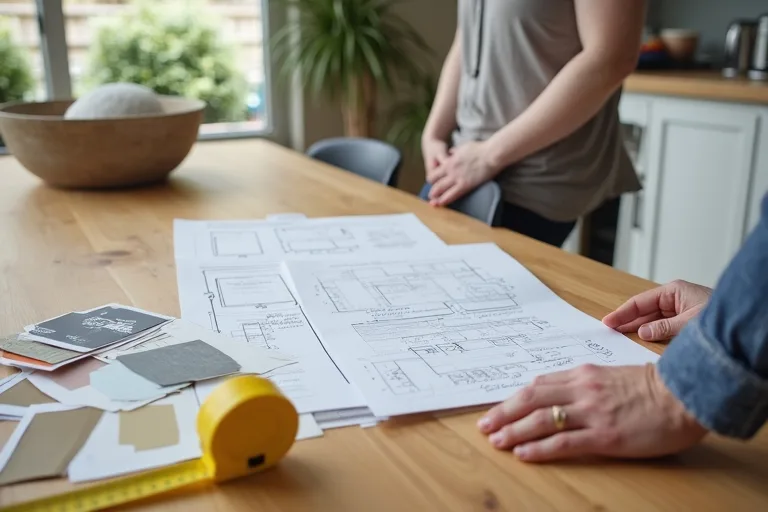
Another common budget leak happens when finish selections are made too early. It is easy to choose tile, lighting, cabinets, or paint samples before the room layout is confirmed. The problem is that many finishes depend on size, clearances, and sequencing. If the measurements change, the product choice may no longer fit the plan.
This is especially true in rooms with tight spacing or multiple trades working in the same area. A vanity, a backsplash, or a light fixture may look right in isolation, but the real question is whether it works with the room dimensions and the order of installation.
- Confirm the room dimensions and fixed points first.
- Check how doors, drawers, fixtures, and walkways will actually function.
- Then choose finishes that match the plan instead of forcing the plan around the finish.
For a smaller, lower-risk update while the larger plan is still being finalised, something like a peel and stick backsplash tile kitchen can be a temporary or budget-led option in the right setting. It is not the answer for every room, but it can help keep a project moving without committing to a full tile installation too early.
If you are working room by room, the Styling Homes tools hub is a sensible place to slow down and check sizing before you spend. For bathroom-specific planning, the bathroom remodel cost estimator can also help you think through the numbers before choosing products.
Plan for hidden costs and mid-project changes
Hidden costs are one of the least dramatic parts of a renovation and one of the easiest to underestimate. Once walls open up or old finishes come out, the project may reveal electrical issues, uneven floors, extra prep, or materials that need replacing sooner than expected. None of that is unusual, but it does need space in the budget.
That is why a contingency matters. It should not be treated as extra money for upgrades. It is the buffer that keeps a necessary change from becoming a financial problem. Without it, even a sensible adjustment can force cuts elsewhere in the project.
Late changes can be just as expensive as hidden damage. A small update to a layout, fixture, or finish after work starts may require reordering materials, changing labor schedules, or repeating finished work. The cleaner approach is to decide what is fixed before construction begins and protect those decisions.
Practical check
Write two lists before work starts: what must happen for the home to function well, and what would simply be nice to have. If a new idea appears later, compare it to those lists before saying yes.
Separate must-haves from nice-to-haves before you start shopping
Budget stress usually gets worse when every decision feels equally important. In a whole home renovation, that leads to scattered spending: one upgraded item here, one more change there, and suddenly the total has moved far beyond the original plan.
A calmer way to plan is to group choices into three levels. First are the must-haves: anything needed for safety, function, or basic livability. Second are the important upgrades that improve the daily experience of the home. Third are the nice-to-haves, which can wait if the numbers start to tighten.
That structure makes shopping much easier. For example, a better bathroom light or a cleaner backsplash solution may be worth doing earlier than decorative extras if they help the room feel finished without forcing a larger redesign. A product like an LED vanity light fixture bathroom can make sense when the room needs a dependable upgrade and the layout is already settled.
If you want a simple way to stay organised, the Home Renovation Budget Planner Spreadsheet can help you track scope, line items, and decisions in one place. It is most useful when you already know what is included and you want a clearer view of how each choice affects the total. For broader project planning, the Remodel & Budget hub is the best place to keep the process grounded.

Best next step
If you are still shaping the project, start with the Remodel & Budget hub and a simple planner before you buy materials or lock in quotes. A clear scope and a running cost list will make every later decision easier.
Common mistakes
- Starting demolition or shopping before the full scope is written down.
- Ignoring room measurements, clearances, and how the layout will function.
- Choosing finishes before major decisions are locked in.
- Forgetting a contingency for hidden issues and prep work.
- Allowing late changes to accumulate without checking the budget impact.
Bottom line
A whole home renovation stays much easier to control when the plan is built in the right order: scope first, measurements next, finishes after that, and budget protection throughout. If you keep the must-haves separate from the nice-to-haves, you can make steady choices without letting the total grow faster than expected.
Helpful next tools and planners
If you want to make the decision easier before you buy
These options are most useful when you are still planning and want to keep the project practical, not impulsive.
FAQ
What usually makes a renovation budget grow the fastest?
Unclear scope and late changes are the biggest drivers. When the project plan is vague, almost every decision becomes a moving target.
Should I choose materials before I hire trades?
Not usually. It is safer to confirm the layout, measurements, and scope first so your finish choices fit the work that actually needs to happen.
How much contingency should I keep in reserve?
That depends on the condition of the home and the size of the project, but the important point is to keep a buffer for surprises instead of using every available dollar on visible upgrades.
What is the simplest way to stay on budget?
Separate must-haves from nice-to-haves, track every decision in one place, and check the budget before approving any change once work has started.
Read next
Three sensible next steps
If you want to keep planning without losing control of the budget, these are the most useful places to go next.
Some links in this article may be affiliate links. Read more in the Affiliate Disclosure.