Farmhouse style stays popular because it feels familiar: simple, warm, and easy to live with. The problem is that it can quickly drift into a look that feels too themed, too busy, or too fragile for everyday use.
The better approach is to start with how the room needs to work. Once the layout, seating, and storage make sense, farmhouse details can add comfort instead of creating clutter.
Use simple materials, a neutral palette, and functional furniture first, then add a few farmhouse details. If the room still works for daily life, the style will feel calm rather than staged.
What farmhouse style means now
Modern farmhouse is less about copying a country house and more about choosing a grounded, practical look. It usually leans on natural materials, soft neutrals, and pieces that feel approachable rather than formal. The best versions of the style look lived in, not decorated to prove a point.
That matters because a room can have farmhouse character without leaning on obvious signs like excessive signage, distressed finishes, or too many barn-inspired accents. In a good farmhouse room, the structure of the space does most of the work. The style comes through in the materials, the shapes, and the way the room is used.
If you are trying to decide whether farmhouse is the right direction, focus on whether you want a room that feels relaxed, practical, and unfussy. It suits homes where comfort and durability matter more than a polished, formal appearance.
The real decision is not whether the room looks farmhouse enough. It is whether the room still supports your routines after you add the style. If the sofa, table, and storage feel awkward, the decor will not fix that. If the room already works, the style layer becomes much easier to handle.
The materials and shapes that do the work
Farmhouse style usually feels strongest when the palette stays restrained. Think warm white, cream, beige, muted gray, soft black accents, and natural wood tones. These colors help the room feel calm and make it easier to mix older and newer pieces without visual noise.
Materials matter just as much as color. Wood, linen, cotton, ceramic, woven textures, and simple painted finishes fit the style naturally. You do not need everything to be rustic. In fact, too much rough texture can make the room feel heavy. The goal is a mix of clean and tactile surfaces.
The shapes should stay simple:
- Choose furniture with easy lines and comfortable proportions.
- Use tables and storage pieces that look solid rather than ornate.
- Repeat a few shapes, such as round ceramics or rectangular frames, so the room feels connected.
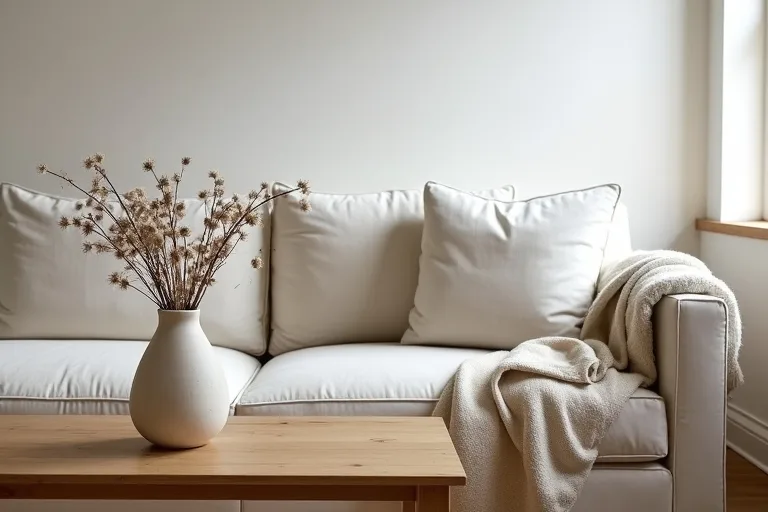
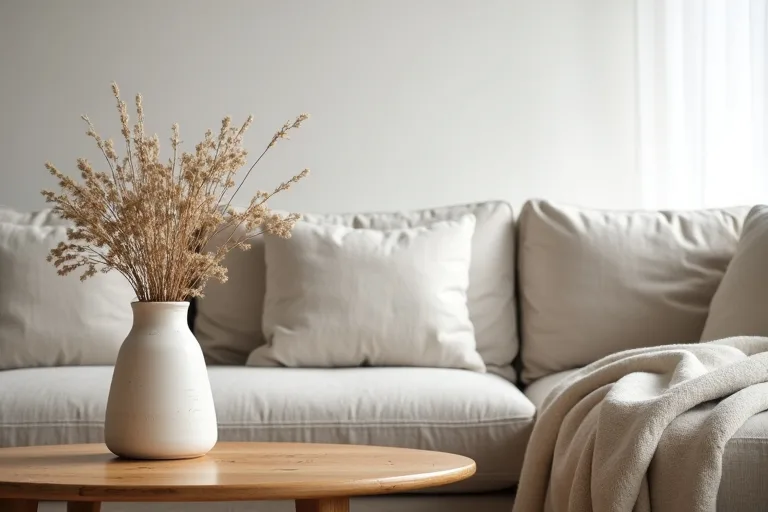
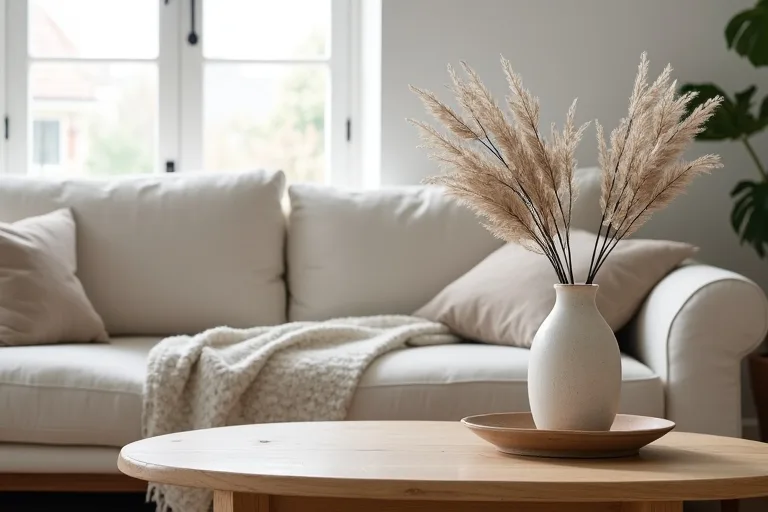
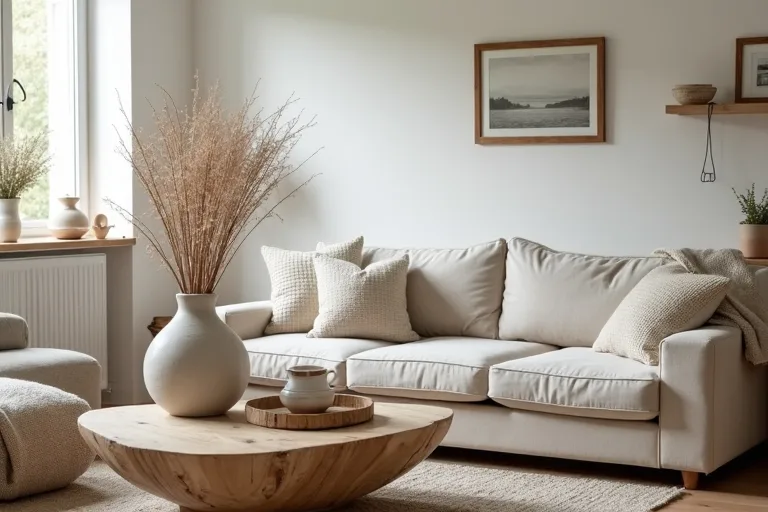
A natural wood coffee table, a plain upholstered sofa, and a ceramic vase set are enough to create the feeling without overbuilding it. The style is strongest when the room looks usable first.
Layout and furniture choices that keep it livable
Farmhouse rooms often fail when the styling gets attention before the layout does. A comfortable farmhouse room needs clear circulation, enough surface space, and furniture that fits the room instead of crowding it. That means checking scale before you shop for details.
Start with the main seating area. Make sure the sofa size suits the wall space, the coffee table is easy to reach, and side tables are placed where they are actually useful. If the room is open plan, keep the arrangement simple so the farmhouse look does not spread into every corner.
When choosing furniture, ask three questions:
- Does this piece fit the room size?
- Will I use it every day?
- Does it support the way the room needs to function?
If you are not sure, use a planning tool before you buy. A layout check is more useful than another inspiration search because it tells you whether the room can hold the style comfortably. For living rooms, the Room Layout Planner is a sensible place to start, and the Sofa Size Calculator can help you avoid a piece that dominates the room.
For broader room ideas, the Living Room Ideas guide is a useful companion when you want to compare looks without losing sight of practical fit.
Finishing layers that add warmth without clutter
Once the room plan is set, the finishing layers can do their job quietly. This is where farmhouse style becomes comfortable rather than overdone. Textiles, ceramics, and a few natural accents bring softness to the room, but they should not compete with the furniture or fill every visible surface.
A neutral throw blanket on the sofa adds an easy layer of warmth, especially in living rooms that need to feel inviting without looking fussy. A ceramic vase set works in the same way. It gives the room a simple focal point and helps reinforce the natural materials already in the space.
For a low-risk update, keep the styling limited to a few pieces you can repeat elsewhere in the home. That creates consistency without forcing the room into a theme. If you like shopping for finishing pieces, the simplest choices are often the best: ceramic vase set neutral home decor and neutral throw blanket for sofa or bed.
If you want a more organized way to plan the room before adding decor, the Home Planning System Bundle can help you work through layout and styling decisions in a more structured way.
Best next step
If you want the farmhouse look to feel calm and practical, start by confirming the room plan before you buy more decor. A layout-first approach saves money and makes the style easier to live with.
- Buying decorative pieces before checking furniture scale.
- Using too many rustic finishes at once, which can make the room feel heavy.
- Mixing in farmhouse accents without a clear neutral base.
- Letting signs and themed decor take over the room.
- Choosing soft furnishings that look good in photos but do not fit daily use.
Farmhouse interior design works best when it stays grounded in comfort, function, and simple materials. Build the room around layout and everyday use first, then add neutral textures, wood, and a few well-chosen accents. That is what keeps the look calm, practical, and easy to live with.
Helpful next tools and planners
If you want to make the decision easier before you buy
These next steps are useful when you want a little more clarity before choosing furniture or finishing pieces. They keep the process focused on fit, direction, and room planning.
FAQ
What makes farmhouse style different from rustic style?
Farmhouse style is usually cleaner and more livable than rustic style. It keeps the room softer, lighter, and more practical, while rustic style often leans more heavily into rough textures and aged finishes.
Can farmhouse style work in a small living room?
Yes, as long as the furniture scale is right and the room is not overloaded with decor. Smaller spaces often work best with a light neutral palette, a simple sofa, and a few functional pieces.
Do I need shiplap or barn-style details to get the look?
No. Those details can be part of the style, but they are not required. Many of the best farmhouse rooms rely on color, texture, and layout instead.
What should I buy first if I want to try this style?
Start with the furniture and layout, then add one or two finishing pieces such as a neutral throw blanket or ceramic vase set. That keeps the room from becoming cluttered before the basics are in place.
Three sensible next steps
Some links in this article may be affiliate links. Read more in the Affiliate Disclosure.