
Bathroom lighting is one of those choices that looks simple until the room starts feeling wrong. A space can be bright enough and still feel flat, or it can be so harsh that every surface seems unforgiving.
The problem is usually not that you bought the wrong style of fixture. It is more often a planning issue: too little layering, poor placement, the wrong bulb tone, or a setup that works on paper but not in everyday use.
Most bad bathroom lighting comes from using one overhead light, poor placement, or fixtures that are too harsh for the space. The easiest fix is to layer light at the mirror, overhead, and around the room so you can see clearly without glare.
Why one ceiling light usually makes a bathroom feel flat
A single ceiling fixture can make a bathroom technically bright while still leaving it visually dull. Light from one source tends to flatten texture, throw shadows in the wrong places, and leave the vanity area less useful than it should be.
That is especially noticeable in smaller bathrooms. When the whole room relies on one point of light, faces can look shadowed, countertops can feel uneven, and the room often reads as harsher than intended after dark.
The better approach is to think about where the light needs to work, not just how many lumens the room receives. In most bathrooms, the mirror, shower, and general room glow each need their own role.

If you can stand at the mirror and see your face lit from above but not from the sides, the room will usually feel harsher than it needs to. If you can also switch on separate light near the mirror, the space becomes easier to use and less flat.
Mirror lighting is where shadows usually start
Bathroom mirror lighting is often the difference between a room that feels calm and one that feels awkward. A fixture placed only above the mirror can cast shadows under the eyes, nose, and chin, which is not ideal for shaving, makeup, or simple grooming.
Side lighting near the mirror is usually more forgiving because it brings light closer to face level. Even when the room is small, that extra balance helps the vanity area feel clearer and more usable.
If you are choosing between one larger fixture and two smaller ones, think about how the light will land on the face first. Style matters, but placement matters more.
- Light the face from both sides if possible.
- Keep the mirror zone separate from the main ceiling light.
- Use a finish that does not bounce too much glare back into the room.
Fixture size, bulb tone, and reflective surfaces can make things worse
Some bathrooms feel harsh because the fixture is too small for the room, too large for the vanity, or visually louder than the rest of the finishes. Scale matters in lighting just as much as it does in furniture.
Bulb tone also changes the way the room feels. A very cool light can make tile, chrome, and white paint look stark, while a warmer tone can soften the room without making it dim. The goal is not to make the bathroom yellow; it is to make it comfortable enough to live with every day.
Reflective surfaces can amplify both good light and bad light. Glossy tile, polished stone, and shiny fixtures can create hotspots if the beam is too direct. If the room already has a lot of reflection, a softer spread of light usually works better than one intense source.
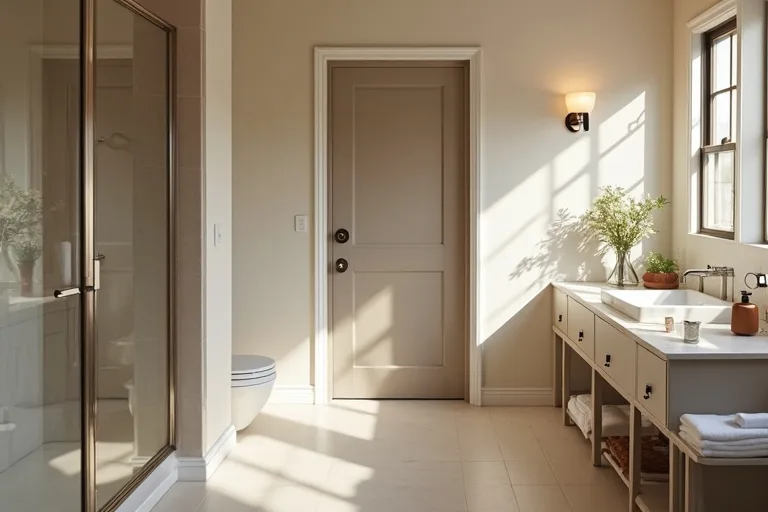
A simple layered-lighting fix that keeps the room practical
The easiest way to improve bathroom lighting is to build it in layers. Start with general light for the room, add task light at the mirror, and then decide whether the shower or a darker corner needs its own source.
If you are planning a refresh, use this order:
- Decide where you need the clearest light for daily routines.
- Choose a mirror light that reduces shadows rather than creating them.
- Check that the main fixture does not overpower the room.
- Look at bulb tone alongside wall color, tile color, and natural daylight.
- Remove clutter around the vanity so light can do its job.
Clutter matters more than people expect. A crowded countertop blocks light and makes even a good fixture feel less effective. Small organizers can help the room read cleaner without requiring a full renovation.

Best next step
If you are changing bathroom lighting, plan the room before you buy fixtures. That way you can match the lighting choice to the scope of the update, the vanity layout, and the budget you actually want to keep.
- Relying on one ceiling light to do every job in the room.
- Placing mirror lighting so it creates shadows instead of balance.
- Choosing fixtures that are too small, too large, or too visually harsh for the vanity.
- Using a bulb tone that fights the tile, paint, or natural light in the room.
- Letting countertop clutter block the effect of otherwise good lighting.
Bathroom lighting works best when it is planned as a system, not as a single fixture. If the room feels flat, harsh, or difficult to use, start by checking placement, mirror lighting, and bulb tone before you buy anything new. A calmer layout usually solves more than a decorative upgrade.
Helpful next tools and planners
If you want to make the decision easier before you buy
A small planning step can save you from buying the wrong fixture or overbuying for the room. These options fit the same practical approach: organize first, then spend with more clarity.
FAQ
What is the biggest bathroom lighting mistake?
The most common mistake is relying on one overhead light. It usually leaves the room flat and the mirror area underlit.
Should bathroom mirror lights go above or beside the mirror?
Side lighting is often better for reducing facial shadows, although a good overhead fixture can work when it is paired with other light sources.
What bulb tone works best in a bathroom?
A balanced tone that feels comfortable in the room is usually better than a very cool, stark light. The right choice depends on the finishes and the amount of daylight.
How do I make a small bathroom feel less harsh?
Use layered lighting, keep the vanity clear, and avoid overly bright glare on reflective surfaces. Small changes in placement can make the room feel much calmer.
Three sensible next steps
Some links in this article may be affiliate links. Read more in the Affiliate Disclosure.