
Bedroom storage is supposed to make a room feel calmer, but the wrong choices often do the opposite. A few extra baskets, a bulky nightstand, or storage that blocks the walking path can make even a tidy bedroom feel visually busy.
The good news is that most of the problem is not about having too little storage. It is usually about using the wrong kind of storage in the wrong place, or buying pieces before checking the room layout first. A few simple sizing decisions can make the whole room feel easier to live with.
Too many open items, oversized furniture, and poor under-bed use usually create the most visual mess. The calmest fix is to measure the room first, keep storage low and contained where possible, and choose pieces that support clear walkways instead of filling every corner.
Why bedroom storage can make a room look busier
Bedroom storage works best when it disappears into the room. When storage is too exposed, too large, or too varied in style, it starts competing with the bed, the bedding, and the natural focal points of the space. That is when the room feels cluttered even if nothing is technically out of place.
The issue is often visual, not just practical. Open shelving, mismatched bedside tables, and loose items on top of furniture all add up quickly. In a small bedroom, that visual noise matters even more because every object is easier to see.
If you are planning a reset, it helps to think in terms of layout first and styling second. The Bedroom Ideas hub is a useful place to step back and make those bigger room decisions before you buy more storage.
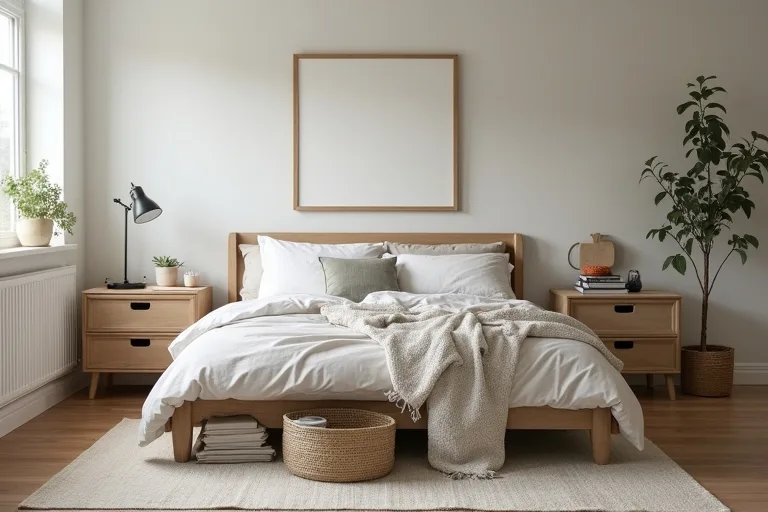
The real decision is not how much storage you can fit in the room. It is whether each piece improves flow, hides the right things, and leaves enough open surface and floor space to make the bedroom feel easy to use.
The most common storage mistakes to avoid
Most visual mess in a bedroom comes from a handful of predictable choices. Once you know them, it becomes much easier to avoid buying the wrong thing.
- Using too much open storage. Open shelves, visible bins, and uncovered stacks can look tidy for a day and busy very quickly.
- Choosing bedside tables that are the wrong scale. A nightstand that is too wide or too tall can crowd the bed and interrupt movement around it.
- Ignoring under-bed space. If the bed has usable clearance, not using it usually means more items end up on the floor or on top of furniture.
- Blocking the path. Storage that narrows the walkways can make the room feel smaller, even if it increases capacity.
- Mixing too many container styles. Too many finishes, basket types, and box sizes can turn organized storage into visible clutter.
For smaller rooms, this matters even more. If you need ideas that focus on compact planning, the small spaces storage hub is a sensible next stop after you identify which mistake is causing the biggest problem.
Smarter choices for under-bed, bedside, and vertical storage
The easiest way to reduce visual mess is to give each storage zone one job. Under the bed is best for items you do not need to see every day. Bedside storage should handle the essentials you actually reach for at night. Vertical storage should stay controlled, so it adds function without taking over the room.
Here is a simple way to think about it:
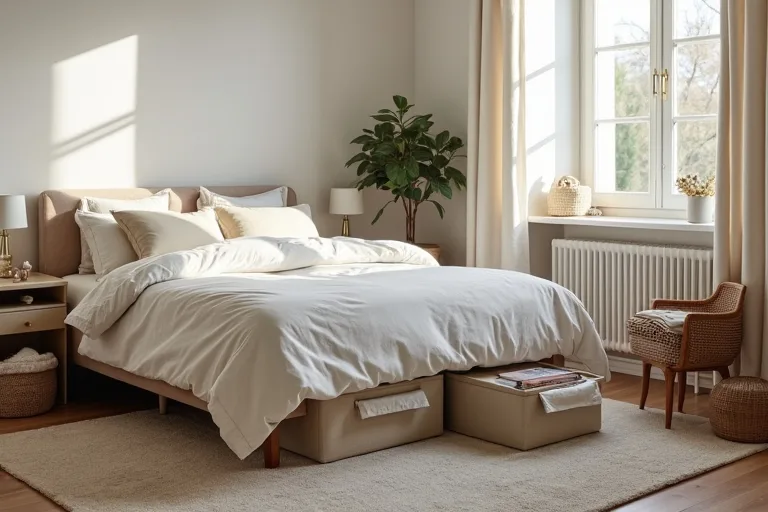
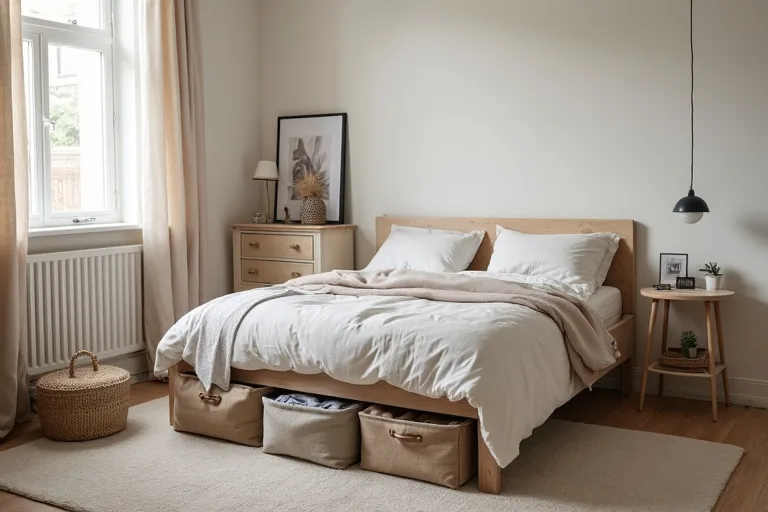
- Under the bed: use containers that slide easily and stay low in profile, especially for off-season bedding or extra pillows.
- Next to the bed: choose a nightstand that leaves room to open drawers, place a lamp, and move comfortably around the edge of the bed.
- Above eye level: keep wall shelves or tall storage visually quiet and avoid overfilling them.
A practical option for the lower storage zone is under bed storage containers with wheels, especially if you want something that is easy to pull out and put back without lifting. For bedside balance, a simple nightstands set of 2 bedroom can help if both sides of the bed need the same scale and function.
A simple layout check before you buy anything
Before you order storage, measure the room in a few key places. You do not need a full redesign to make a better decision. You just need the basics: bed width, available wall space beside the bed, walkway clearance, and under-bed height if you plan to use that space.
Start with the bed first, then check what remains. If the bed is already tight against a wall, a large nightstand may not be the right answer. If there is good clearance under the bed, a lower, hidden storage system may be more useful than another visible cabinet or basket.
A simple layout review can save money and prevent the room from feeling crowded later. If you want help mapping the space before you buy, the room layout planner is the most useful next step. For broader planning guidance, the Bedroom Ideas hub keeps the room decision process in one place.
Best next step
Before you buy another basket, cabinet, or nightstand, map the room first. A layout tool makes it easier to check bed clearance, bedside sizing, and under-bed space so you can choose storage that improves the room instead of adding more visual mess.
- Buying storage before measuring the room and walkway widths.
- Using too many open bins, baskets, and shelves in view.
- Choosing nightstands that are too large for the bed and wall space.
- Leaving usable under-bed space empty while adding more visible storage.
- Mixing storage pieces that solve different problems but do not visually belong together.
The calmest bedroom storage is not the biggest system. It is the one that fits the room, uses hidden space well, and keeps walkways, bedside areas, and surfaces clear enough for the room to feel easy rather than crowded.
Helpful next tools and planners
If you want to make the decision easier before you buy
A simple planner can help you avoid the most common sizing mistakes. If you prefer to sketch the room first, check the layout, then decide which storage really earns its place.
FAQ
How do I know if my bedroom storage is the problem?
If the room feels crowded even when it is clean, the issue is often the size, placement, or openness of the storage pieces rather than the amount of storage overall.
What is the best place to start when reorganizing a bedroom?
Start with the bed and the walking space around it. Once that is clear, it is easier to decide what belongs under the bed, beside the bed, or elsewhere in the room.
Should I use more open or closed storage in a bedroom?
Closed storage usually creates a calmer look in bedrooms because it reduces what you see at a glance. Open storage can work, but it needs to stay very controlled.
Why does my bedroom still look messy after I organize it?
That usually means the room has a layout issue, a scale issue, or too many visible items competing for attention. Rechecking the sizing and placement often helps more than adding another organizer.
Three sensible next steps
Some links in this article may be affiliate links. Read more in the Affiliate Disclosure.