
A whole home renovation feels much easier when you slow the process down at the start. Before you request quotes or fill carts with finishes, you need a clear picture of what is changing, what can wait, and what the project is actually trying to solve.
This checklist is designed to keep the work practical. Use it to define scope, room order, measurements, and budget before you spend time comparing materials or speaking with contractors.
Define scope, budget, room order, and measurements first so you can price materials and talk to contractors with fewer surprises.
Start with scope, not shopping
The biggest planning mistake is beginning with finishes. A backsplash, a vanity light, or a paint color can be useful later, but they should not decide the renovation for you. First, write down what is staying, what is changing, and what problem each room needs to solve.
For a whole home renovation, that means separating cosmetic updates from work that affects layout, plumbing, wiring, storage, or circulation. If the plan is still vague, your contractor quotes will be harder to compare and your material budget will drift quickly.
Try to describe the project in plain language. For example: replace worn kitchen surfaces, improve bathroom lighting, refresh flooring, and update storage in the main living areas. That is much easier to price than a loose list of ideas.

If you cannot explain the project in one or two sentences without naming products, the scope is probably not ready yet. Tighten the brief before you start asking for prices.
Map the rooms and measure what matters
Once the scope is clear, list the rooms in priority order. Decide which spaces must be handled first and which ones can wait. A phased plan often makes more sense than trying to do every room at once.
Then measure the basics that affect layout and buying decisions:
- Room dimensions and ceiling height
- Door and window positions
- Fixed fixtures such as sinks, radiators, and built-ins
- Clearances around circulation paths
- Any large items you plan to keep
These numbers help you understand whether the current layout still works or whether the renovation needs more than a surface update. They also prevent avoidable mistakes when you start comparing products or asking for bids.
For layout-based planning, the Room Layout Planner is a useful next step before you buy anything that needs to fit the space.
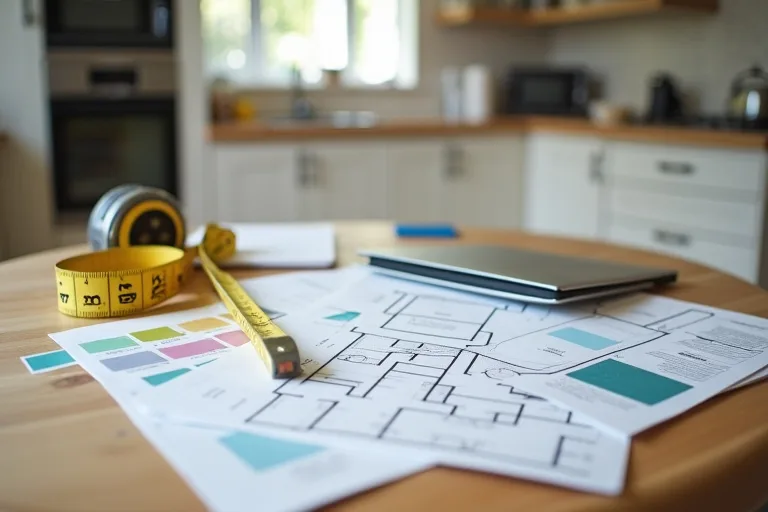
Set the budget and contractor questions before you request quotes
A realistic renovation budget is more than a total number. It should separate the work into useful buckets: labor, materials, fixtures, finishes, delivery, and a small buffer for things you are likely to discover once work begins. That structure makes it easier to compare contractor estimates and decide where to spend more carefully.
Before you call contractors, write down the questions that will help you compare them fairly. For example: What is included in the quote? What allowances are assumed? What changes would trigger a cost adjustment? Who is responsible for ordering, delivery, and disposal? Clear questions save you from comparing one vague bid against another.
If you want one place to organize this, the Tools page is a good starting point. For a more detailed budget structure, the Home Renovation Budget Planner Spreadsheet can help you track scope, allowances, and material targets in one place.
Price materials after the plan is clear
Once your scope, measurements, and budget are settled, material shopping becomes much simpler. You can price items against a real plan instead of reacting to whatever looks appealing in the moment.
For budget-led upgrades, it often helps to compare one or two practical options before committing to a full replacement. In a kitchen, for example, peel and stick backsplash tile kitchen can be a temporary or lower-cost way to refresh the room while you keep the larger renovation budget focused on layout, storage, or worktop improvements. In a bathroom, a simple led vanity light fixture bathroom can make the room feel more finished without changing the entire room plan.
If you are still deciding where the renovation should begin, go back to the room order and ask which choice will improve day-to-day use first. That is usually the best guide for where money should go.

Best next step
If you want the project to feel manageable, organize the scope and budget before you call anyone. The Home Renovation Budget Planner Spreadsheet is the most practical next move for tracking room priorities, material allowances, and contractor-ready notes in one place.
- Buying finishes before the room order is set
- Requesting contractor quotes without measurements
- Comparing bids that include different allowances or scopes
- Forgetting to separate labor, materials, and contingency costs
- Choosing products before deciding what the room needs to do
Whole home renovation planning gets easier when you slow down at the start. Define the scope, measure the spaces, set a realistic budget, and list contractor questions before you price materials. Once the structure is clear, shopping becomes more useful and the renovation is much easier to control.
Helpful next tools and planners
If you want to make the decision easier before you buy
These are the most practical next steps if you are still organizing the project. Start with the planner, then use the relevant tools to check fit and room-by-room costs.
FAQ
What should I decide before getting contractor quotes?
Decide the project scope, room priority, rough budget range, and the measurements that affect layout and materials. That gives contractors enough information to quote more accurately.
How detailed should my renovation plan be before I shop?
Detailed enough that you know what each room needs to do, what is changing, and which dimensions matter. You do not need every finish chosen, but you do need a clear plan.
Should I price materials before or after I hire a contractor?
After the plan is clear, but before you finalize everything. Early pricing helps you see whether the project fits your budget and whether the scope needs to change.
What is the simplest way to stay organized?
Use one budget planner, one room list, and one measurement sheet. Keeping scope and costs in separate buckets makes the process much calmer.
Three sensible next steps
Some links in this article may be affiliate links. Read more in the Affiliate Disclosure.