
Bedroom storage goes wrong when the shopping comes first. A set of bins, a tall shelf, or a new cabinet can look like the answer, but if it does not suit the room layout, it often becomes another thing to work around.
The calmer approach is to decide what needs storing, where the space really is, and how often you need to reach it. Once those three things are clear, it is much easier to choose between bins, shelves, cabinets, and under-bed storage without overbuying.
Start with what needs storing, where it can fit, and how often you need access before buying anything. In most bedrooms, the right storage choice is the one that fits the room flow first and looks good second.
Start with what needs storing, not what looks handy
Before you compare furniture, group the items you want to store. Bedding, seasonal clothing, books, accessories, charging cables, and daily essentials usually need different solutions. Mixing all of them into one big storage purchase is where bedrooms get cluttered again.
A useful rule is simple: daily-use items should stay easy to reach, while occasional items can live in deeper or lower storage. That is why a nightstand, a shelf, and a few under-bed containers can sometimes work better than one oversized cabinet.
If you are deciding how much storage the room actually needs, start by asking what is currently piling up on the floor, dresser, or chair. That pile usually tells you more than a shopping list does.
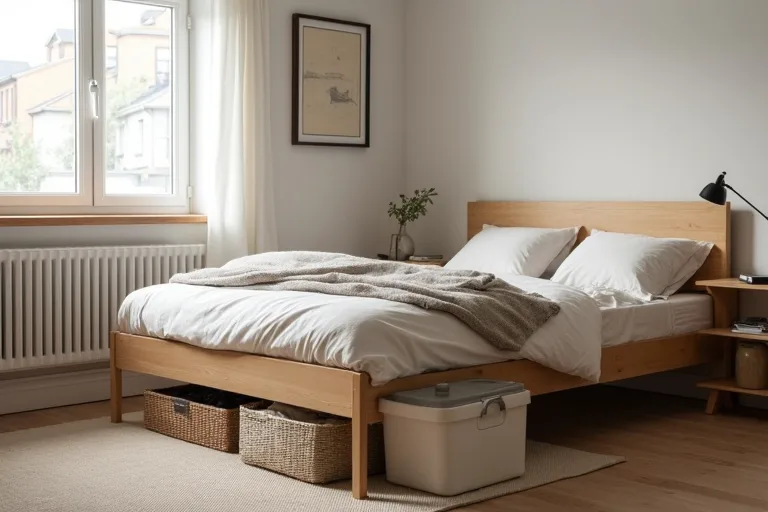
If the item needs to be reached every day, keep it within easy arm’s reach. If you only need it sometimes, it can go under the bed, higher on a shelf, or inside a closed cabinet. The real decision is not just storage style; it is access level.
Measure the room before you compare bins, shelves, or cabinets
Storage only feels simple until a door stops opening or a drawer cannot slide out. That is why the next step is to check the space you already have, not the space you wish you had.
Look at four areas: floor space, wall space, closet space, and under-bed space. Each one has different limits. A narrow wall may suit shelves but not a deep cabinet. A bed with enough clearance may hold rolling containers. A small bedside area may only work for a compact nightstand, not a bulky table.
When you are planning a room update, it helps to make the layout visible before you buy. If you want a simple way to do that, the room layout planner is a useful next step, and the small spaces storage guide can help you think through tighter rooms more clearly.

- Check that doors, drawers, and walking paths stay clear.
- Leave space for lamp cords, charging, and bedside movement.
- Make sure storage depth matches what you want to put inside it.
- Think about whether the room needs open storage, closed storage, or a mix of both.
Choose the storage type based on use, not just appearance
Each type of storage solves a different problem. Bins are good when you want order and flexibility. Shelves are helpful when you want visibility and easy sorting. Cabinets hide visual clutter, but they take more room and can feel heavy in a small bedroom. Nightstands matter too, because they often become the only truly convenient storage beside the bed.
For practical bedroom planning, think about how the room behaves at night and in the morning. If you only need space for a book, a glass of water, and a charger, a compact nightstand may be enough. If you need extra bedding or off-season clothes out of sight, under-bed storage containers with wheels can be a better use of space.
If you want to compare furniture choices without guessing, a quick product search can help you see styles and sizes side by side. A set of nightstands set of 2 bedroom can be useful when you need matching bedside storage, while under bed storage containers with wheels are often the most practical choice when floor space is limited and access still matters.
Choose closed storage when the room already feels visually busy. Choose open storage when the items are tidy, easy to group, and used often. Choose under-bed storage when you need capacity without giving up wall or floor space.
Make the small-bedroom decision easier with one simple plan
If the room is small, you do not need more storage types. You need fewer, better-chosen ones. A good small-bedroom plan usually combines one main storage solution, one bedside surface, and one low-profile option for overflow.
A practical way to decide is to rank the room by urgency. What must stay visible? What can be hidden? What can move under the bed? What should stay near the bed for daily use? Once you answer those questions, the shopping list gets much shorter.
If you want to map the room before you spend, the Room Makeover Planner, Home Layout Budget Spreadsheet (Digital Download) can help you keep layout decisions and budget decisions in one place. It is especially useful if you are comparing a cabinet, shelving, or under-bed storage and want to see what fits the plan best before you order anything.

For broader bedroom planning, the bedroom ideas hub is a sensible place to compare storage choices with the rest of the room, not as a separate shopping problem.
Best next step
Before you buy anything, map what needs storing and where each item can fit. Then use a room planner or layout tool to test the size and placement of your storage idea against the bedroom flow.
- Buying a large cabinet before checking door swing or walking space.
- Choosing open shelves for items that already look cluttered.
- Using under-bed storage for things you need every day.
- Forgetting bedside needs like charging, reading, and water access.
- Adding too many storage pieces and making the room feel tighter, not calmer.
The best bedroom storage choice is the one that fits the room layout, matches how often you use the items, and keeps the space easy to live in. Start with what needs storing, check the available space, and then choose the simplest solution that solves the real problem.
Helpful next tools and planners
If you want to make the decision easier before you buy
These tools and product ideas can help you compare storage types, test the layout, and keep the room practical before you commit.
FAQ
How do I know if I need bins, shelves, or cabinets?
Start with the items you need to store and how often you use them. Bins work well for grouped items, shelves for visible and easy-to-reach items, and cabinets for clutter you want to hide.
Is under-bed storage a good idea in a bedroom?
Yes, if the space under the bed is easy to access and you do not need those items every day. It is especially useful for seasonal bedding, off-season clothes, or backup linens.
What should I measure before buying bedroom storage?
Check floor space, wall space, closet clearance, and under-bed height. Also make sure doors, drawers, and walking paths still work once the storage is in place.
How do I keep a small bedroom from feeling crowded?
Use fewer pieces, choose compact furniture, and match the storage type to the item. In many small rooms, one bedside table, one closed storage piece, and one under-bed solution is enough.
Three sensible next steps
Some links in this article may be affiliate links. Read more in the Affiliate Disclosure.