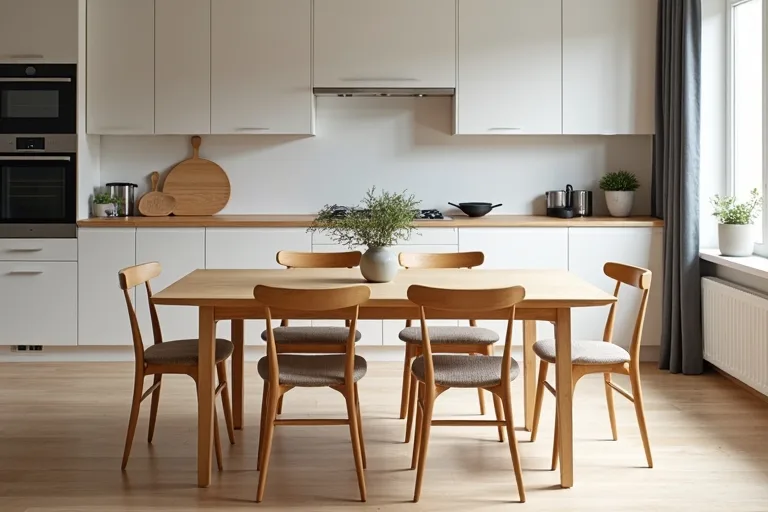
Choosing dining chairs is rarely just about the chair itself. The real decision starts with the room: how much space you have, how people move through it, and whether the table and seating will still feel comfortable once you live with them every day.
If you are comparing tables, chairs, benches, or a full set, the calmest approach is to measure first and shop second. That makes it easier to avoid a table that crowds the room or chairs that look good online but feel too tight once they are in place.
Measure clearance first, then choose the table and chairs that fit your room and daily use. The right dining setup is the one that leaves enough walking space, matches table height, and suits how you actually eat, work, or host.
Start with the room, not the chair
Before you compare styles, decide what the space needs to do. A compact kitchen-dining corner, a family dining room, and an open-plan layout all need different seating choices. The same chair that feels balanced in one room can make another room feel crowded.
Think through the route people take around the table, where chairs will be pulled out, and whether there is a wall, island, radiator, or cupboard nearby. This is where many dining chair ideas become practical rather than purely visual.
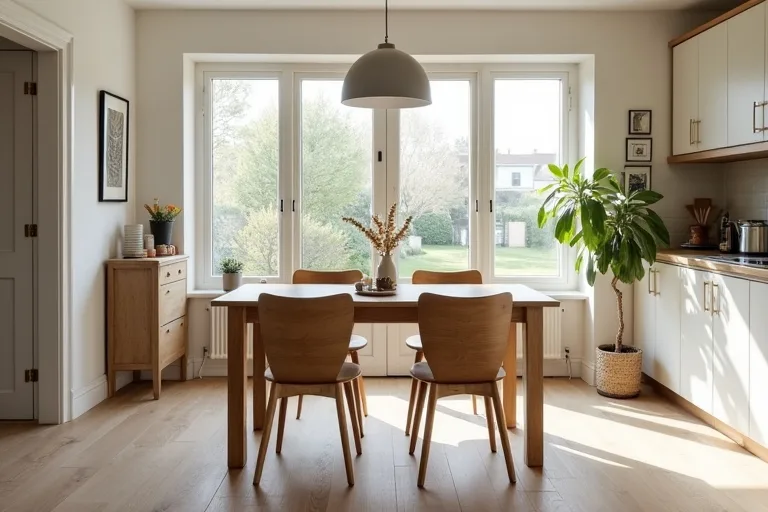
If you are unsure how large the table should be, use the dining table size calculator once you have a rough room measurement. It is a simple way to right-size the table before you commit to chairs or seating around it.
The real question is not whether a chair looks nice on its own. It is whether the full dining setup still leaves comfortable space to walk, sit, and stand up without bumping into walls or other furniture.
Measure table space and clearance before buying
The most useful dining chair checklist starts with floor space. Measure the area where the table will sit, then add the clearance needed for chairs to move back naturally. That extra space matters more than most shoppers expect, especially in small dining rooms and narrow kitchen-dining layouts.
If you are deciding between a fixed table and an extendable one, measure the room for both the everyday size and the expanded size. A table that fits well most days but overwhelms the room when opened may not be the best practical choice.
A simple order of decisions usually helps:
- Measure the room area available for the table.
- Check the walking space around it.
- Decide how much pull-out space chairs need.
- Confirm whether the table should stay fixed or extend.
- Only then compare chair styles and seating options.
If you are still comparing table options, an extendable dining table for small dining room can be a sensible starting point when you need flexibility without giving up daily space.
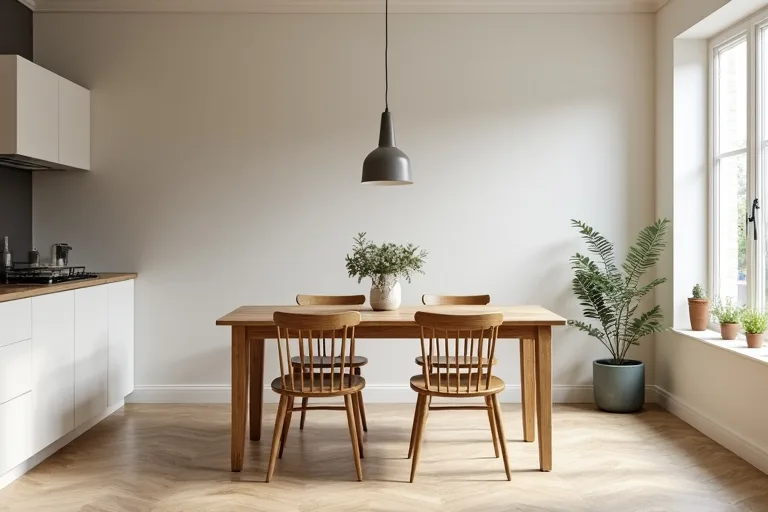
For readers who like a more structured planning step, a room worksheet can help keep the measurements and options in one place. The Room Makeover Planner, Home Layout Budget Spreadsheet (Digital Download) is useful if you want to compare layout choices before buying.
Check chair width, depth, and seat height
Once the room is measured, the next question is whether the chairs themselves will fit comfortably around the table. Chair width affects how many seats you can place. Chair depth affects how easily people can sit down and move out. Seat height affects how the chair feels at the table.
These details matter more than the finish or the shape when you are planning for daily use. A narrow chair might fit more people, but it can feel less comfortable for longer meals. A padded chair may be inviting, but it can also need more visual and physical room.
When you are choosing dining chair ideas, compare the chair to the table as a pair. Look at how much space the chair takes when pulled out, whether arms will slide under the table, and whether the seat height looks balanced with the tabletop.
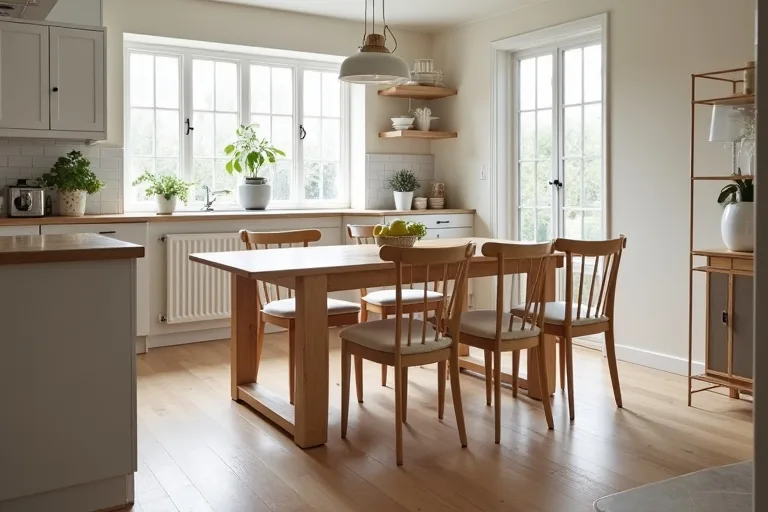
If comfort is important and the room can handle the extra softness, an upholstered dining chairs set of 4 can work well. If your household needs faster cleanup, a more wipeable finish may be the better long-term choice.
Choose the chair that fits the daily routine, not just the chair that looks best in a single photo. If the room is tight, slimmer chairs may be better than bulkier ones. If the room is larger, comfort and presence can matter more than saving every inch.
Choose the seating mix that suits how you live
Not every dining area needs a matching set of four or six chairs. Some rooms work better with a bench on one side, a pair of upholstered chairs at the ends, or a mixed setup that leaves easier traffic flow. The best choice depends on how the room is used most often.
If the dining area doubles as a homework spot, casual work zone, or overflow prep space, it is worth choosing seating that can handle that flexibility. Upholstered chairs are comfortable, but easy-clean surfaces can be simpler in homes with children, pets, or frequent everyday use.
Bench seating can save space and feel more open along a wall, while individual chairs are usually easier to move and space evenly. Mixed seating can also help a room feel less rigid, as long as the table shape and clearance still work.
For a calmer next step, return to the Kitchen & Dining hub and compare dining, layout, and planning options together rather than shopping in pieces. That keeps the room decision connected to the way the space will actually function.
Best next step
If you have your room measurements, the most helpful next move is to right-size the table before buying chairs or extra seating. That keeps the layout realistic and makes the rest of the choices easier.
- Buying chairs before measuring the table area and walking clearance.
- Forgetting that pulled-out chairs need space behind them.
- Choosing a table that fits only when no one is seated.
- Mixing seating styles without checking height and depth together.
- Picking a finish that looks good but is hard to live with every day.
The easiest way to choose dining chair ideas is to begin with clearance, then match the table size, chair dimensions, and seating style to the room you actually have. Once the layout works, the style choices become much simpler.
Helpful next tools and planners
If you want to make the decision easier before you buy
These options are most useful when you are still comparing layout, comfort, and budget. Start with the planning tool, then move to products only if the measurements make sense.
FAQ
How much space should I leave around a dining table?
Leave enough room for chairs to pull out and for people to walk past without squeezing through. The right amount depends on the room, but the key is to plan clearance before buying the table.
Should I buy dining chairs or the table first?
Start with the room and table size, because the table usually sets the footprint for everything else. Then choose chairs that fit the remaining space and the way you use the room.
Are upholstered dining chairs a good idea?
They can be a good choice if comfort matters and the room has enough space. If your household needs easy cleanup, a simpler wipeable finish may be more practical.
What is the easiest way to compare seating options?
Measure the room, check table size, then compare chair width, depth, and seat height together. That keeps the decision grounded in fit rather than style alone.
Three sensible next steps
Some links in this article may be affiliate links. Read more in the Affiliate Disclosure.