
If your bathroom always feels busy, the problem is usually not a lack of baskets. It is a storage plan that does not match the room, the people using it, or the amount of everyday clutter that needs a home.
The best bathroom storage ideas start with layout first. Once you know what needs to be stored and where the useful space actually is, the right solution becomes much easier to choose.
The best bathroom storage uses vertical space, keeps daily items easy to reach, and matches the room’s layout. In most bathrooms, that means choosing one strong main solution, such as over-toilet shelving or a rustproof shower caddy, then adding only the small extras you truly need.
Start with what the bathroom actually needs to store
Before you buy shelves or containers, list the items that are causing the clutter. Most bathrooms hold a mix of daily-use products, spare toiletries, towels, cleaning items, hair tools, and sometimes medication or backup paper goods. These need different kinds of storage, and they should not all compete for the same shelf.
A calm bathroom usually has three storage zones: the items you use every day, the items you use occasionally, and the items you want out of sight. Once you separate those categories, it becomes clearer whether you need open shelving, closed storage, or a simple way to keep the shower area under control.
For a small or awkward bathroom, the right answer is often not a bigger cabinet. It is a better split between visible and hidden storage, so the room feels lighter without becoming impractical.
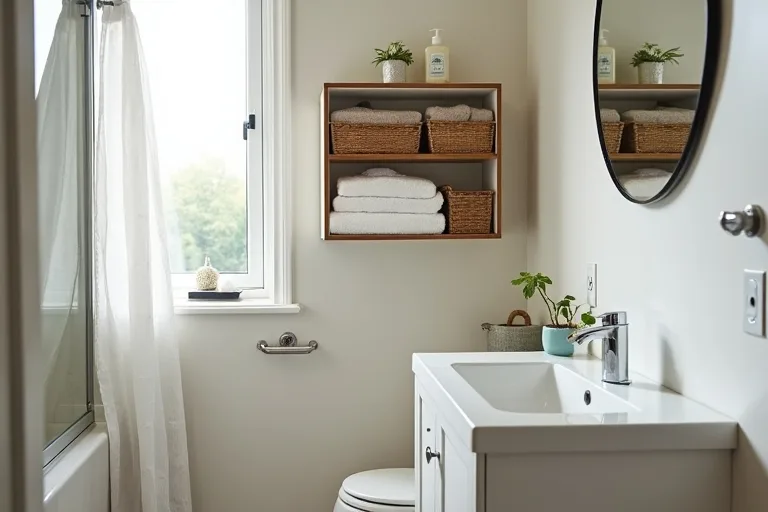
If you can see the same bottles, towels, and loose items every day, the issue is usually not volume alone. It is that the room needs one clear storage system for daily items and one separate place for backup stock or less-used things.
Use vertical and wall storage before adding more floor clutter
When floor space is limited, vertical storage usually gives the biggest improvement. That is why an over toilet storage shelf bathroom solution is often one of the most practical choices. It uses space that is usually wasted, keeps towels or spare supplies within reach, and avoids blocking the room’s main circulation path.
Wall-mounted shelves can also work well above a towel rail, beside a mirror, or in a narrow gap that would otherwise go unused. The key is to keep them shallow enough that they do not interrupt movement or make the room feel tighter.
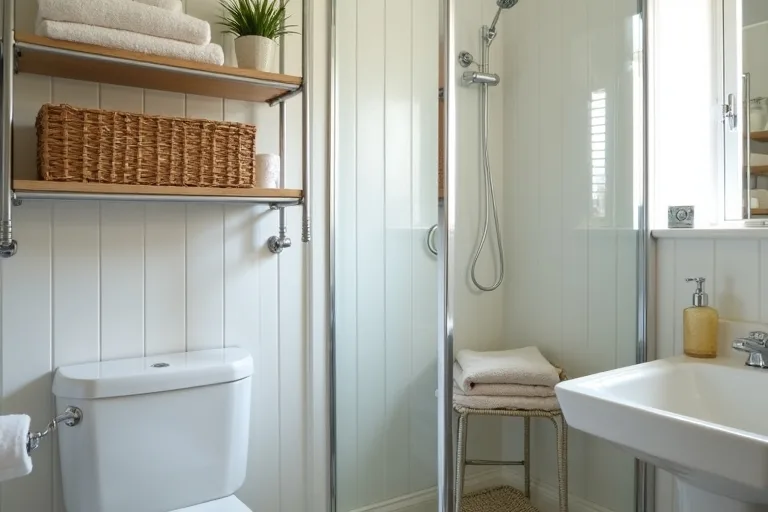
If you prefer a more flexible setup, think in this order:
- Use wall or over-toilet storage first.
- Add a small basket or tray only for loose daily items.
- Choose closed storage if the room already feels visually busy.
- Leave enough clear space for cleaning and easy access.
This approach keeps the room working well, rather than filling every available surface.
Match storage to the wet, dry, and hidden zones
Bathrooms are easier to organize when you stop treating all storage the same. The shower area needs moisture-resistant storage. The sink area needs a place for daily products. The under-sink area is best for items you do not want visible all the time.
For the shower zone, a rustproof shower caddy organizer is a sensible buy because it solves a very specific problem: keeping soap, shampoo, and wash items contained in the wettest part of the room without rusting quickly or becoming a constant clean-up task.
For the hidden zone, under-sink storage works best when it is simple. Stackable bins, pull-out trays, or a single organizer can help, but the goal is still the same: make it easier to reach what you use and easier to ignore what you do not need every day.
If your bathroom has a mix of shared and personal items, label bins or separate shelf areas by category rather than by person. That usually keeps the system easier to maintain.
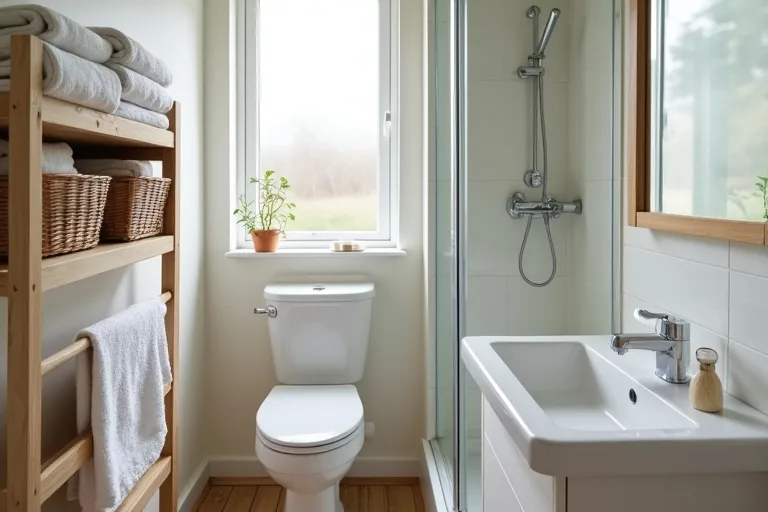
Choose the simplest setup that you can keep using
The best bathroom storage idea is not the one with the most compartments. It is the one that fits your habits and your room. A good system should make it easier to put things away, not just prettier to look at for a day or two.
As you decide what to buy first, ask what problem is most visible right now. If towels and spare items are taking over, start with vertical shelving. If the shower is the messiest zone, start with a caddy. If the sink area is crowded, reduce the number of items left out and give the rest a single contained home.
If you want to plan the room with a clearer structure, a budgeting or layout tool can help you avoid overbuying. The point is not to fill space. It is to assign space with less friction.
Best next step
Choose one storage solution based on your bathroom layout, then build the rest around it. If the room is tight, start with over-toilet shelving or a rustproof shower caddy rather than buying several smaller organizers that may not solve the main problem.
- Buying baskets before deciding what they are meant to hold.
- Using only open storage in a bathroom that already feels visually busy.
- Choosing non-rustproof items for the shower area.
- Filling every wall or corner with storage and leaving no room to move or clean.
- Keeping daily products in places that are hard to reach, which makes the system fail quickly.
Good bathroom storage is really a layout decision. Start with the items you need to store, use vertical space where possible, and choose one practical solution that matches the room’s wet and dry zones. If you get that first decision right, the whole bathroom usually feels calmer with less effort.
Helpful next tools and planners
If you want to make the decision easier before you buy
A focused product can help, but the real win comes from planning the storage around the room first. These options are useful when you already know which problem you are solving.
FAQ
What is the best storage for a small bathroom?
In most small bathrooms, the best storage uses vertical space first. Over-toilet shelving, wall shelves, and compact shower organizers usually work better than bulky floor cabinets.
Should bathroom storage be open or closed?
Open storage is easier to access, but closed storage hides visual clutter better. If the bathroom already feels busy, a mix of both is usually the most practical choice.
What should go in the shower versus under the sink?
Keep only wet-use items in the shower, such as shampoo, soap, and wash products. Store backups, cleaning items, and less-used supplies under the sink or in another dry cabinet.
What should I buy first for bathroom organization?
Buy the solution that fixes the biggest everyday problem. For many homes, that means an over-toilet shelf, a shower caddy, or one simple under-sink organizer rather than several small containers.
Three sensible next steps
Some links in this article may be affiliate links. Read more in the Affiliate Disclosure.