
A good breakfast nook does not need to be large, elaborate, or fully built in to feel useful. It just needs to fit the space you actually have and leave enough room to move without squeezing past the table every morning.
The easiest way to plan one is to start with clearance, then choose the table shape, seating, and style that suit the nook you already have. That order keeps the decision calm and prevents the most common mistake: buying furniture before the layout is clear.
Measure the nook first, then choose a table and seating that leave enough clearance to move comfortably. If the layout feels tight, size the table before you shop and use the Dining Table Size Calculator to confirm the fit.
What makes a breakfast nook work
A breakfast nook works when it supports everyday routines without getting in the way. For some homes, that means a small table near a window. For others, it means a banquette in a corner, a compact round table, or a narrow freestanding setup that keeps the traffic path open.
The best place to start is not with the decor. It is with the function. Ask how the nook will be used: quick breakfasts, coffee, homework, laptop work, or a place for two people to sit while the kitchen is in use. The answer helps determine whether you need a four-seat setup, a smaller two-seat arrangement, or a table that can expand when needed.
Keep the atmosphere simple. A nook should feel connected to the kitchen, not separate from it. Light, easy-to-clean materials, a clear walking path, and a table shape that suits the corners around it will usually matter more than a highly styled finish.
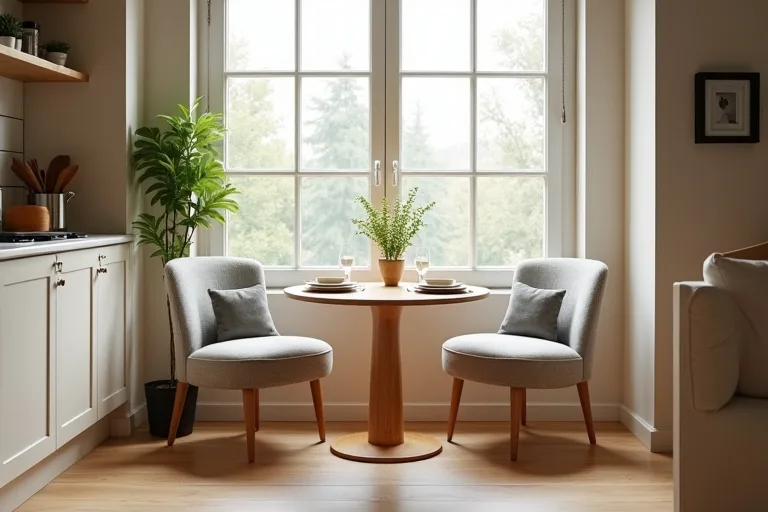
If you are unsure whether a nook is the right solution, compare it with the rest of the room. In a small kitchen, a breakfast nook can be a better answer than trying to force in a full dining set. In a larger kitchen, it may work best as an extra casual seating spot rather than the main dining area.
The real decision is not whether the nook looks inviting. It is whether the table, chairs, and circulation space work together. If people have to turn sideways to pass or pull chairs out, the setup is too tight even if the furniture itself is technically small enough.
How to size the table and seating
Once you know how the nook will be used, size the table around the available floor space. That is where many breakfast nook ideas succeed or fail. A beautiful table that blocks a drawer, crowds a walkway, or forces chairs into a wall will make the whole area feel awkward.
Start by measuring the nook width, depth, and the clearance you need to sit and stand comfortably. Then decide whether a round, square, or rectangular table fits the shape of the opening. Round tables often soften tight corners, while rectangular tables can make better use of long narrow spaces. If the room is very compact, an extendable dining table for small dining room use can give you flexibility without overcrowding the everyday layout.
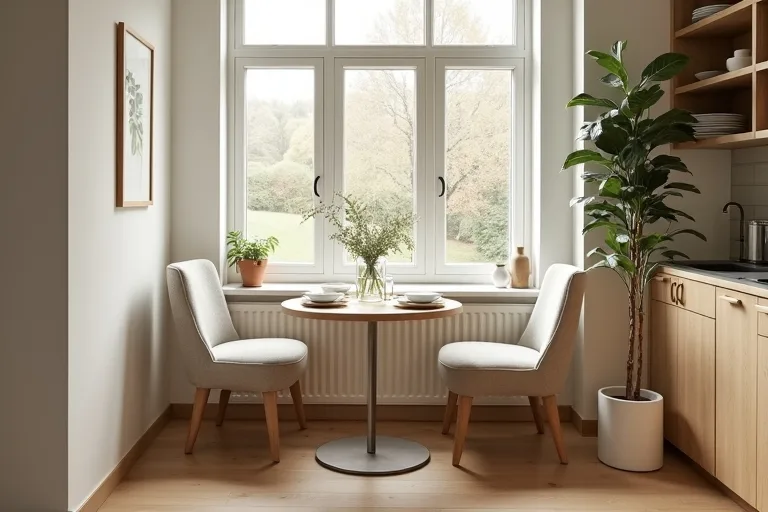
A simple way to make the decision clearer is to work in this order:
- Measure the nook and nearby traffic path.
- Choose the seating count you actually need most days.
- Select a table shape that matches the room geometry.
- Check how far chairs need to pull out.
- Confirm the layout before buying anything.
If you want the most reliable next step, use the Dining Table Size Calculator before you shop. It helps turn a vague idea into a layout you can trust.
Built-in or freestanding: choose the layout that matches the room
The right breakfast nook layout depends on how fixed you want the seating to be. Built-in banquette seating can be a smart answer in awkward corners, under windows, or in spaces where every inch matters. It often gives a neat, tailored result and can add hidden storage if the design allows it.
Freestanding furniture is easier to adjust. It works well if you rent, if you expect the room to change, or if you want to keep options open for future furniture updates. A table and a set of upholstered dining chairs can be moved, resized, or replaced more easily than a built-in corner bench.
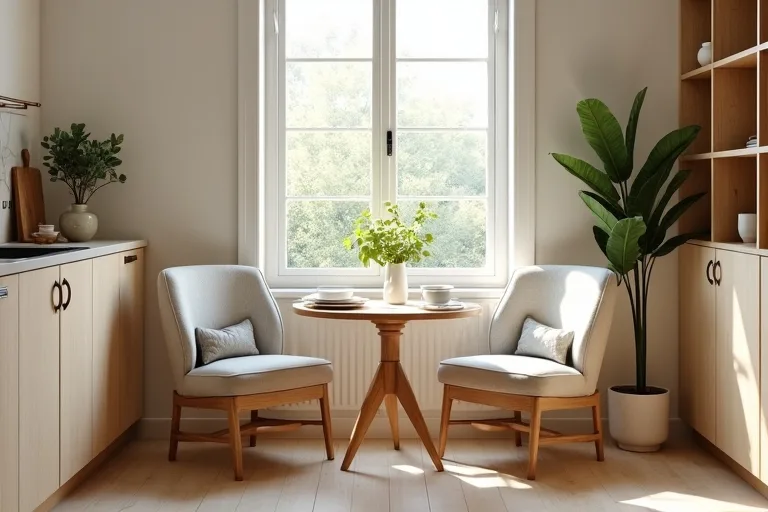
Before you decide, think about these tradeoffs:
- Built-in seating can save space and feel tucked in, but it is less flexible.
- Freestanding chairs are easier to move and replace, but they need more circulation room.
- Round tables usually help in tighter layouts, while rectangular tables suit longer walls.
- Storage benches can reduce clutter, but only if they do not make the nook feel crowded.
If the nook is part of a larger kitchen and dining zone, it helps to think about it as one decision inside the whole room, not as a separate project. The Kitchen & Dining hub is a useful place to compare related layouts before you commit.
Style the nook so it stays calm and useful
Style should support the layout, not compete with it. A breakfast nook feels best when it is easy to keep tidy and comfortable to use every day. That usually means simple seating, a table surface that is not overloaded, and a few finishing touches that make the space feel intentional without adding clutter.
Soft lighting helps the nook feel separate from the rest of the kitchen. A pendant light, a wall sconce, or even a table lamp on a nearby surface can make the area feel more inviting in the morning and more useful at night. If the nook has a window, keep the surrounding treatment light enough to preserve daylight.
Storage nearby can also make the space work better. A shallow shelf, closed cabinet, or basket for placemats and napkins keeps the table clear. If you are starting from scratch, a room planning tool or budget sheet can help you decide what belongs in the project now and what can wait.
If the layout is confirmed and you want to start shopping, upholstered dining chairs can be a practical next purchase because they help define the nook and usually feel comfortable enough for longer sitting. For a more organized room update, a digital planner such as the Room Makeover Planner, Home Layout Budget Spreadsheet (Digital Download) can help you keep track of measurements and spending in one place.
Best next step
Before you buy furniture, confirm the measurements. A breakfast nook only works well when the table size, chair clearance, and traffic flow are all aligned. Use the sizing tool first, then move to shopping once the layout feels settled.
- Choosing a table before measuring the nook and chair clearance.
- Using seating that blocks the main kitchen traffic path.
- Picking a shape that fights the room instead of following it.
- Adding too much decor and making the nook harder to use.
- Forgetting to check whether the nook needs to flex for daily life.
Good breakfast nook ideas start with measurement, not styling. Decide how the nook will be used, measure the available space, and choose a table and seating that leave enough room to move comfortably. Once the layout is clear, the rest becomes much easier.
Helpful next tools and planners
If you want to make the decision easier before you buy
These are the most useful next steps once you have confirmed the layout. Start with sizing, then move to products and planning support only if they match the space.
FAQ
What size should a breakfast nook table be?
The right size depends on the nook dimensions and the clearance around the chairs. Measure first, then choose the table size that still leaves comfortable movement.
Is a round table better for a breakfast nook?
Often, yes, especially in smaller or tighter corners. A round table can improve flow and make the space feel less rigid, but the room shape should decide.
Can a breakfast nook replace a dining room?
Sometimes it can, especially in compact homes or kitchens with generous seating space. In larger homes, it may work better as a casual everyday eating area.
Should I choose built-in seating or chairs?
Choose built-in seating if you want a fixed, space-efficient solution. Choose chairs if you want flexibility, easier changes, and less commitment.
Three sensible next steps
Some links in this article may be affiliate links. Read more in the Affiliate Disclosure.