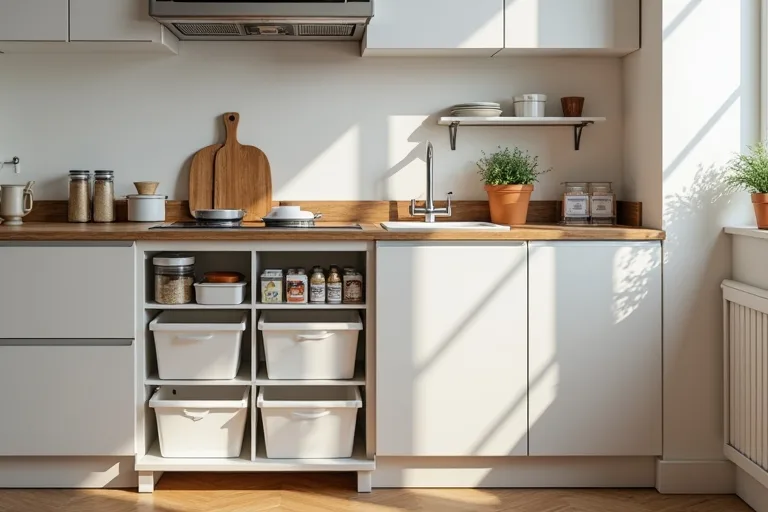
Small kitchen storage gets complicated fast because the problem is rarely just “not enough space.” It is usually a mix of awkward cabinet depth, wasted vertical space, and items that have no clear home.
The good news is that you do not have to solve everything at once. In many kitchens, a few low-cost changes improve daily use enough to delay a bigger purchase until you know exactly what the room needs.
Use budget fixes for quick wins, and choose a bigger storage upgrade only if your layout and measurements support it. In a small kitchen, the smartest move is often to improve flow and visibility first, then invest in a larger unit only when you know it will fit without crowding the room.
Start with the cheapest storage changes that actually improve daily use
Before buying furniture, look at what the kitchen is already trying to do. Many small kitchens feel messy because the same few items are used every day, but the storage is split across too many places. Budget fixes work best when they reduce friction, not when they simply add more containers.
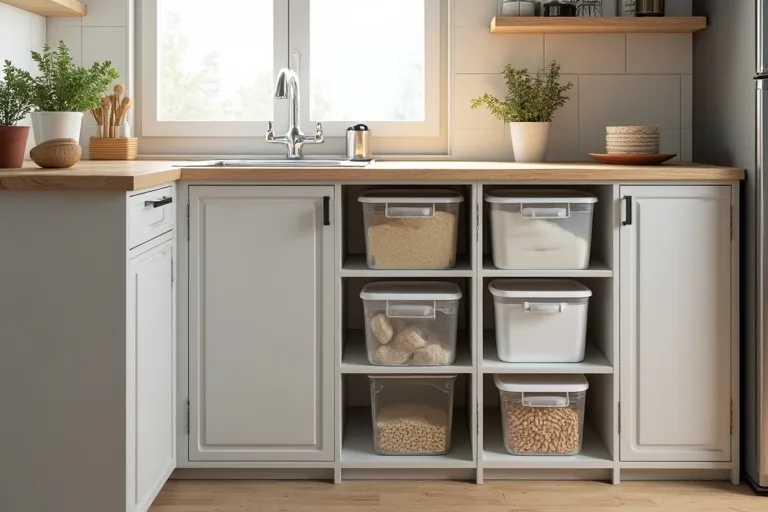
Simple changes like clearing a counter corner, grouping pantry items together, or using bins inside a shelf can make the room feel easier to manage right away. These fixes are especially helpful if your kitchen already has decent cabinets, but the usable space is poorly organized.
That is where a compact utility piece can help. An 8 cube storage organizer is not a kitchen-style centerpiece, but it can work well as a practical overflow zone for dry goods, backup supplies, and labeled bins when the kitchen needs function more than decoration.
If a low-cost fix makes the kitchen easier to use without changing the walking path, it is probably the right first move. If you still cannot store the basics without stacking, bending, or spreading items across several rooms, the problem may be capacity rather than organization.
When a bigger space-saving upgrade is worth it
A larger upgrade makes sense when the room has a real storage gap, not just a visual one. If you need one dedicated place for pantry overflow, small appliances, or family supplies, a more substantial storage piece can reduce clutter more reliably than temporary fixes.
The benefit of a bigger upgrade is consistency. Instead of trying to force the kitchen to do everything, you can give repetitive items one clearly defined home. That usually helps more when the kitchen is part of an open-plan layout, or when the cabinets are too limited to absorb everyday life.
The trade-off is that larger storage can become a problem if it takes up too much floor area or blocks easy movement. A useful upgrade should solve a storage issue and still leave the room feeling open enough to work in.
Measure the room before you commit to a bigger unit
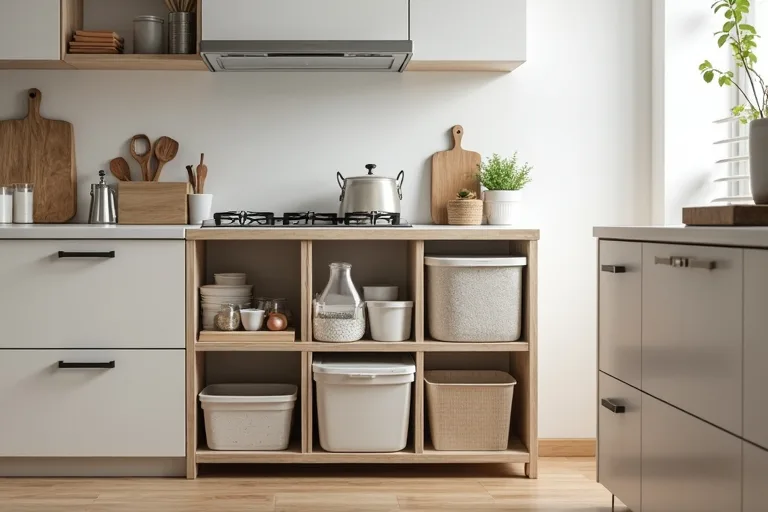
This is the step people skip most often. A storage piece can look reasonable online and still feel oversized once it is in the room. Before you buy, measure the area where the unit would go, then check nearby clearances for doors, drawers, and walking paths.
A simple order of checks keeps the decision calmer:
- Measure the available wall or floor space.
- Check how far cabinet doors and appliance doors open.
- Confirm there is still comfortable movement through the room.
- Decide which items the storage unit will hold every day.
- Only then compare size, shape, and bin options.
If the numbers are close, use a layout tool before buying. The room layout planner is the most practical next step if you want to test fit, flow, and storage placement before spending money on a larger unit.
How an organizer and fabric bins can make the upgrade work better
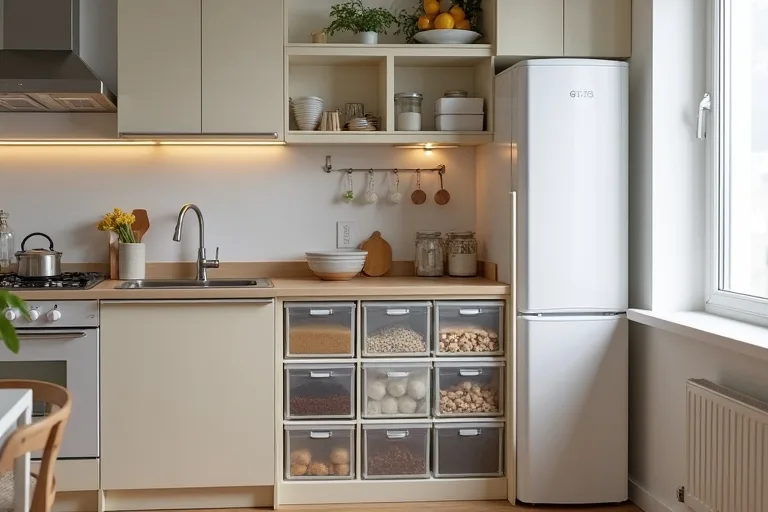
If you choose a cube-style storage unit, the real value usually comes from how well it is divided and labeled. A plain shelf can become more useful when each section has a clear purpose, such as pantry refills, lunch items, cleaning supplies, or small kitchen tools.
That is why fabric storage bins set for cube organizer can be a sensible companion purchase. Bins keep loose items from spreading, make shelves feel less visual-heavy, and let you adjust the system later if your needs change.
If you want to map the room before buying anything, a digital planning sheet can also help. The Small Space Furniture Planner, Room Layout Spreadsheet (Digital Download) is useful when you want to compare storage ideas, note measurements, and avoid guessing about what will fit.
Best next step
Before buying a larger storage piece, confirm that the size works with your room and the way you actually move through it. A quick layout check will usually tell you whether a budget fix is enough or whether a bigger upgrade is justified.
- Buying storage before measuring the space it will occupy.
- Choosing a unit that fits the wall but blocks the room flow.
- Using open storage for too many loose items without bins or labels.
- Adding more containers when the real issue is poor cabinet access.
- Skipping the plan for what the new storage will actually hold.
Budget fixes are the right first step when the kitchen is basically workable but needs better order. A bigger space-saving upgrade is worth considering when you have measured the room, know what the unit will store, and can confirm it will improve both capacity and circulation. If you are unsure, test the layout first and let the room decide.
Helpful next tools and planners
If you want to make the decision easier before you buy
These options are most useful when you have already narrowed the problem down to fit, function, and storage capacity. Start with planning, then use products to support the layout you have chosen.
FAQ
How do I know if my small kitchen needs more storage or just better organization?
If the kitchen has enough space in theory but items are scattered, organization is usually the issue. If you have nowhere sensible to put daily items, and the room still feels crowded after tidying, you likely need more capacity.
Is an 8 cube storage organizer practical for a kitchen?
It can be, especially as a utility piece for pantry overflow, labeled bins, and non-fragile items. It works best when you treat it as functional storage rather than decorative furniture.
What should I measure before buying a larger storage unit?
Measure the full footprint, nearby door swings, and the walking path around the piece. You also need to know what the unit will hold so the size matches the job.
What is the safest first step if I am undecided?
Test the room layout before you buy anything major. That keeps the decision grounded in fit and function instead of guesswork.
Three sensible next steps
Some links in this article may be affiliate links. Read more in the Affiliate Disclosure.