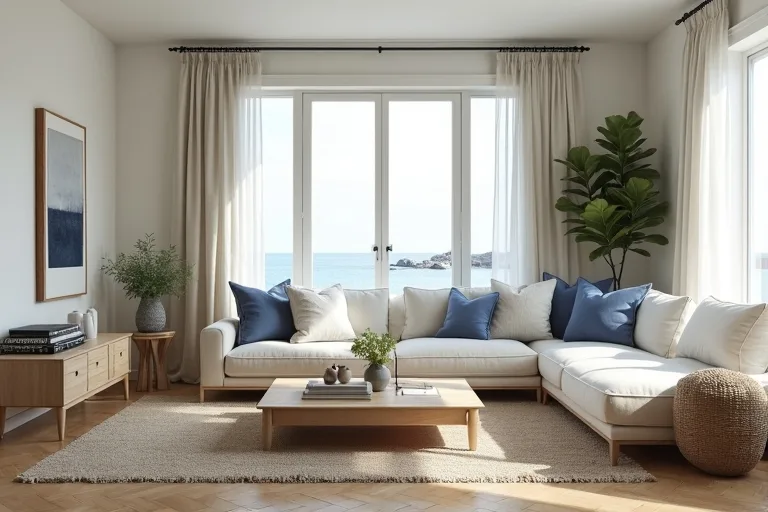
Coastal interiors work best when they feel easy, light, and practical. The trouble starts when the room tries too hard to announce the theme instead of letting the materials, proportions, and flow do the work.
If a space feels more staged than relaxed, the issue is usually not the idea of coastal style itself. It is the way the pieces are chosen, repeated, or arranged.
Coastal style feels forced when the room leans too hard on themes, color, or decor instead of keeping the palette, texture, and layout relaxed. The safest approach is to use a restrained base, add natural materials, and check the room plan before buying more accessories.
What forced coastal style usually looks like
Forced coastal design often happens when every surface is trying to say the same thing. You see shells, rope, blue stripes, driftwood, nautical art, and beach sayings all at once, and the room stops feeling like a home.
Good coastal style is quieter than that. It usually starts with a simple, airy base and then adds a few pieces that suggest the feeling of the coast without copying it directly. The room should still look like it belongs to the people living there, not to a shop display.
One of the easiest ways to keep the style believable is to let the furniture and window treatments do some of the work. Linen textures, light wood, and soft daylight often create the mood more effectively than obvious theme decor ever will.
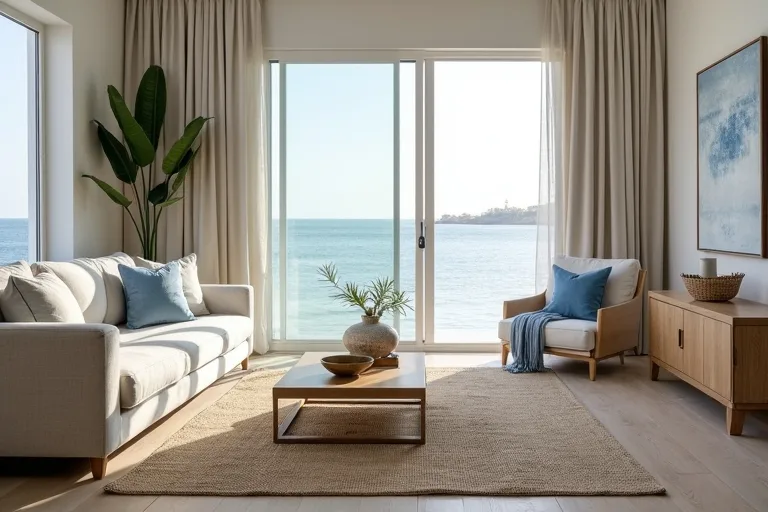
Before adding another coastal accent, ask whether the room already has enough of the feeling through color, texture, and light. If the answer is yes, the next purchase is probably not more decor. It may be a better layout, a larger rug, or a simpler finish plan.
The decor mistakes that make the style feel obvious
The fastest way to lose the calm feeling of coastal interiors is to lean on literal beach references. A few can work, but when every object points to the same idea, the room begins to feel more like a message than a space.
These are the mistakes that show up most often:
- Using shells, anchors, fish, and seascapes in the same room.
- Mixing too many blue-and-white patterns without enough quiet space.
- Choosing decorative words or signs that explain the theme instead of supporting it.
- Repeating the same motif on pillows, shelves, wall art, and table decor.
When the theme is very direct, the eye has nowhere to rest. A coastal room needs pauses, not constant cues. That does not mean the space should be plain. It means the details should feel edited.
A better approach is to choose one or two subtle nods, then let materials and shape do the rest. A framed set of neutral abstract wall art can soften a wall without pushing the room toward a beach-house cliché, and modern candle holders can add structure without adding clutter.
Why texture, furniture, and scale matter more than theme pieces
Even a well-chosen color palette can feel wrong if the room is missing texture or the furniture is scaled badly. Coastal style depends on balance. If everything is light but flat, the space can feel thin. If everything is oversized or fragile-looking, it can feel awkward and unfinished.
Natural materials help anchor the room. Wood, linen, woven fibers, ceramic, and matte finishes give the eye something soft but real to land on. Without them, the style can look like it was assembled from separate decor ideas instead of planned as one room.
Furniture size matters too. A sofa that is too bulky can make the space feel heavy, while pieces that are too slight can make the room feel temporary. The right answer is usually somewhere in the middle: relaxed forms, clear lines, and enough visual weight to hold the room together.
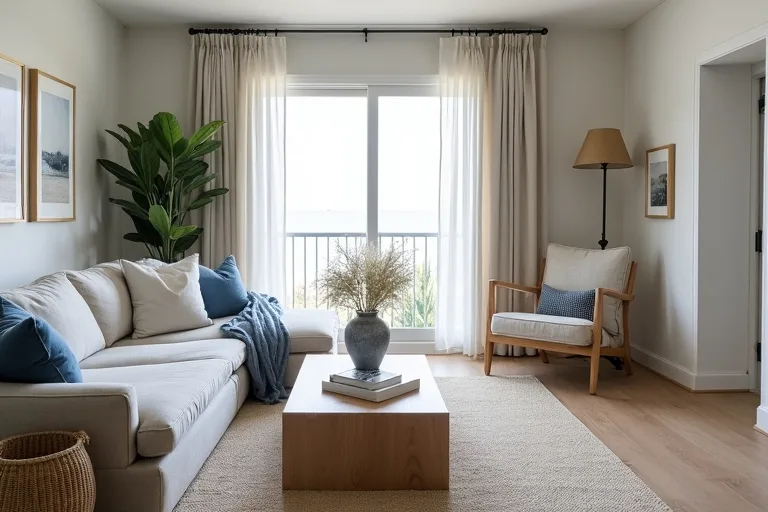
If you are unsure whether the room is drifting too far into theme or looking too sparse, start with the plan before the decor. A room-layout check can show whether the problem is actually scale, spacing, or circulation rather than style choice.
Simple fixes that make coastal style feel calm and lived-in
The best fix is usually subtraction. Remove one or two obvious theme pieces, then replace them with items that support the room in a quieter way. That might mean a larger neutral rug, one grounded artwork grouping, or a pair of simple candle holders instead of several small objects.
It also helps to review the room in this order:
- Confirm the layout feels open and easy to move through.
- Check that the main furniture pieces are the right size for the room.
- Limit the color palette so the blue accents stay restrained.
- Add texture through fabric, wood, and woven materials.
- Use decor only after the big decisions are settled.
If the room still feels busy, look at the shelves and side tables. They do not need to be empty, but they should not carry the entire style. A few edited objects with some open space around them will usually feel more confident than a crowded surface full of beach references.
For readers planning a refresh, this is also where a small planning tool can save money. It is easier to buy the right pieces once than to keep replacing decor that does not fit the room.
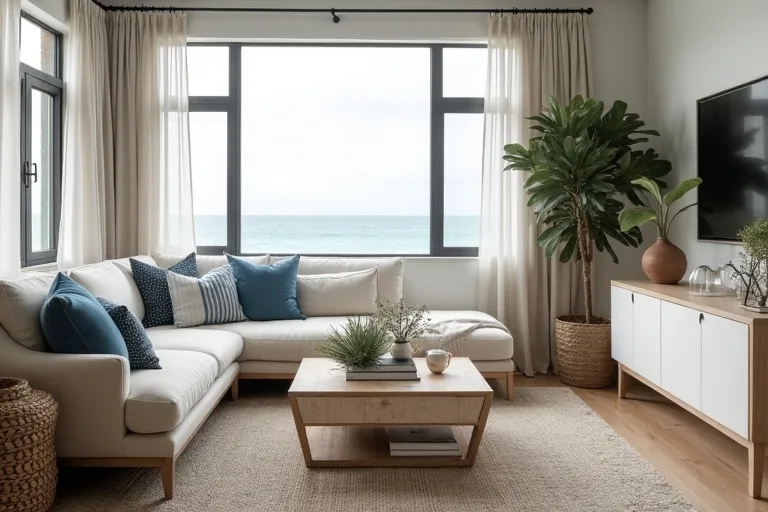
Best next step
If you are deciding what to buy next, start by checking the room plan first. A simple layout or style check can tell you whether you need fewer accessories, better proportions, or a stronger base before any new decor goes in.
- Using too many literal beach motifs in one room.
- Relying only on blue and white without enough texture or warmth.
- Buying decor before checking layout and furniture proportions.
- Choosing flimsy or oversized furniture that fights the space.
- Filling every shelf and surface with small coastal accessories.
- Forgetting that lighting and window balance shape the mood just as much as decor.
Coastal interior design feels forced when the theme gets louder than the room itself. A calmer result comes from a simple palette, real texture, good proportions, and a restrained number of decor choices. If you want the style to feel natural, make the planning decision first and the shopping decision second.
Helpful next tools and planners
If you want to make the decision easier before you buy
These options are most useful when you are still shaping the room and want a cleaner way to decide what belongs, what does not, and what to buy next.
FAQ
Can coastal style work without obvious beach decor?
Yes. In many rooms, it works better without it. Light wood, linen, soft neutrals, and a few well-chosen accents usually create a calmer result than seashells or nautical motifs.
Why does my coastal room look staged?
It usually means there are too many theme pieces and not enough everyday balance. Real homes need open space, practical furniture, and a mix of textures.
What colors make coastal style feel less forced?
Start with a neutral base and use blue sparingly. Soft white, sand, warm beige, pale wood, and muted gray usually give the room more flexibility.
Should I buy decor first or plan the layout first?
Plan the layout first. Once the furniture placement and scale are clear, it becomes much easier to choose decor that fits naturally.
Three sensible next steps
Some links in this article may be affiliate links. Read more in the Affiliate Disclosure.