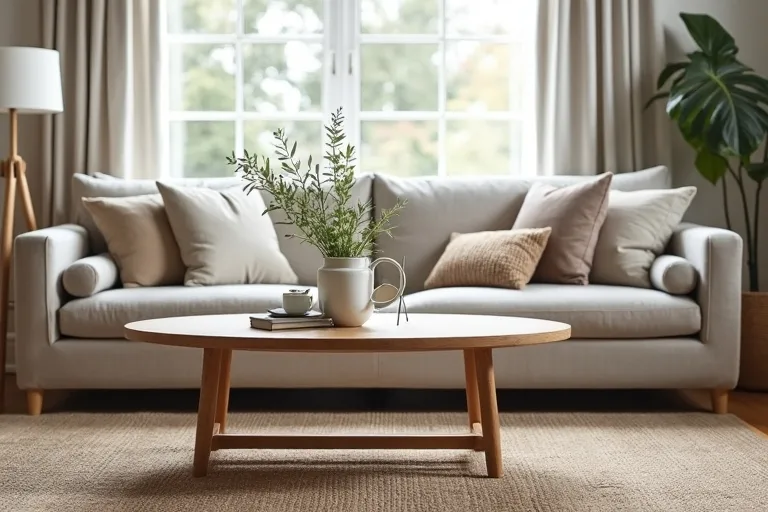
When a living room feels unfinished, the coffee table is often the piece people want to replace first. The trouble is that it is easy to shop for style before the room has the right proportions, and that usually leads to buying twice.
The calmer approach is to decide what the room needs first: the right size, the right shape, and a finish that works with the rest of the seating. Once that is clear, you can choose between a budget table that does the job well or a more custom-looking upgrade that still makes sense for the space.
Start with the right size and shape first, then choose the finish that makes the table look more custom. If the proportions are right, even a simple wood coffee table for the living room can feel intentional, while the wrong size will make a more expensive table look off.
Start with size and room flow before you compare styles
Budget versus custom-looking is not really the first decision. The first decision is whether the coffee table fits the seating arrangement without crowding the room. A table that is too large will block movement and make the seating area feel heavy. A table that is too small can look disconnected and unfinished.
That is why it helps to think about the coffee table together with the sofa, not on its own. If you are planning a full seating arrangement, the coffee table size calculator can help you confirm proportions before you shop. It is also worth checking the sofa size calculator if you are still balancing the main pieces in the room.

Before you compare finishes or brands, ask three questions: Can people walk around the table easily? Does the table sit in proportion to the sofa? Does the shape support how you actually use the room, whether that is resting drinks, holding books, or softening a large seating area? If the answer to any of these is no, keep sizing before styling.
Budget-friendly coffee table ideas that still look thoughtful
A budget table does not need to look cheap. The goal is to choose a simple shape and a finish that feels calm and consistent with the rest of the room. In many living rooms, a straightforward round, square, or rectangular table works better than a piece with too many details.
Budget-friendly choices usually work best when the room already has a clear style. For example, if your sofa, rug, and cushions are soft and neutral, the table can stay plain and still feel pulled together. A set of neutral throw pillow covers set living room can help the seating area feel more finished without demanding a large spend on the coffee table itself.
If you want the room to feel cohesive on a tighter budget, focus on one or two visible qualities rather than trying to maximize every detail:
- Choose a simple shape that matches the circulation in the room.
- Pick one finish family, such as light wood, medium wood, or matte black.
- Keep the surface styling restrained so the table looks intentional, not overloaded.

What makes a coffee table look more custom without a full custom build
If you want a more tailored result, you do not necessarily need a fully bespoke piece. Often the difference comes from material quality, edge detail, and how the table relates to the rest of the room. A wood coffee table for the living room tends to read as more grounded and finished when the tone works with the floor, media unit, or side tables.
Custom-looking upgrades usually have a quieter profile. That can mean a cleaner silhouette, better joinery, a more deliberate wood tone, or a shape that feels chosen for the room rather than bought as a filler item. The result should feel calm and fitted, not showy.
This is also where planning helps. A room layout that already balances the sofa, rug, and traffic path will make a better-looking table stand out even more. If you are working through the whole room, a digital planner such as the Room Makeover Planner, Home Layout Budget Spreadsheet (Digital Download) can help you keep decisions in sequence instead of making them one by one in isolation.
A more tailored look often comes from these details:
- Lower visual clutter on the tabletop
- Better proportion to the sofa and rug
- A finish that repeats one or two tones already in the room
- A shape that supports the layout instead of interrupting it
How to choose the right finish, shape, and purchase path
Once the room is sized correctly, your choice becomes much easier. If your living room is compact, a lighter visual finish and a simpler shape usually keep the space feeling open. If the seating area is larger, a more substantial wood table can help anchor the arrangement.
Round tables are often easier when you need softer movement around the seating area. Rectangular tables can work well in longer rooms or in front of a wider sofa. Square tables can feel balanced in more centered layouts, but they need enough surrounding space to avoid feeling cramped.
The finish matters just as much. A matte or low-sheen surface often feels calmer and more tailored than something overly shiny. Natural wood tones can bridge the gap between budget and custom-looking, especially when the rest of the room is kept simple.

Best next step
Before you buy, confirm the coffee table proportions for your seating area. The coffee table size calculator is the most useful next step if you are deciding between a budget table and a more custom-looking wood coffee table for the living room. If the room is still in progress, keep the wider layout in view so the table works with the whole setup rather than against it.
- Choosing a table before checking room clearance.
- Buying a shape that does not suit the way people move through the seating area.
- Spending more on a finish while ignoring proportion.
- Using too many materials at once, which makes a simple table feel visually busy.
- Forgetting to coordinate the coffee table with the sofa and rug size.
The best coffee table choice is not always the cheapest or the most custom-looking one. It is the one that fits the room well, supports the layout, and feels calm with the rest of the seating. If you get the size and flow right first, a budget table can look considered, and a better-finished wood table can look genuinely tailored.
Helpful next tools and planners
If you want to make the decision easier before you buy
These tools and planners can help you move from browsing to a clearer plan. They are most useful once you know the basic layout and want to confirm that the coffee table, sofa, and room plan work together.
FAQ
What is the safest coffee table choice if I am unsure about style?
A simple table with the right size and a neutral finish is usually the safest choice. If the proportions work, it will feel calmer than a more decorative table that is too big or too small.
Is a custom-looking coffee table always more expensive?
Not always. Sometimes the look comes from better proportions, a quieter shape, and a finish that matches the room. You can get close to that effect without a fully custom build.
Should I choose the coffee table or the sofa first?
Usually the sofa comes first, then the coffee table is sized around it. The seating arrangement sets the scale, so the coffee table should support that layout rather than compete with it.
What finish makes a coffee table look more expensive?
Usually a matte or low-sheen finish, especially in a wood tone that suits the rest of the room. The finish should feel quiet and deliberate, not overly polished.
Three sensible next steps
Some links in this article may be affiliate links. Read more in the Affiliate Disclosure.