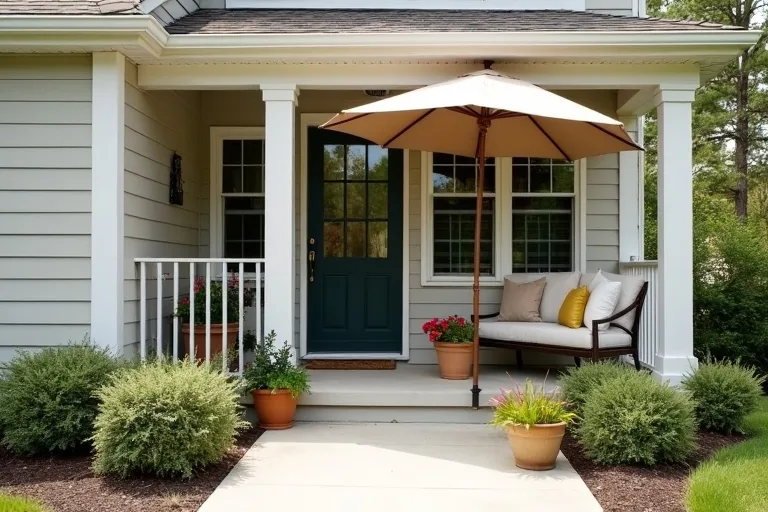
Front porch ideas work best when they start with the porch you actually have, not the one you wish you had. A good porch plan should make the entry feel welcoming, give you enough room to move comfortably, and support the way you use the space day to day.
That usually means deciding on layout first, then adding a few practical layers: seating, shade, lighting, and durable details that hold up outdoors. If you keep those priorities in order, the porch feels calmer and more finished without becoming difficult to maintain.
Start with layout, seating, and shade, then add a few simple finishing touches.
Start with what the porch needs to do
The easiest way to plan a front porch is to treat it like a small outdoor room. Some porches mainly need to frame the entry and handle traffic smoothly. Others need to support sitting, casual dining, or a place to pause with a drink or book. The right front porch ideas depend on which of those jobs matters most.
Begin by asking a few practical questions. Do people need to pass through the porch quickly, or will they stop and sit there? Is the porch narrow and linear, or wide enough for a bench and side table? Does the front door swing into the area in a way that limits furniture placement? Once those answers are clear, the styling choices become much easier.

For many homes, the best layout is the simplest one: one clear path to the door, one defined sitting zone, and only the pieces that support those uses. If the porch is small, a bench may do more than two large chairs. If it is wider, a pair of chairs with a small table can make the space feel more intentional without crowding the entry.
The real decision is not whether the porch looks styled enough. It is whether the layout leaves a comfortable path to the door, enough space to open it fully, and a seating arrangement that fits the porch size without blocking movement.
Check size, flow, and seating fit
Porch seating only works when it matches the footprint. A porch that feels too tight usually needs less furniture, not smaller decorations. Before you shop, map out the main movement line from the steps to the entry and keep furniture out of that route.
If you are deciding between a bench, two chairs, or a small loveseat, think about how many people actually use the porch and how often they sit there together. A bench can be ideal for a narrow porch or a quick drop-in spot. Chairs feel more flexible for conversation. A loveseat makes sense only when the porch is deep enough to support it without squeezing the entry.
- Measure the usable floor space, not just the porch overall.
- Leave room for door swing, walking, and packages.
- Choose the smallest seating option that still serves the space well.
- Add a side table only if it does not interrupt the path.
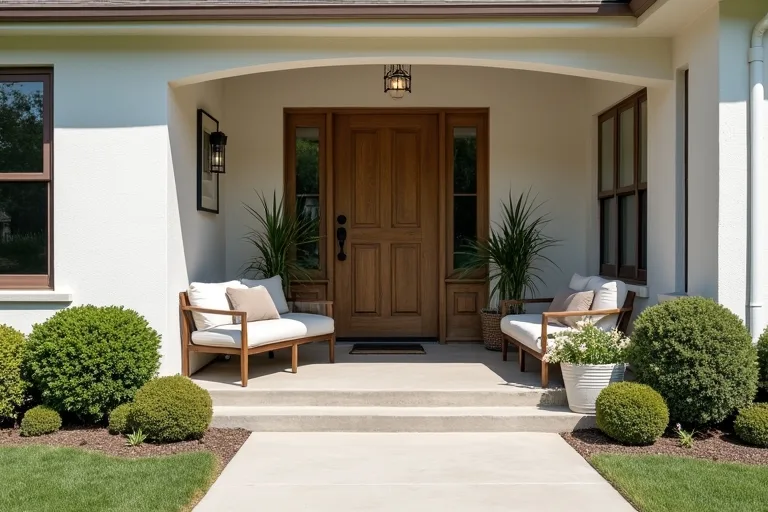
If you want a more structured way to think through layout, the Styling Homes room layout planner can help you test whether the porch furniture really fits before you buy anything. That is especially useful when the porch pulls double duty as both entry and sitting area.
Add shade, texture, and lighting
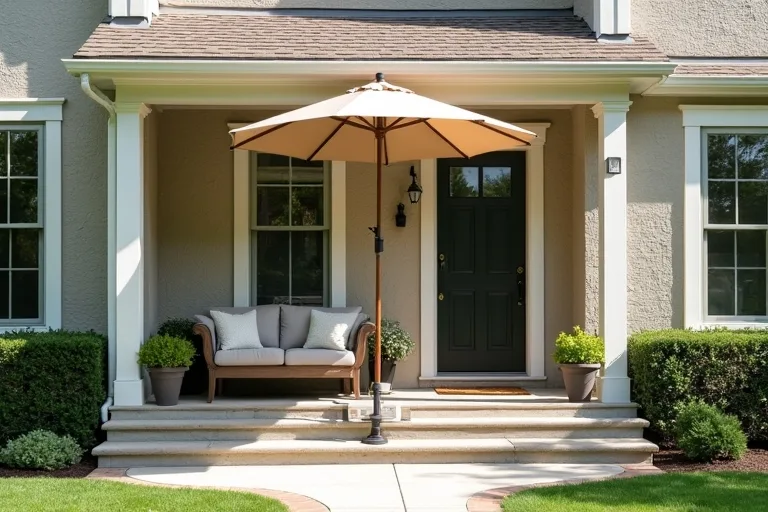
Once the layout makes sense, the porch can start to feel comfortable. On sunny porches, shade matters as much as seating because it determines whether the space is usable in the middle of the day. A simple umbrella can make a big difference if the porch has room for it and the placement does not block the entry or walkway.
Soft layers help too. Outdoor pillows, a small rug if the porch size allows one, and a couple of planters can make the space feel more finished without adding clutter. The key is to keep the pieces weather-friendly and restrained. One or two strong accents usually work better than many small ones.
For evening use, lighting should be practical first. A porch light that clearly supports the door, plus one additional layer such as a lantern or wall-mounted fixture, is usually enough. The goal is not to turn the porch into an outdoor lounge. It is to make the entry feel safe, readable, and pleasant.
If the porch feels good in the morning but unusable in full sun or after dark, the problem is usually not style. It is missing shade, light, or both.
Choose materials that stay easy
Good front porch ideas are not just about appearance. They also need to be easy to live with through weather, foot traffic, and seasonal changes. That is why durable materials matter so much on a front porch. Anything placed here should be able to handle sun, moisture, dust, and repeated use without constant attention.
Look for outdoor textiles that can be removed, cleaned, or replaced without much effort. That makes products like outdoor throw pillow covers a practical choice, especially when you want a softer look for a seating zone without committing to high-maintenance pieces. If you are creating a sunny dining or seating area, a 9 ft patio umbrella with base can also be a useful comfort layer, as long as it fits the porch size and flow.
The same idea applies to planters, side tables, and storage. Keep the scale simple, the materials weather-safe, and the number of items low enough that the porch still feels open. A porch that is easy to reset is more likely to stay tidy and welcoming.
Best next step
If you are still deciding how much seating, shade, or styling your porch can support, use a planning tool before you shop. It is the simplest way to avoid buying pieces that do not fit the layout.
- Buying seating before checking the usable porch width.
- Blocking the front door swing or the main walking path.
- Adding too many small decor pieces instead of one clear layout.
- Choosing materials that look good indoors but do not suit outdoor exposure.
- Skipping shade and wondering why the porch is never comfortable in daylight.
The most useful front porch ideas are the ones that make the entry easier to use. Start with layout, then add the smallest amount of seating, shade, and finishing detail needed to make the porch feel calm, practical, and welcoming.
Helpful next tools and planners
If you want to make the decision easier before you buy
Use one planning tool for layout clarity, and keep product choices focused on comfort and durability rather than overdecorating the space.
A simple way to narrow down the porch look that suits the rest of your home.
A practical comfort layer for sunny porch seating or dining zones.
Useful if you want to map porch upgrades alongside the rest of a home refresh.
FAQ
What should come first when planning a front porch?
Start with how the porch needs to function. Clear traffic flow, door clearance, and the main use of the space should come before decor.
What is the best seating for a small front porch?
A bench or two compact chairs usually works best because they take up less room and are easier to place without blocking the entry.
How do I make a front porch more comfortable?
Add shade, a few weather-safe cushions or pillow covers, and lighting that makes the space usable in the evening.
Which details improve curb appeal without much maintenance?
Clean planters, a simple seating arrangement, durable textiles, and a clear walkway usually make the biggest difference with the least upkeep.
Three sensible next steps
Some links in this article may be affiliate links. Read more in the Affiliate Disclosure.