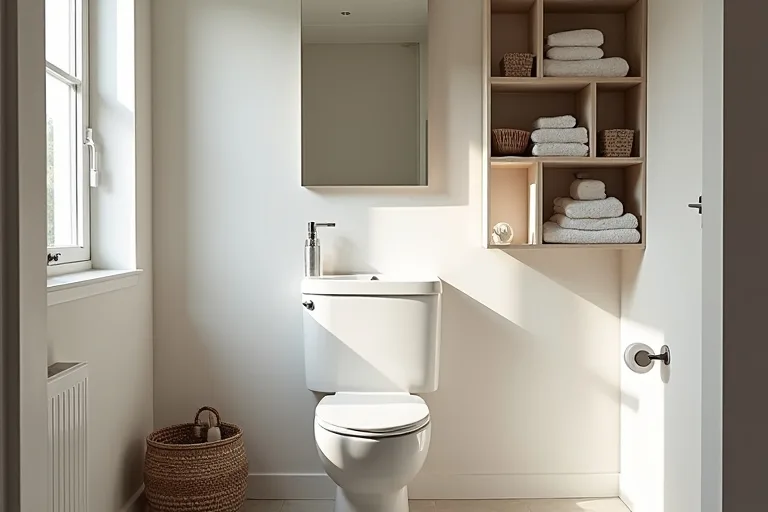
Bathroom shelving can solve a storage problem very quickly, but only when it suits the room you already have. In a small bathroom, the wrong shelf placement adds clutter fast. The right one can make daily routines feel easier and calmer.
The best approach is to think about wall space, moisture, and what you actually need to reach every day before you buy anything. That usually leads to a simpler, more useful setup than shopping first and trying to make it work later.
Use vertical shelving to add storage without crowding the bathroom. In most homes, the smartest choices are over-toilet shelves, floating shelves, corner shelves, recessed shelving, or a rustproof shower caddy, depending on where the empty wall space is.
Where bathroom shelving helps most
Bathroom shelving works best where the room has unused vertical space but not much floor area. That is why it is often more useful than another cabinet in tighter bathrooms. A narrow wall above the toilet, a corner near the vanity, or a shower wall can all hold storage without making the room feel smaller.
Start by looking at what needs to live outside the vanity. Towels, spare toilet rolls, skincare, cleaning products, and bath items all need different kinds of access. If something is used every day, it should be easy to reach. If it is only needed occasionally, it can sit higher up or farther away.

Open shelving is especially helpful when you want the room to feel lighter. Closed storage can hide more, but shelves are often better when the goal is to free up visual space and keep essentials within easy reach. In a small bathroom, that tradeoff is often worth it.
The real decision is not whether shelving looks good. It is whether the wall area you have can hold the items you need without blocking movement, splashing, or making the room harder to clean.
Shelf types and what each one solves
Different shelf types solve different problems, so it helps to match the shelf to the job instead of choosing the most decorative option. A bathroom that needs towel storage has a different need from one that just needs a place for shampoo or hand soap.
- Floating shelves: Good for a clean, lightweight look near the vanity or above a toilet. They work best for folded towels, baskets, and a few daily items.
- Over-toilet shelves: A strong choice when floor space is limited and the wall above the toilet is open. They add vertical storage without changing the room layout.
- Corner shelves: Useful when wall lengths are short or awkward. They make use of areas that often go unused.
- Recessed shelving: Best when you are renovating or already opening a wall. This is a neat way to create storage without projecting into the room.
- Shower shelves or caddies: Ideal for keeping wash products off the floor and within reach. Rustproof materials matter here.
If you are comparing shelving options, one of the most practical purchases for a tight bathroom is an over toilet storage shelf bathroom. It is often the simplest way to gain storage without changing the footprint of the room.

How to choose shelving for your layout
The best shelving choice depends on how much space you have to work with and where people move through the room. A shelf that fits on paper can still feel wrong if it interrupts the route to the sink, toilet, or shower.
Use this simple order of thinking:
- Identify the wall space that is truly free.
- Check whether the shelf would interfere with doors, mirrors, or fittings.
- Decide what needs to be stored there every day.
- Choose the shelf type that gives access without visual heaviness.
- Keep the most-used items at easy reach and the rest higher up.
For very small bathrooms, vertical storage usually works better than wide shelving. Narrow shelving can sit above eye level or above the toilet and still make a noticeable difference. If you are trying to plan around a difficult layout, the small spaces storage hub is a useful next step for thinking through the room as a whole.
A shower area needs a different approach. Moisture-safe storage matters more than style, and rustproof hardware is worth prioritizing. A rustproof shower caddy organizer is a simple example of storage that does one job well without asking for extra floor space.
Sizing, materials, and styling that stay practical
Bathroom shelving should be easy to use and easy to keep clean. That means thinking about height, depth, and material as part of the design, not as afterthoughts. If shelves are too deep, they collect clutter. If they are too shallow, they may not hold the things you wanted them for in the first place.
Moisture-safe finishes are important in any bathroom, especially near the shower or sink. Metal, treated wood, and sealed materials tend to be more forgiving than anything that absorbs dampness easily. If you are adding baskets, keep them simple and limit them to categories that make sense, like extra hand towels or spare toiletries.
Styling works best when it supports the room rather than decorating it. A few folded towels, one basket, and a small container for daily essentials is usually enough. Once shelves start holding too many loose items, they stop feeling like storage and start feeling like visual noise.
If you want a low-pressure way to plan the room before buying shelves, a digital layout and budget tool can help you compare options against the space you actually have. The Room Makeover Planner, Home Layout Budget Spreadsheet (Digital Download) is a straightforward option if you prefer to map the room before making purchases.

Best next step
Before buying shelves, assess your bathroom layout and decide where vertical storage can work without blocking movement or adding visual clutter. If the room feels tight, start with the wall space you already have and choose one shelf solution that fits that area well.
- Choosing shelves before checking wall space, door clearance, or shower splash zones.
- Using open shelving for too many loose items, which makes the room feel busier than before.
- Picking materials that are not suited to moisture.
- Adding storage that is too deep or too high to use comfortably.
- Mixing too many shelf styles in one small room.
The calmest bathroom shelving choices are usually the simplest ones: vertical storage that fits the wall space you already have, holds the right items at the right height, and stays easy to clean. If your bathroom feels tight, start with the most unused vertical area and build from there instead of trying to store everything in one place.
Helpful next tools and planners
If you want to make the decision easier before you buy
These are useful if you are comparing shelving options, planning a tighter bathroom, or checking whether the layout can support the storage you want.
FAQ
What shelving is best for a small bathroom?
Over-toilet shelves, floating shelves, and corner shelves are usually the most useful because they add storage without taking up floor space.
Should bathroom shelves be open or closed?
Open shelves work well for towels and a few daily items. Closed storage is better for visual clutter, but it can feel heavier in a small room.
What material is best for bathroom shelving?
Moisture-safe materials and finishes are the safest choice, especially near sinks and showers. Rustproof hardware is important for shower storage.
How high should bathroom shelves be?
Place shelves where they are easy to reach and do not interfere with movement, mirrors, or fixtures. The best height depends on what the shelf will hold and where it sits in the room.
Three sensible next steps
Some links in this article may be affiliate links. Read more in the Affiliate Disclosure.