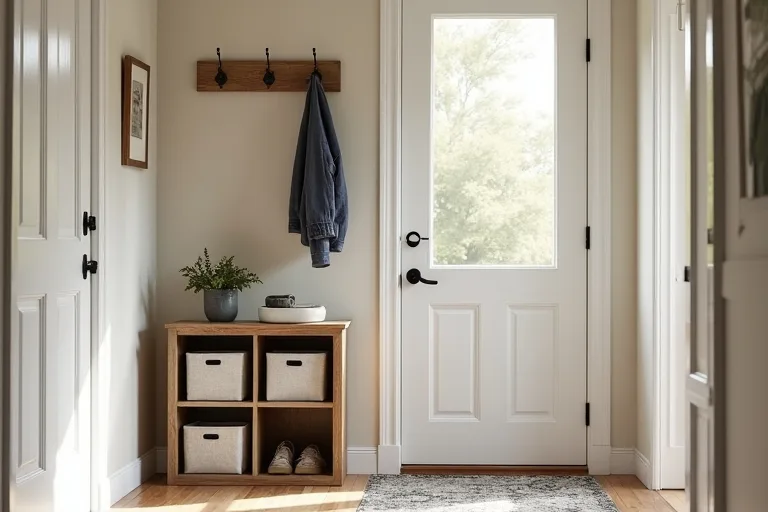
A small entryway has one job: help people come and go without turning into a drop zone. The trouble is that coats, shoes, bags, keys, umbrellas, and mail all arrive at once, and the space fills faster than you expect.
The best entryway storage ideas are not the ones that hold the most on paper. They are the ones that fit the room’s width, protect the walkway, and keep the visible clutter under control so the entrance still feels open.
Use closed or partially closed storage, keep only daily essentials visible, and choose slim pieces that fit the entryway’s clear path. In a small space, the calmest setup is usually a simple mix of wall hooks, one contained shoe area, and a storage unit that hides the items you do not want on display.
Start with what the entryway actually needs to hold
Before you buy anything, list the things that truly live in the entryway every day. For many homes, that means one coat per person, everyday shoes, a bag or two, keys, and maybe a place for mail or dog leads. Anything beyond that usually belongs somewhere else.
This matters because an entryway becomes messy when it tries to function like a storage room. Once you separate daily essentials from occasional items, the layout gets much easier to solve. You are no longer planning for everything you own; you are planning for the handful of items that need a reliable landing spot.

A useful rule is to keep the most frequently used items nearest to the door and the least attractive items hidden first. That usually means visible hooks for coats, a basket or shelf for grab-and-go items, and a closed unit for the things that would otherwise make the room feel busy.
If you are unsure whether your entryway needs more storage or just better sorting, look at the floor first. If the floor is crowded, the problem is usually layout. If the floor is clear but the room still feels messy, the problem is usually too much visual exposure.
Choose storage by width, not by wish list
In a narrow entryway, storage has to respect the walking path. A piece that looks useful in a photo can be frustrating if it blocks the route, catches on bags, or forces people to squeeze past it. Measure the clear area first, then choose furniture that leaves comfortable space to move.
That is why slim benches, wall-mounted hooks, and narrow shelves often work better than deeper furniture. They do less, but they do it without crowding the room. If the entryway is wider, you can add a more substantial unit, but only if it still leaves the doorway and turning area easy to use.
When you need hidden storage with a simple footprint, an 8 cube storage organizer can be a practical option. It gives you a flexible mix of open and closed storage, which is useful when the room needs to hold several types of items without looking overfilled.

- Measure the available width and depth, including the swing of the door.
- Decide what must stay accessible every day.
- Choose the smallest storage piece that can still handle those items.
- Leave a clear walking path so the room feels calm, not packed.
If the entryway is especially tight, wall storage may do more for the room than another floor piece. Hooks, a slim shelf, and a contained shoe zone often create a better result than trying to force a large organizer into the space.
Use bins and closed storage to reduce visual clutter
Open storage can be useful, but too much of it quickly makes a small entrance look busy. That is where bins come in. They keep everyday items grouped, hide mixed shapes, and make it easier to reset the space at the end of the day.
If you use a cube unit, matching bins can make the whole setup feel calmer. A set of soft-sided containers is especially helpful for gloves, hats, scarves, pet items, and other things that would otherwise spill across shelves. The goal is not to hide everything; it is to keep the visual noise under control.
A fabric storage bins set for cube organizer makes sense when you want the storage to work hard without calling attention to itself. Choose bins only after you know what each cube needs to hold, so the unit feels intentional rather than filled at random.
For households still figuring out the best layout, the Small Space Furniture Planner, Room Layout Spreadsheet can help you map the entryway before you commit to a storage piece. It is useful when you want to test whether a cube unit, bench, or wall-mounted setup is actually the best fit.
Style the space so it stays calm day to day
The best entryway storage is only helpful if it is easy to maintain. That means the setup should work with normal habits, not against them. If the storage is too high, too deep, or too segmented, people stop using it properly and clutter starts collecting on the nearest flat surface.
Keep one clear surface for daily drop-off items, but make it small enough that it does not invite accumulation. Use only the number of hooks you truly need. Store backup shoes, seasonal accessories, and extras somewhere else if possible. The room will look more relaxed when the storage supports the routine instead of encouraging overflow.
It also helps to think in categories: things that hang, things that sit, and things that should disappear. A modest wall hook setup, one contained shoe zone, and a hidden bin or cube system usually cover the basics without making the entryway feel crowded.

If you are unsure whether your space needs a bench, a cube organizer, or a wall-only solution, step back and compare the visual load. The calmer option is usually the one that removes the most from view while still giving you a place for the essentials.
Best next step
Before you buy storage, measure the entryway and test the layout. A clear plan is the easiest way to avoid pieces that block the path or add clutter instead of removing it.
- Buying a unit before checking the clear walking path.
- Using too much open storage for small items that are better hidden.
- Keeping seasonal or rarely used items in the entryway just because there is space.
- Choosing a deep bench or cabinet that makes the room feel tighter.
- Adding decor before the storage plan is working.
The calmest entryway storage ideas are usually the simplest ones: limit what lives there, keep the walkway clear, and use storage that hides visual clutter without taking over the room. If you need flexible, concealed storage, an 8 cube storage organizer with matching fabric bins can be a sensible choice. If you are still deciding on the layout, measure first and use the room planner before you shop.
Helpful next tools and planners
If you want to make the decision easier before you buy
These options are useful when you want storage that fits the room instead of adding more visual noise. Start with layout, then move to the product that matches the space.
FAQ
What is the best storage for a small entryway?
The best storage is usually a mix of wall hooks, a contained shoe solution, and one hidden storage piece that does not block the path. The right choice depends on the width of the space and how many items need to stay there every day.
Is an open cube organizer good for an entryway?
It can be, especially if you use bins to hide smaller items. An open cube organizer works best when you want a flexible system and do not want the room to feel heavy.
How do I keep the entryway from looking messy?
Limit what is visible, keep a small landing spot for daily items, and store seasonal extras elsewhere. The less mixed clutter you can see at once, the calmer the room will feel.
Should I choose a bench or a cabinet?
Choose the piece that fits the room’s clear path. A bench can be helpful if you need a place to sit, while a cabinet or cube unit may work better if your main goal is hidden storage.
Three sensible next steps
Some links in this article may be affiliate links. Read more in the Affiliate Disclosure.