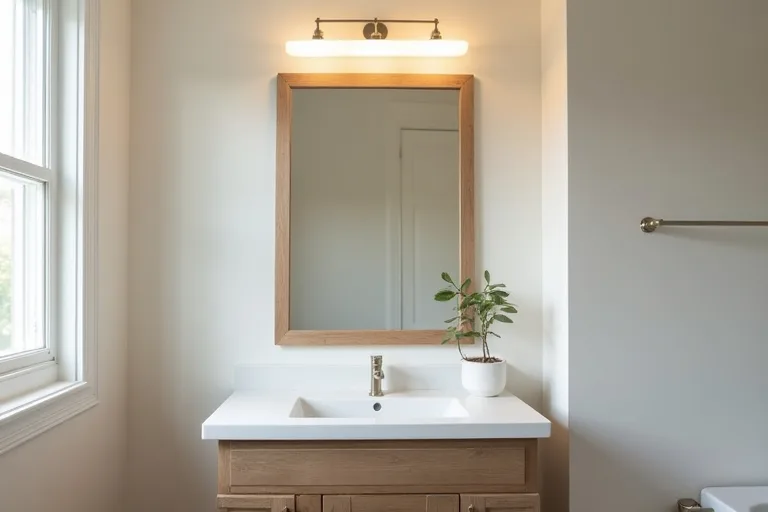
When a remodel budget is tight, the hardest part is not finding things to buy. It is deciding which changes will make the room feel calmer, more finished, and less obviously limited by cost.
The best low-cost upgrades are usually not the most decorative ones. They are the ones that improve what you see every day: the lighting, the paint, the hardware, and the small details that frame the room. If those choices are handled well, even a modest update can feel considered instead of improvised.
Focus on visible finishes, lighting, paint, and hardware first. If you want the room to feel better without looking cheap, spend where the eye lands most often and keep the rest simple. In a bathroom, that usually means the vanity lighting zone, then paint, then the small parts you touch every day.
Start with the finishes people see first
Cheap-looking rooms usually have one thing in common: the eye lands on too many mismatched details at once. A finish that is slightly off, a fixture that feels undersized, or a color that does not relate to the rest of the room can make the whole space feel less resolved.
The quickest way to improve that is to choose a few visible surfaces and make them work together. That does not mean matching everything perfectly. It means reducing visual noise so the room reads as intentional.
In practical terms, start with the zone you notice as soon as you walk in. In a bathroom, that is often the vanity area. In a kitchen or laundry room, it may be the backsplash, cabinet hardware, or overhead light. In a small living area, it could be the wall color, trim, and the first layer of lighting.

If a visitor only noticed one thing after the update, what would you want it to be? That answer should guide where you put the first dollars. A small improvement in the most visible area usually does more for the room than several tiny upgrades scattered around it.
Use lighting and paint to change the room’s feel
Lighting and paint are often the best-value upgrades because they affect the whole room, not just one object. They also help older finishes look more deliberate by softening contrast and improving how materials read in daylight and at night.
For bathrooms, lighting is especially important. A well-chosen LED vanity light fixture can make the sink area feel brighter, cleaner, and more balanced. It is not about chasing a dramatic look. It is about making the room feel easier to use and less visually uneven.
Paint works in a similar way. A calm, related wall color can help an older vanity, simpler mirror, or basic tile feel less jarring. If you are working within a budget, paint is often the quietest upgrade with the broadest effect.
- Choose the light source that improves the main task area first.
- Use paint to reduce contrast where the room already feels busy.
- Keep the finish choices simple so the room feels consistent.
If you are planning paint changes, the paint calculator can help you map quantities before you buy. If you are comparing upgrade costs in a bathroom, the bathroom remodel cost estimator is a better starting point than guessing.

Choose hardware and small fixture swaps carefully
Hardware is one of the easiest places to overspend without improving the result. The goal is not to buy the fanciest option. It is to choose something that looks restrained, suits the room, and does not fight the other finishes.
Simple brushed or matte finishes often feel steadier than overly shiny ones in modest spaces. The same is true for mirrors, faucet styles, and towel hardware. When the shapes are clean and the proportions make sense, the room feels more polished even if the pieces themselves are not expensive.
If you are swapping a few items at once, keep the following order in mind:
- Fix anything that is visibly outdated or mismatched.
- Match the new finish to the strongest finish already in the room.
- Skip decorative extras that do not improve function or balance.
This is also where a small measuring tool helps. A laser measure tool for home projects can make it easier to check spacing, mirror width, fixture clearance, and hardware alignment before you order. Those checks sound minor, but they are often what keep a budget update from looking improvised.

Set a simple budget order before you buy
The safest way to stretch a small budget is to decide the order of spending before shopping starts. Without that order, it is easy to spend on visible extras and then run short when you reach the part that would have made the room feel finished.
A sensible order is usually: lighting, paint, the most visible hardware, then any small fixture swap that improves the room’s balance. If there is money left after that, it can go toward the detail that solves the biggest visual problem rather than the most tempting product on the list.
For a bathroom, that often means upgrading the vanity light first, because it sits in the most visible zone and affects how everything else reads. If you need help deciding whether the update belongs in this room or should be saved for another part of the project, use the bathroom remodel cost estimator before you buy anything. If you want to keep track of priorities across several rooms, a Home Renovation Budget Planner Spreadsheet (Google Sheets, Excel) can make the tradeoffs easier to see.
When the numbers are clear, it becomes much easier to choose the upgrade that gives the room its finished look without pushing the whole plan into a more expensive tier.
Best next step
If you are still deciding where a small upgrade budget should go, start with the room’s highest-visibility zone and check the numbers before you buy. That will usually tell you whether a lighting change, a paint update, or a small fixture swap will do the most work.
- Spending first on decorative details before fixing the most visible area.
- Choosing a finish that does not relate to the room’s strongest existing material.
- Upgrading several small items without improving the lighting or wall color.
- Buying fixtures before checking clearances, spacing, or scale.
- Trying to make every element stand out instead of letting the room feel calm and consistent.
Low-cost upgrades feel expensive when they reduce visual clutter, improve the main light source, and keep finishes consistent. The smartest budget move is usually not more stuff; it is better decisions in the most visible part of the room. Start there, then use simple tools to confirm costs and quantities before you commit.
Helpful next tools and planners
If you want to make the decision easier before you buy
These are useful when you want a clearer plan before spending money on a bathroom or small remodel update.
FAQ
What low-cost upgrade has the biggest impact in a bathroom?
The vanity light is often the best place to start because it changes how the whole sink area looks and functions. If the lighting is weak or dated, the room can feel unfinished even when everything else is clean.
Should I paint before I replace hardware?
Usually yes, if the paint is part of the update. Paint helps set the backdrop, and then hardware can be chosen to match the room’s new tone instead of working against an old color.
How do I avoid making a budget remodel look cheap?
Keep finishes consistent, avoid too many different metals or styles, and focus on one or two upgrades that improve the most visible area. Clean proportions and good placement matter more than adding more pieces.
What should I plan first if my budget is small?
Start with the visible zone, then check cost and quantity. A simple order is lighting, paint, hardware, and only then the smaller extras that remain after the main decisions are made.
Three sensible next steps
Some links in this article may be affiliate links. Read more in the Affiliate Disclosure.