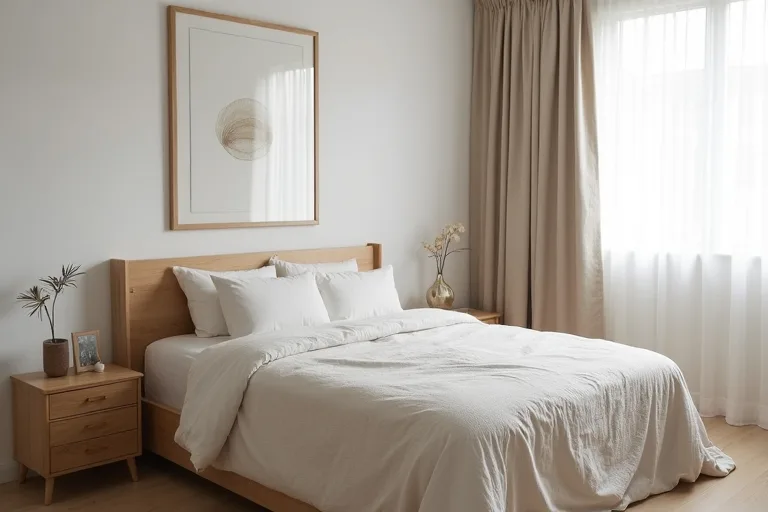
Minimalist interiors work best when they feel settled, not stripped back. The style is not about making a room empty. It is about removing unnecessary noise so the space is easier to use, easier to clean, and easier to live in.
If you are trying to create a calmer home, the real question is not how little you can own. It is which pieces deserve space, how they should sit in the room, and what details will keep the result comfortable day to day.
Use fewer pieces, clearer layouts, hidden storage, and soft neutral finishes to keep minimalist rooms comfortable and functional.
Start with layout, not decor
The easiest way to get minimalist style wrong is to begin with accessories. A room only feels calm when the layout supports movement, daily routines, and a clear visual pause between pieces. Before you think about styling, look at how the room is used.
In practice, that means leaving enough breathing room around the main furniture, avoiding overcrowding near doors and windows, and choosing a scale that suits the room rather than filling every corner. A simple room plan usually looks cleaner because it is easier to read, not because it contains fewer things by accident.
Think about what the room needs to do first. A bedroom needs clear paths on both sides of the bed, accessible storage, and enough surface area for the things you actually use. A living room needs a seating arrangement that feels grounded and balanced, with nothing added just to make it look complete.
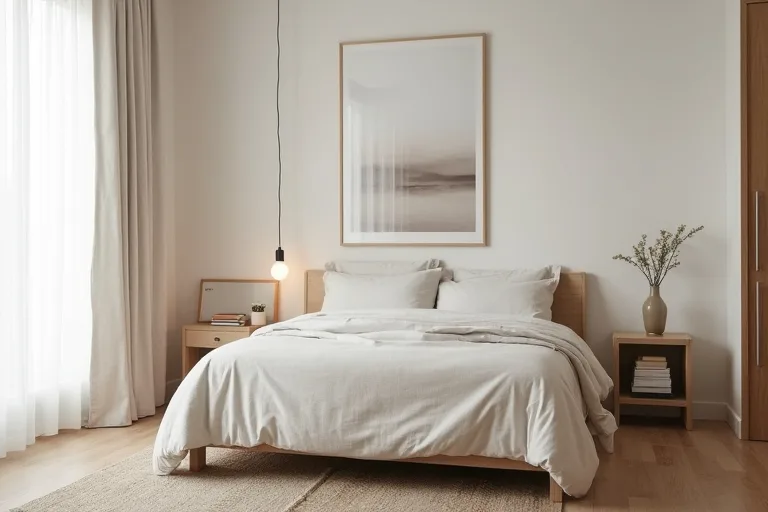
If a room feels bare, the problem is not always a lack of decor. It may be that the furniture is too small, too large, too scattered, or not serving the room’s daily use well enough. Minimalism should make the space easier to understand, not harder to live in.
Choose fewer pieces that work harder
Minimalist style is easier to maintain when each item earns its place. That does not mean every object needs to be hidden. It means the room should be edited so furniture, storage, and a few supporting pieces do more of the heavy lifting.
Start with the essentials. In most rooms, that means one clearly defined seating or sleeping anchor, a practical storage solution, and a limited number of secondary pieces. If a table, bench, or chair does not solve a real problem, it may be taking up more visual space than it is worth.
A useful way to narrow decisions is to ask:
- Does this piece help the room function better?
- Does it suit the scale of the room?
- Does it add to the feeling of calm, or just fill an empty spot?
For people planning a room update, a layout tool can help reveal when the furniture mix is too busy or too small for the space. If you are unsure what belongs where, a planning step is more useful than another shopping trip.

Use texture and soft finishes to keep it comfortable
Minimalism should feel calm, but it should not feel hard. Comfort comes from the materials and finishes you choose once the layout is settled. Soft fabrics, gentle contrast, and a few warmer natural elements stop the room from becoming flat or severe.
Neutral does not have to mean lifeless. Linen, cotton, light wood, matte finishes, and layered bedding all bring softness without visual clutter. A room can stay visually quiet while still feeling inviting enough to use every day.
Window treatments are especially important in minimalist rooms because they affect both light and softness. Linen curtain panels in a neutral tone can make a room feel finished without adding pattern noise. The same is true of artwork: one framed neutral abstract piece often does more for the room than several smaller items competing for attention.
If you are styling a bedroom, the same principle applies to bedding, lamps, and bedside surfaces. Keep the shapes simple and let texture do the work. That creates a comfortable room that still reads as minimal.
Finish with calm styling and storage habits
The final stage of minimalist design is not decoration for decoration’s sake. It is deciding what stays visible and what should disappear. The more routine items you can store out of sight, the less effort it takes to keep the room looking composed.
Open surfaces should stay selective. A lamp, a book, or a small tray may be enough. If everything is displayed at once, the room stops feeling restful. Minimalist styling is strongest when there is a clear reason for each visible object.
One or two finishing pieces are usually enough. Neutral abstract wall art framed set can support the room without taking over it, especially when the rest of the space is already calm. If you want the room to feel more complete, choose finishes that repeat the same quiet palette instead of introducing a new visual direction.
For a budget-conscious refresh, a planning system can also help you avoid buying pieces that do not fit the room’s size or storage needs. That matters in minimalist rooms because every item has a stronger presence.

Best next step
If you want to make the room feel more intentional before you buy anything, start with the plan. A layout check will tell you whether the problem is spacing, storage, scale, or styling.
- Buying decor before the layout is resolved.
- Using furniture that is too small, which makes the room feel unfinished.
- Removing too much without adding texture, so the space feels hard or cold.
- Leaving visible clutter on every surface, which works against the calm look.
- Adding too many finishes, patterns, or accent pieces at the end.
Minimalist interior design works when the room is edited with purpose. Clear layout, enough storage, a restrained palette, and a few soft materials create a space that feels calm without losing comfort or everyday function.
Helpful next tools and planners
If you want to make the decision easier before you buy
Start with planning support, then add only the finishing pieces that still make sense for your room. These options fit the same calm, practical approach.
FAQ
How do I make minimalist style feel warmer?
Use softer fabrics, natural textures, warm wood tones, and layered lighting. These details keep the room calm without making it feel stark.
What furniture should stay in a minimalist room?
Keep the pieces that support daily use first. The best minimalist rooms are built around function, then edited for simplicity.
Is minimalist interior design good for small spaces?
Yes, especially when storage and layout are handled well. A small room usually benefits from fewer visual distractions and more open circulation.
How do I know if my room is too bare?
If the room feels unfinished, uncomfortable, or hard to use, the issue may be proportion or missing texture rather than a lack of decor.
Three sensible next steps
Some links in this article may be affiliate links. Read more in the Affiliate Disclosure.