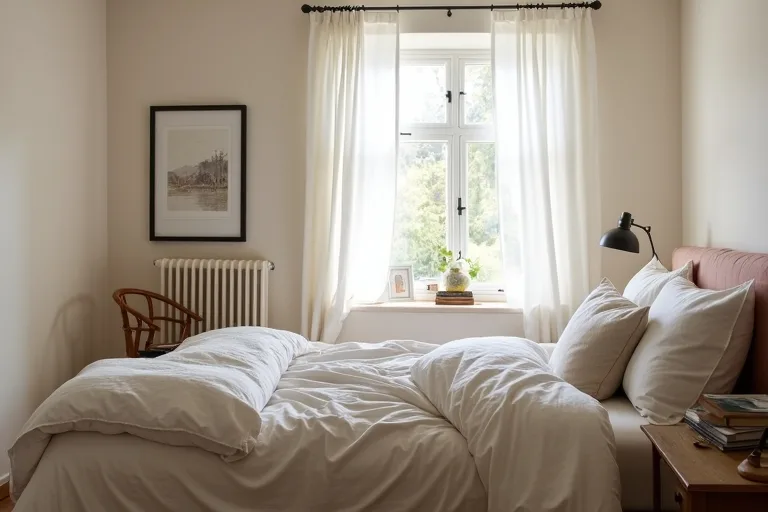
Bedroom paint can look calm in the store and unexpectedly harsh at home. That is usually not a decorating failure. It is a lighting and context problem.
The same color can feel softer in morning light, flatter in the afternoon, and colder at night. Before you choose a wall color, it helps to look at how the room actually receives light and what else is shaping the view.
The biggest mistake is choosing paint without checking how it changes in your room’s real light.
Why paint changes more than color
Bedroom paint is never just a wall finish. It works with window direction, bulb temperature, trim, flooring, bedding, and even the size of the window opening. That is why a color that seemed balanced in one bedroom can feel too shadowy or too bright in another.
Natural light is the main reason the room mood shifts. North-facing rooms often read cooler, while south-facing rooms usually feel warmer and more forgiving. East light can make colors feel fresh early in the day but flatter later on. West light often does the opposite, with stronger warmth near evening.
That does not mean you need to avoid certain colors. It means you should judge them in your room, not in a sample photo or under store lighting. If you want to estimate coverage before buying, the Styling Homes paint calculator is a useful planning step before you commit.
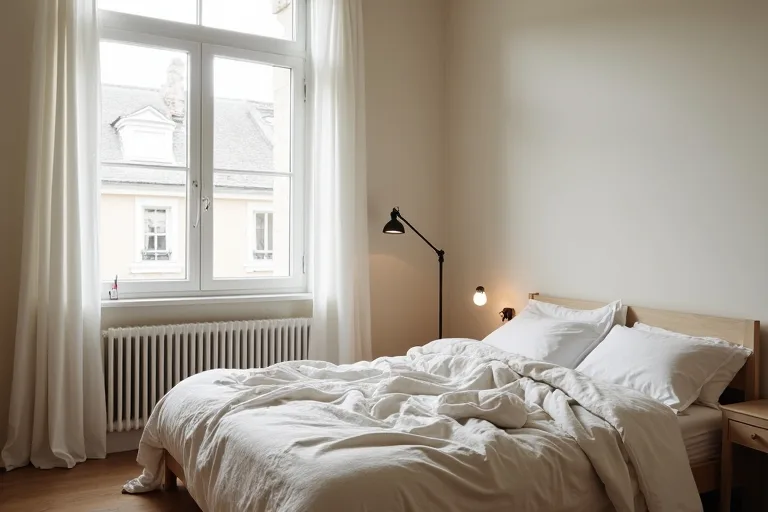
If a bedroom color feels right only when the curtains are open or only when the lamp is on, the room is still controlling the decision. You want a shade that works in more than one lighting condition, not a color that depends on a perfect moment.
The most common bedroom paint mistakes
Most bedroom paint problems come from a few predictable missteps. The color may still be attractive on its own, but it can throw off the mood of the room when it is pushed into the wrong setting.
- Ignoring the direction of natural light. A soft gray can look balanced in a south-facing room and cold in a north-facing one.
- Choosing a color that is too dark for the room’s light level. Dark walls can be restful, but they can also absorb too much light and make the room feel smaller than it is.
- Picking a cool tone for a room that already feels cool. Blue-based grays and icy whites can make a bedroom feel unsettled if the room lacks warmth elsewhere.
- Testing the paint on a tiny patch only. A small sample does not show how the color behaves across a full wall or beside other finishes.
These mistakes are common because they are easy to make quickly. The fix is not to become overly cautious. It is to treat paint as part of the full room plan, not a stand-alone choice.
How to test paint in your own room
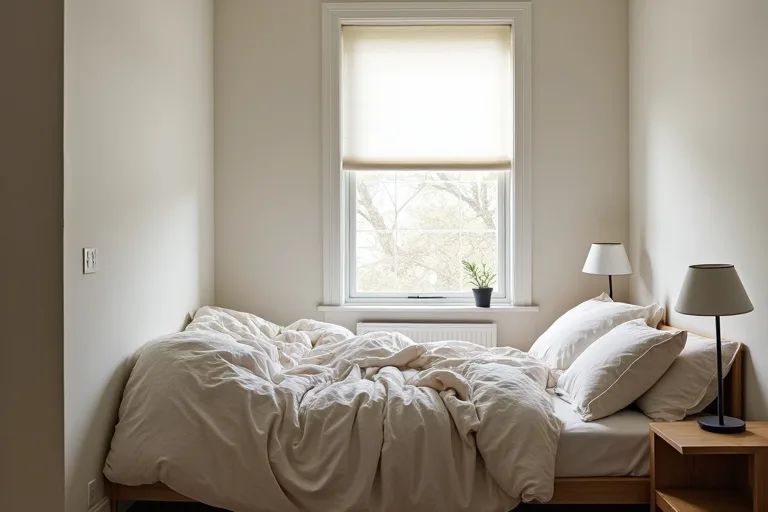
Testing paint well does not need to be complicated. It just needs to happen where the color will live.
A simple approach helps you see the real effect before you buy more than you need:
- Paint a sample on more than one wall, not just one small square.
- Check it in morning light, midday light, and evening lamp light.
- Place the sample near bedding, flooring, and trim so you can see the full combination.
- Leave it up for a day or two before deciding.
- Pay attention to whether the room feels calmer, colder, flatter, or busier with the color in place.
If you are already comparing colors, this is also the moment to look at the bedroom as a whole. Paint should support the room’s layout and the way you use it. A restful wall color can still feel wrong if furniture placement, storage, or circulation is cluttered. If you want a broader planning reference after the color choice, the Styling Homes design styles page is a helpful next step for keeping paint and room direction aligned.
Window treatments, trim, and the final check
Window treatments have more influence on bedroom paint than many people expect. They affect how much daylight enters the room, how hard the shadows feel, and how clearly you see the undertone of the paint.
This is where the practical side of bedroom planning matters. If you are choosing paint at the same time as curtains or blinds, keep the two decisions connected. Cleanly installed window treatments can soften strong daylight, reduce glare, and make a wall color feel more settled.
A simple, adjustable hardware choice can help the room feel more finished without creating visual noise. If you are planning the window treatment side of the room, an adjustable curtain rod matte black can be a practical option for a neat and flexible installation. If you are also trying to keep the room calm while you sort through what stays and what goes, under bed storage containers with wheels can help reduce visible clutter that competes with the paint.
For readers mapping out a fuller refresh, a room planning tool can also make the process feel more manageable. The Room Makeover Planner, Home Layout Budget Spreadsheet (Digital Download) is useful if you want to keep color, layout, and spending in one place while you decide.
Best next step
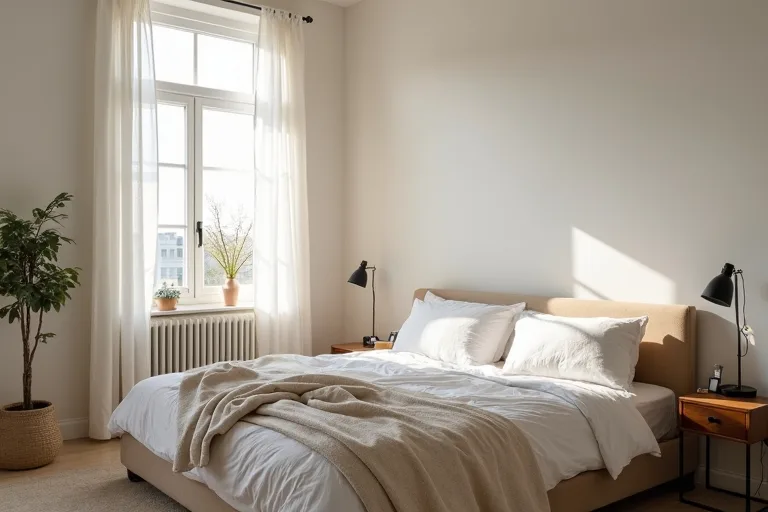
If you are narrowing down bedroom paint, start with the room logic first: light direction, undertone, and how much paint you actually need. Then bring in the rest of the room so the finish works with curtains, bedding, and storage instead of fighting them.
- Choosing a bedroom color without checking the room’s real daylight.
- Testing only a tiny sample and assuming it will read the same on a full wall.
- Letting a cool wall color clash with an already cool room.
- Forgetting that curtains, trim, and bedding all affect how the paint feels.
- Picking paint before thinking through the room’s overall layout and clutter level.
Bedroom paint works best when it supports the light you already have instead of fighting it. Check the room in real daylight, compare the color with your finishes, and treat window treatments as part of the decision. That is usually what separates a bedroom that feels settled from one that feels slightly off.
Helpful next tools and planners
If you want to make the decision easier before you buy
These options can help you plan the room more calmly once you know which paint direction makes sense. Use them to support the decision, not to replace it.
FAQ
Why does the same bedroom paint look different from room to room?
Because light direction, window size, trim, flooring, and nearby furnishings all change how the color reflects and how the undertone reads.
Should I choose bedroom paint before curtains?
You can choose either first, but they should be planned together. Curtains affect daylight, and daylight affects how the paint feels.
What is the safest bedroom paint mistake to avoid?
The biggest one is skipping a real test in your own room. A color that looks calm in a shop can feel very different at home.
How do I know if a color is too cool for a bedroom?
If the room already gets cool light and the sample starts to feel flat, pale, or slightly stark, it may be pushing the room colder than you want.
Three sensible next steps
Some links in this article may be affiliate links. Read more in the Affiliate Disclosure.