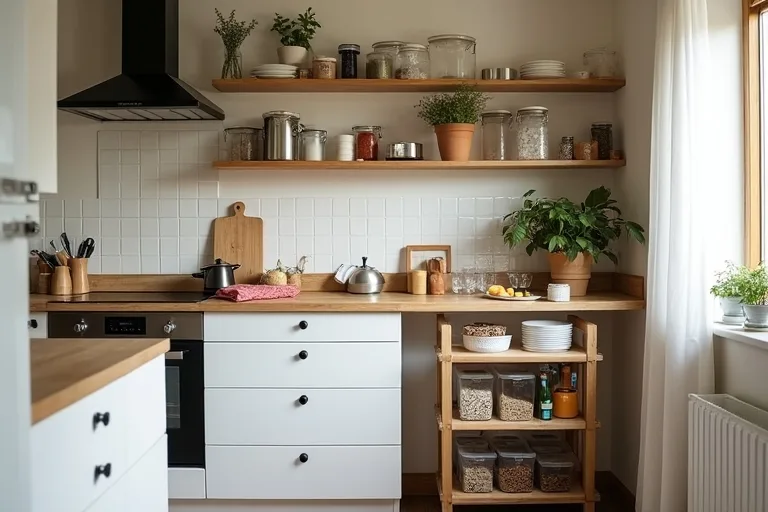
Kitchen storage is supposed to make the room feel easier to use. But the wrong setup can do the opposite: it leaves counters crowded, shelves visually noisy, and everyday items harder to reach than before.
The problem is often not that you need more storage. It is that the storage you already have is working against the way the kitchen is actually used. Once you spot the pattern, the fixes are usually simpler than they look.
Too many visible items, poor zoning, and the wrong storage pieces usually create the mess. The fastest improvement comes from keeping daily items in one clear zone, reducing what stays out on display, and choosing storage that fits the room instead of filling it.
Why storage can make a kitchen feel busier
Kitchen storage only works when it supports the way you move through the room. If containers, appliances, and tools are spread across every surface, the eye reads them as clutter even when the kitchen is technically organized. That is why some kitchens feel calm with very little storage, while others feel crowded despite having plenty of cupboards.
Open shelving, mixed canisters, and small accessories are common reasons the room starts to feel visually loud. The issue is not always the number of items. It is the lack of a clear system. When items do not belong to a defined zone, they drift onto counters and shelves in a way that breaks up the room.
The goal is not hidden perfection. It is making the storage read as intentional. When you group items by use, keep the most active items close together, and avoid scattering the same category across multiple places, the kitchen looks calmer and works better.
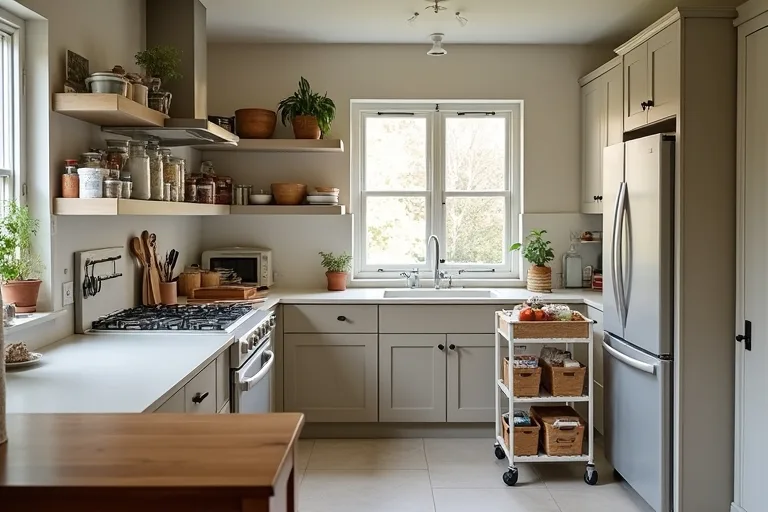
If you can answer these three questions quickly, your storage is probably on the right track: what do I reach for every day, where does it belong, and does it need to stay visible? If the answer is unclear, the storage plan needs tightening before you buy more containers.
The storage mistakes that create the most visual mess
Most cluttered kitchens are not caused by one big problem. They are usually the result of a few small decisions that add up. These are the ones that matter most.
- Too many mismatched containers. Different heights, lids, and labels can make even tidy pantry shelves look restless.
- Leaving too many small items out. Utensils, oils, spices, and paper goods quickly take over a counter when they do not have a fixed home.
- Using storage that is too large for the room. Oversized bins, carts, or racks can block pathways and make the kitchen feel tighter.
- Splitting one category across several places. When baking supplies, snacks, or cleaning items are stored in multiple spots, the room feels less settled and harder to maintain.
- Forgetting the visual line of the room. Tall items placed at the wrong edge of a counter or shelf can interrupt the sense of order, even if everything is technically accessible.
The easiest fix is often to reduce the number of storage styles, not add more of them. A consistent pantry setup, a single zone for everyday tools, and a clear place for overflow items will usually do more for the room than another round of baskets.
How to choose storage that calms the room
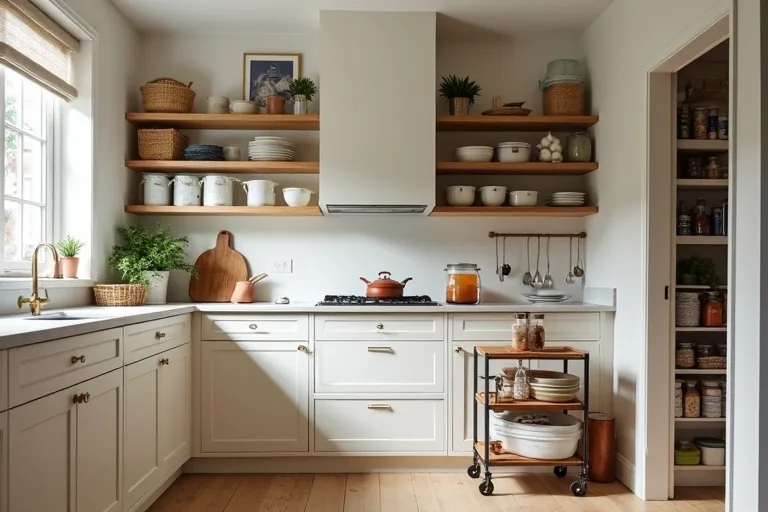
Good kitchen storage starts with how often you use each item. The more often something is used, the easier it should be to reach. The less often it is used, the more it can be moved out of sight. That simple rule helps the room feel more open without making daily routines harder.
A practical way to decide is to sort items into three groups:
- Daily use: items that belong close to the prep or cooking area.
- Weekly use: items that can live in a drawer, cabinet, or cart.
- Occasional use: items that should be stored higher, deeper, or farther away.
For pantry storage, airtight containers can help reduce both mess and visual noise, especially when packaging is uneven or bulky. For counters, keep the surface for active tasks first and decoration second. If something is used every day, it can stay out; if it is only useful once in a while, it probably does not need counter space.
If you are working with a small kitchen, it is often better to improve the zones you already have than to introduce another storage category. That may mean one drawer reassigned to prep tools, one shelf simplified into matching containers, or one cabinet reserved for overflow. Small changes like this usually make the room look more settled than a major reset.
When a cart, containers, or planner is worth it
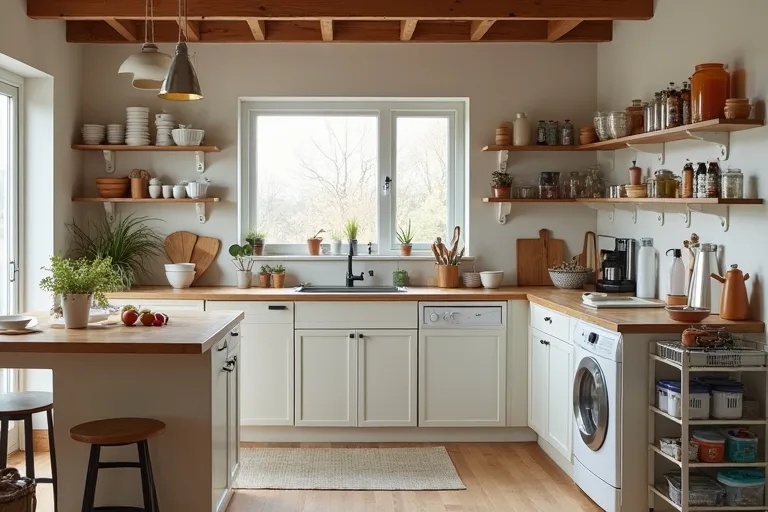
Some kitchens need a flexible extra surface, but the answer is not always a bigger cabinet or a permanent remodel. A rolling kitchen cart with storage can be useful when you need a little more room for prep, overflow produce, or the items that do not fit neatly elsewhere. It works best when it has a clear job, not when it becomes a second dumping ground.
A cart is worth considering if you need temporary or movable storage, if your cabinets are full but your floor plan still has a little breathing room, or if you want a practical stopgap while you rethink the layout. It is less useful if it blocks movement, collects miscellaneous items, or adds another visible surface that needs constant tidying.
For pantry items, airtight containers are most helpful when they replace packaging rather than sit beside it. That is where the visual improvement really happens. And if you are still deciding how much storage space you actually need, a layout-first planner can be more useful than another shopping trip.
Best next step
If your kitchen feels cluttered, start with the layout before you buy another storage piece. A rolling cart can help, but only when the room has enough space for it to work naturally. For the clearest next step, check the small-space storage guidance first, then compare the kitchen and dining hub if you want broader planning ideas.
- Buying containers before deciding what should stay visible and what should be hidden.
- Letting counters hold items that are only used occasionally.
- Choosing storage pieces that are too large for the available floor space.
- Storing one category in several places instead of creating one clear zone.
- Using open shelving without editing what is displayed.
- Adding a cart without assigning it a specific job.
Kitchen storage works best when it reduces decisions, not adds them. Keep daily essentials close, move less-used items out of sight, and choose pieces that fit the room instead of filling it. If you need a flexible solution, a rolling kitchen cart with storage can help, but only when it supports the layout rather than crowding it.
Helpful next tools and planners
If you want to make the decision easier before you buy
These options are useful when you are trying to sort the room first, then shop with a clearer plan. Start with the layout, then add storage pieces only where they solve a real problem.
FAQ
What makes a kitchen look cluttered even when it is organized?
Usually it is too many visible items, mixed storage styles, or categories that are spread across the room instead of grouped into one zone.
Are open shelves a bad idea for kitchen storage?
Not necessarily. They work best when you keep the display simple and consistent. Too many different container shapes or colors can make the shelf feel busier than a closed cabinet would.
Should I buy containers before organizing the pantry?
No. First decide what you actually need to store and how often you use it. Then choose containers that fit those items and reduce packaging noise.
Is a rolling kitchen cart worth it in a small kitchen?
It can be, if it solves a real problem such as overflow storage or extra prep space. It is not helpful if it blocks movement or becomes another surface for clutter.
Three sensible next steps
Some links in this article may be affiliate links. Read more in the Affiliate Disclosure.