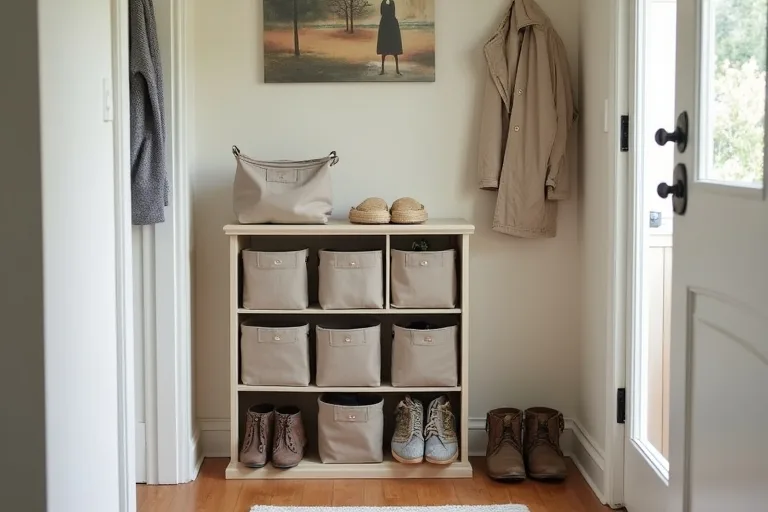
An entryway usually becomes the place where real life lands first: shoes, bags, keys, school things, dog leads, and the things you meant to carry upstairs later. When there is no clear drop zone, the whole home can feel messier than it is.
The good news is that you usually do not need a full renovation to fix that. The better question is whether your space needs a flexible storage setup now, or whether it is worth investing in a built-in solution that becomes part of the room.
Choose budget storage if you need flexibility now; choose built-in storage if you want a longer-term fit and can invest more.
What budget entryway storage actually solves
Budget entryway storage works best when the problem is not the size of the room alone, but the lack of structure. A simple setup can give every person in the household a place for daily items without committing you to cabinetry or construction.
A practical version usually includes an 8 cube storage organizer, a few fabric storage bins set for cube organizer, wall hooks, and maybe a small bench or tray. That combination can contain visual clutter while still staying easy to move if your needs change.
The strength of this approach is that it buys time. If you are still figuring out how many shoes need to live near the door, who drops bags there, or whether the entryway also needs to handle coats and pet gear, a modular setup keeps the decision open.
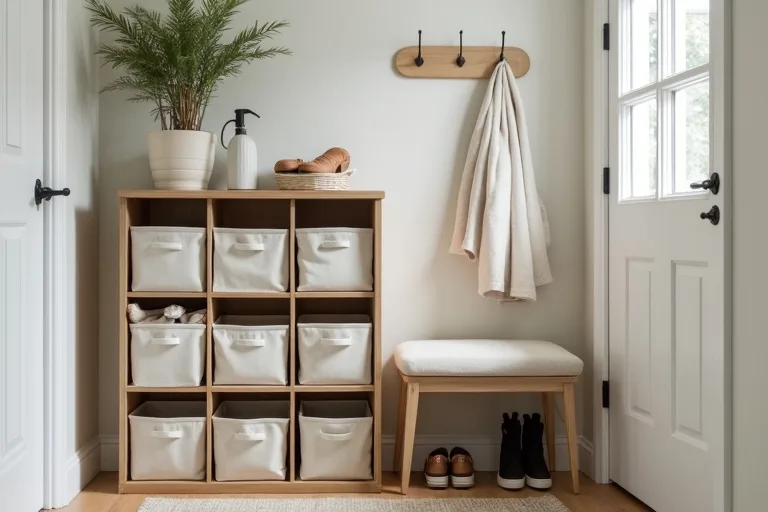
If you are trying to solve daily clutter, start with the cheapest version of the storage problem: a landing zone for shoes, a place for bags, and a hook for the items used every day. If that setup works in real life, you may not need a built-in upgrade at all.
What a built-in upgrade changes
A built-in entryway upgrade usually means custom cabinetry, a bench with storage, and wall integration that makes the whole area feel intentional. It can be a strong choice when the entry is part of the main circulation route and needs to look tidy without constant resetting.
The main difference is not just appearance. Built-ins can use awkward corners more efficiently, reduce the need for separate furniture, and create a cleaner path through the room. That can matter in narrow hallways or open-plan homes where the entry is visible from the living space.
Built-ins are more permanent, though, which means they work best when the layout is already clear. If the flow of the room is still changing, a fixed solution can be harder to live with later.
How to compare cost, fit, and flexibility
When people compare budget storage with a built-in upgrade, they often focus on price first. That matters, but the better comparison is how each option affects the room over time.
A simple way to think about it is this:
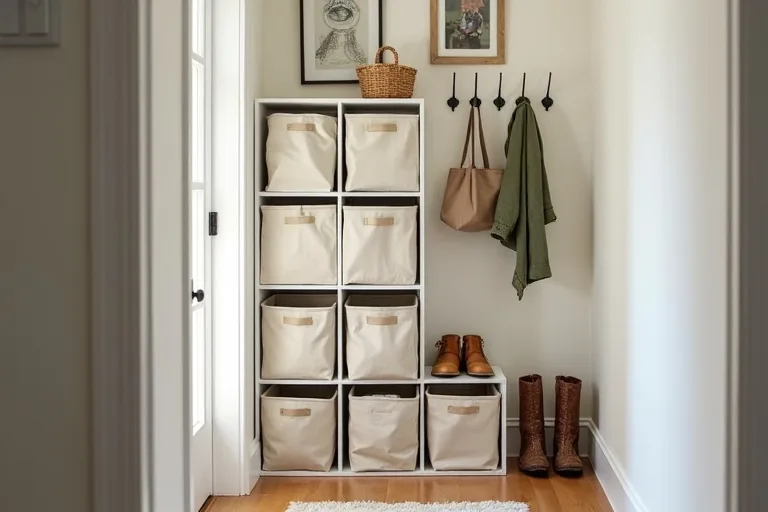
- Budget storage: lower commitment, faster to put in place, easier to move or replace.
- Built-in storage: more tailored, usually cleaner visually, but less flexible if your needs change.
- Space fit: modular furniture is easier to test in a room before you commit to a larger project.
- Daily routine: if you need the entryway to work for kids, guests, and deliveries, the simpler solution is often the one that gets used.
If you are planning a connected open-plan space, it can help to think beyond the entryway alone. The same sense of flow applies to nearby furniture and circulation, which is why tools like the room layout planner can be useful before you buy anything permanent. For larger seating areas close to the entry, the sofa size calculator can also help you keep pathways clear.
For households that want a simple starting point, a compact cube organizer with bins is often the easiest way to test what the space actually needs before committing to a custom build.
A simple measurement checklist before you decide
Before you order furniture or start talking to a cabinet maker, take a few straightforward measurements. This is less about perfection and more about avoiding a storage solution that blocks the way in and out of the house.
Check these points first:
- Width of the entryway and the clear walking path
- Door swing and how far it opens
- Space needed for shoes to open and close comfortably
- Whether coats, bags, and umbrellas need separate homes
- How many people use the entry every day
- Whether the home is rented, owned, or likely to change soon
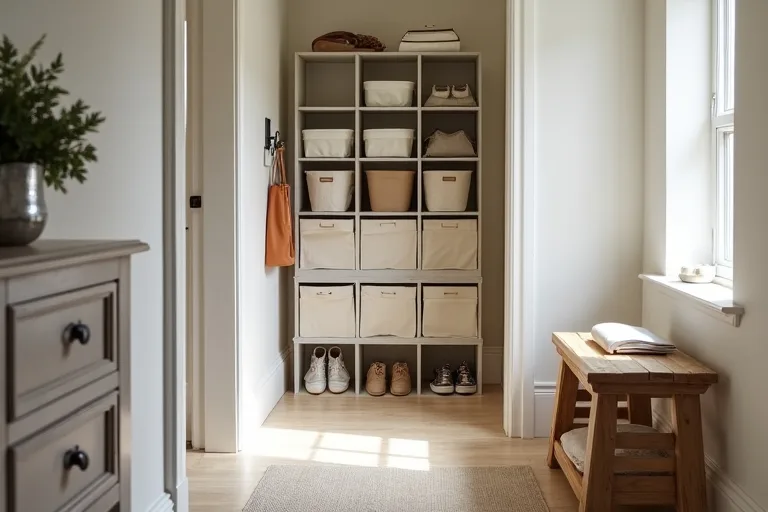
If the room is narrow, a slimmer modular setup may work better than a deep built-in. If the space is stable, visible, and likely to stay the same for years, a custom solution may earn its place.
For a calm next step, the room layout planner can help you map the entryway before you buy furniture or plan carpentry. If you want a more detailed planning companion for a smaller space, the Small Space Furniture Planner, Room Layout Spreadsheet (Digital Download) can help you think through the layout in a structured way.
Best next step
If you are still deciding between a flexible setup and a built-in upgrade, map the space first. A clear layout check will tell you whether the entryway can handle a cube organizer, whether it needs a slimmer solution, or whether a custom build is worth the investment.
- Buying a storage unit before checking door swing and walking space
- Choosing a built-in solution before the routine of the entryway is clear
- Using deep furniture where a narrower layout would stay more usable
- Forgetting that shoes, bags, and coats often need separate storage zones
- Making the setup look good on day one but hard to live with every day
Budget entryway storage is usually the better first move if you want flexibility, speed, and a lower-risk way to stop clutter at the door. A built-in upgrade makes more sense when the space is stable, the traffic pattern is clear, and you want the entryway to blend into the architecture of the home. If you are unsure, measure first and use a layout planner before you spend.
Helpful next tools and planners
If you want to make the decision easier before you buy
Start with a practical storage anchor, then check the layout before moving to a more permanent plan. These options are useful when you want the entryway to work calmly in everyday life.
FAQ
Is a cube organizer good for a small entryway?
Yes, especially if you need a simple way to contain shoes, bags, and seasonal items without committing to built-in cabinetry.
When is built-in entryway storage worth it?
It is worth considering when the layout is stable, the space is visible from main rooms, and you want a permanent solution that blends into the home.
How do I know if my entryway is too narrow for furniture?
Check the clear walking path, door swing, and how much space remains when people bend to put on shoes or drop bags.
What should I buy first if I am unsure?
Start with a modular setup such as a cube organizer and bins, then refine the layout once you know what the space really needs.
Three sensible next steps
Some links in this article may be affiliate links. Read more in the Affiliate Disclosure.