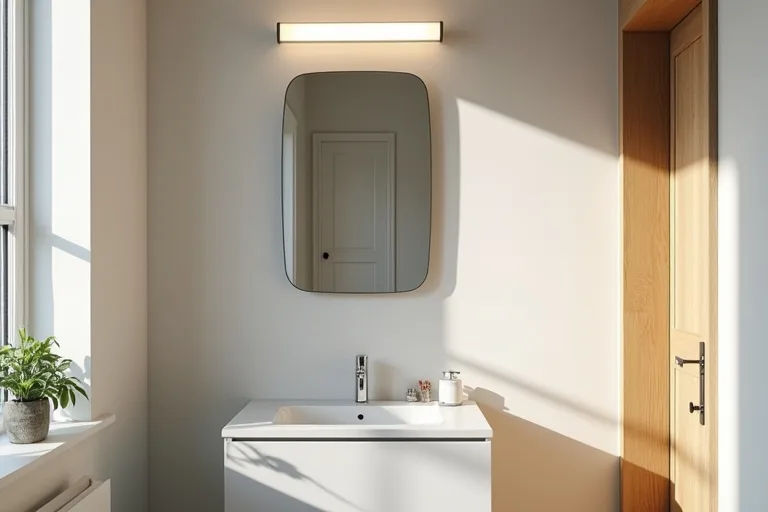
When a room feels off, the hardest part is not finding ideas. It is deciding which changes are worth money first. A small budget can disappear quickly if you start shopping before you know what will make the biggest difference.
This checklist keeps the focus on the upgrades you see and use every day. In a bathroom, that usually means the vanity lighting zone, the wall finish, and a few small details that make the whole room feel more settled.
Start with the upgrades you see and use every day, especially lighting, paint, and small fixes that improve the whole room. If the bathroom vanity zone is your main concern, set a realistic budget first with the bathroom remodel cost estimator before you shop.
Start with what changes the room fastest
Before you compare products, ask one simple question: what will be noticed immediately when you walk into the room? In most remodel-and-budget decisions, the highest-impact changes are the ones tied to visibility, daily use, and the room’s main path of sight.
That is why a bathroom update often starts with the mirror wall and the space around the vanity. A clean light fixture, a brighter wall finish, or clearer hardware can change the room’s mood more quickly than a long shopping list of small accessories.
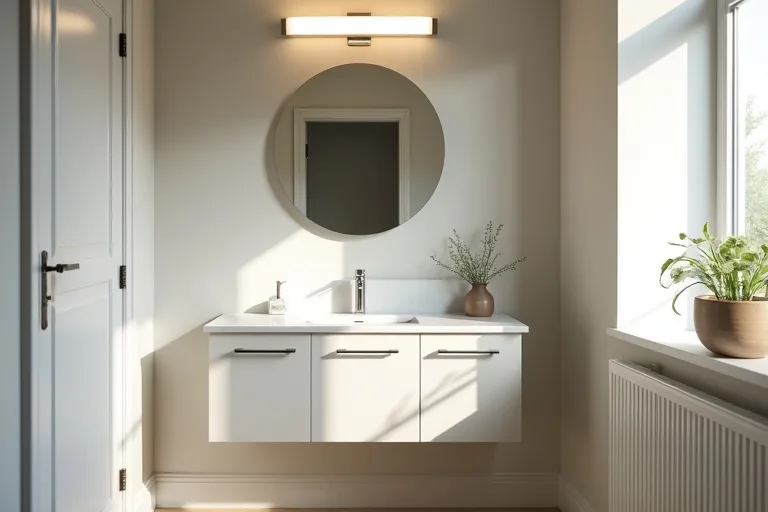
If you are comparing upgrades, rank them in this order: what is most visible, what is most used, and what is easiest to improve without creating more work later. That keeps the room plan calm and prevents you from buying items that look good online but do little in the space itself.
The real decision is not “What looks best in a store?” It is “Which change will make this room feel noticeably better for the money I have right now?” If the answer is not clear, pause before buying.
Check lighting before you spend on decor
Lighting is one of the fastest low-cost upgrades because it changes how every other finish reads. In a bathroom, the vanity zone matters most. If the mirror area feels dim, uneven, or tired, even fresh paint can still leave the room feeling unfinished.
A simple LED vanity light fixture bathroom is worth considering if the current light is dated or weak. The goal is not a dramatic makeover. It is better visibility, a cleaner look, and a more usable daily routine.
Before you replace anything, look at three things:
- Where the light falls on your face at the mirror.
- Whether the fixture size fits the vanity and mirror width.
- Whether the new light will solve a real problem or only change the style.
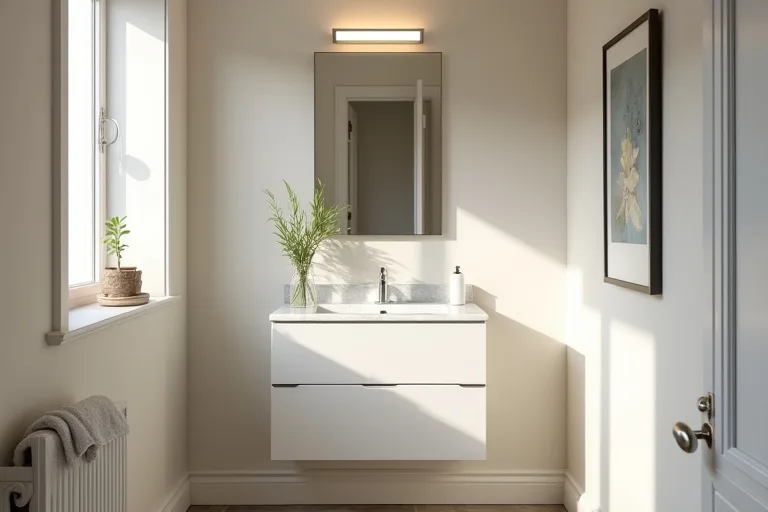
If the room already has good light, do not spend there just because lighting is a common upgrade. A strong budget plan is about solving the weakest point first, not checking every renovation box.
Use paint, hardware, and small repairs to tighten the room
Once the main light and layout issues are clear, move to the updates that make the room feel more complete. Paint, hardware, trim, and small repairs are often low-cost, but only when they are chosen carefully and in the right order.
Fresh wall color can do a lot for a room that already has decent proportions and usable fixtures. If the paint is faded, patchy, or the wrong finish for the space, that visual noise can make everything else feel more dated than it is. Use the paint calculator before you buy so you can confirm how much you actually need and avoid over-ordering.
Then look at the smaller details:
- Cabinet knobs or pulls that feel loose, mismatched, or worn.
- Caulk, grout, or trim that makes the room look unfinished.
- Minor fixes that affect the room’s overall care level more than its style.
If a small repair can improve the whole room’s first impression, it may deserve more priority than a decorative purchase. That is especially true in bathrooms, where visible wear is easy to notice.
Set a budget and shopping order before you buy
Shopping feels easier when you already know what the room can support. The most practical way to avoid overspending is to set a ceiling for the project first, then divide the work into do, delay, and skip.
If the vanity lighting zone is the biggest issue, start by estimating the bathroom work with the bathroom remodel cost estimator. That gives you a clearer picture of whether a fixture change, a paint refresh, or a broader update is the better use of money.
For anyone tracking renovation spending by hand, a simple planner can help keep the decision steady. A Home Renovation Budget Planner Spreadsheet (Google Sheets, Excel) is useful if you want to compare costs, keep a running total, and avoid drifting into impulse purchases.
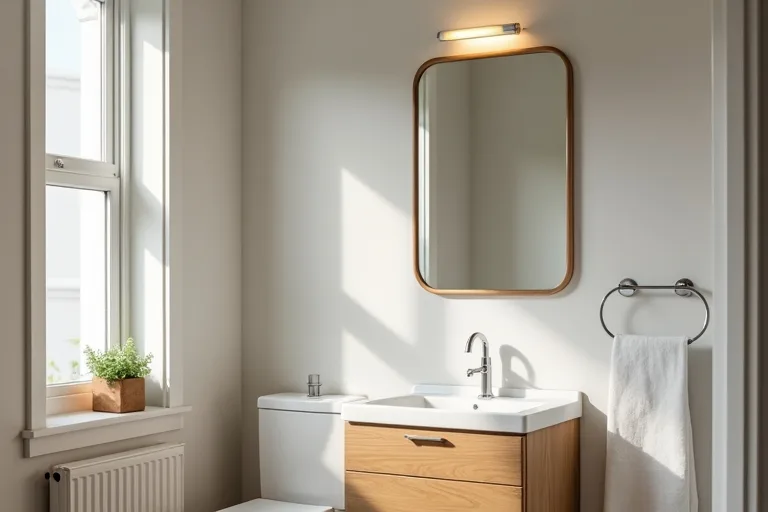
A helpful order is usually this: fix the biggest visibility problem, confirm the finish quantities, then buy the smallest upgrades last. That way, your money goes to the changes that shape the room, not the ones that simply fill it.
Best next step
Before you start shopping, set your budget around the part of the room that matters most. If the bathroom vanity zone is the priority, use the remodel cost estimator first, then move to the paint calculator so you can compare the visual upgrades that fit what is left.
- Buying decor before fixing lighting or wall finish.
- Choosing upgrades because they are popular instead of because they solve a real room problem.
- Skipping measurements and then forcing the wrong-size fixture, hardware, or paint quantity.
- Spending too early on small items and leaving no room for the change that would matter most.
- Ignoring the bathroom vanity area, even though it is often the most visible part of the room.
Start with the upgrades that affect the room’s daily feel, not the ones that are easiest to add to a cart. In a bathroom, that usually means the vanity light, then paint, then small repairs and hardware. If the budget is tight, do the visible problem first, delay the rest, and skip anything that does not improve the room enough to justify its cost.
Helpful next tools and planners
If you want to make the decision easier before you buy
These tools and planners fit the same calm planning approach: estimate first, measure next, and only then decide what deserves your budget.
FAQ
How do I know which low-cost upgrade to do first?
Start with the change that affects how the room looks and works every day. In a bathroom, that is often the vanity lighting zone, followed by paint and small visible repairs.
Is lighting really more important than decor?
Usually, yes. Good lighting improves how the room feels and how other finishes look, while decor only helps after the room’s main problems are under control.
Should I measure before buying a light fixture or hardware?
Yes. Even small upgrades can go wrong if the size does not suit the mirror, vanity, or cabinet fronts. A quick measurement check saves wasted purchases.
What if my budget is too small for a full remodel?
Focus on one visible problem and solve that well. A clear budget, one strong upgrade, and a few delayed items will usually make the room feel more intentional than a scattered mini-makeover.
Three sensible next steps
Some links in this article may be affiliate links. Read more in the Affiliate Disclosure.