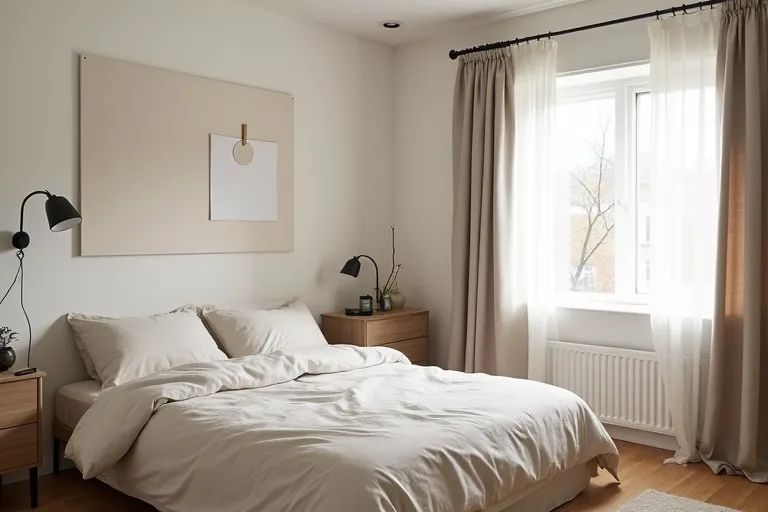
Choosing a bedroom paint color feels simple until you are standing in a paint aisle with too many similar swatches. The easiest way to avoid a repaint is to slow the decision down and check the room first.
This checklist keeps the focus on what actually changes the result: light, undertones, finish, and how the color works with the bed, flooring, trim, and curtains you already have.
Check light, undertones, finish, and room function before choosing a bedroom paint color. If those four things work together, the color is far more likely to look right on the wall and stay right after the furniture is back in place.
Start with the room’s purpose and light
Before you compare paint chips, decide what the bedroom needs to feel like. A room used for rest usually needs a softer, quieter color path than a room that doubles as a reading space, dressing room, or compact work zone. The goal is not just a pretty color. It is a color that supports how the room is used day and night.
Then check the light. Bedrooms often change more than people expect because morning light, late-afternoon shade, and lamp light can all pull the same paint in different directions. A color that looks warm and calm in one bedroom may look flat, pink, green, or gray in another.
Stand in the room at different times of day and note where the strongest natural light falls. Also check the direction of the window if you know it. North-facing light tends to look cooler, while warmer light can soften some paint colors and intensify others.

If you cannot decide between two similar shades, test both in the same spot on the wall and look at them in morning light, evening light, and lamp light. The better bedroom color is usually the one that stays steady across all three.
Check undertones against the pieces already in the room
Most bedroom paint problems are really undertone problems. A paint can look like a soft white on the chip and still feel yellow, pink, blue, or muddy once it sits next to flooring, trim, bedding, and window treatments.
Lay the sample beside the things that are staying in the room. That includes wood floors, headboard finish, white trim, duvet cover, and curtain fabric. If a color fights with any of those, the clash may be subtle at first but it usually becomes obvious once the room is fully styled.
- Compare the sample to the floor first, because flooring usually sets the strongest fixed tone.
- Check it against trim and doors, especially if they are a bright white.
- Place it beside bedding and curtains, since textiles can change the whole temperature of the room.
- Look at the color from the doorway and from the bed, not just close up.
For a calmer result, the paint should feel related to the room’s existing materials, even if it is not the exact same tone. That is usually easier than trying to force a brand-new palette into a room that already has a clear direction.

Compare finish, samples, and window treatments
Finish matters almost as much as color. In a bedroom, a flatter finish usually feels softer on walls, while a slightly more washable finish can be useful in spaces that need more cleaning. The right choice depends on how much wall wear you expect and how much light the room gets.
Samples also need enough space to tell the truth. A tiny paint chip rarely shows how the color behaves across an entire wall, especially when daylight hits it from the side. Paint larger sample patches if you can, and leave them up long enough to see them through different parts of the day.
Window treatments matter here too, especially if you are planning to install them cleanly as part of the room update. Curtain fabric, liner weight, rod finish, and how high the curtain sits all affect the final look. A simple matte black curtain rod can give a bedroom a neat edge, but it will also change how the wall color reads next to the window. If you are checking how the room comes together, this is the stage to coordinate the paint with the curtains instead of treating them as separate decisions.
The same logic applies if you want storage to disappear into the room. Under-bed storage containers, for example, can be helpful in a bedroom with a tight closet or limited dresser space. Choosing a wall color without considering that extra visual weight can leave the room feeling busier than expected.

Confirm timing, prep, and budget before you buy
Once the color is promising, check the practical side of the project. That means knowing whether the room needs patching, whether you are painting trim too, and whether you are buying enough paint for all planned coats. A calm paint plan usually saves money because it avoids last-minute extra purchases and mismatched batches.
This is also where timing matters. If the room is being used every night, plan around bedding changes, airing out the room, and drying time. If you are coordinating several updates at once, write them down before you start shopping. A simple room plan can keep you from buying the color before the room’s layout and finish choices are clear.
If you are not sure how much paint to buy, use the Styling Homes paint calculator before you commit. It is a practical step that helps you estimate coverage and stay closer to budget. If you prefer to map the whole room update first, a planner can help you track the room layout, finish decisions, and shopping list in one place.
Best next step
Before you buy samples or gallons, estimate how much paint the room needs and check the project against your wider bedroom plan. That keeps the color decision tied to the room, not just the swatch.
- Picking a color from a chip without checking it in the bedroom’s light.
- Ignoring undertones in flooring, bedding, and trim.
- Testing samples too close together, where they compete instead of reading clearly.
- Choosing a finish before deciding how durable or soft the walls should look.
- Buying paint before confirming prep work, timing, and quantity.
The best bedroom paint color is the one that works with the room you already have. Check the light, confirm the undertones, compare the finish, and make sure the timing and budget are clear before you commit. That is the simplest way to avoid repainting and end up with a bedroom that feels settled.
Helpful next tools and planners
If you want to make the decision easier before you buy
These are useful when you are turning a paint decision into a real room plan. Keep them secondary to the color check, but use them if you want a cleaner process.
FAQ
How do I know if a bedroom paint color is too dark?
If the room feels smaller, flatter, or harder to relax in during the day, the color may be too dark for the light you have. Test it on larger wall areas before deciding.
Should bedroom walls be flat or washable?
Flat finishes usually feel softer, while washable finishes are easier to maintain. The better choice depends on how much durability you need and how much texture you want to see in the light.
Why do paint samples look different on the wall?
Wall color changes with natural light, lamp light, undertones in nearby materials, and the size of the sample. A chip is too small to show the full effect.
What should I check before I buy paint?
Check the light, undertones, finish, room use, prep work, and paint quantity. Those are the decisions that most often affect the final result.
Three sensible next steps
Some links in this article may be affiliate links. Read more in the Affiliate Disclosure.