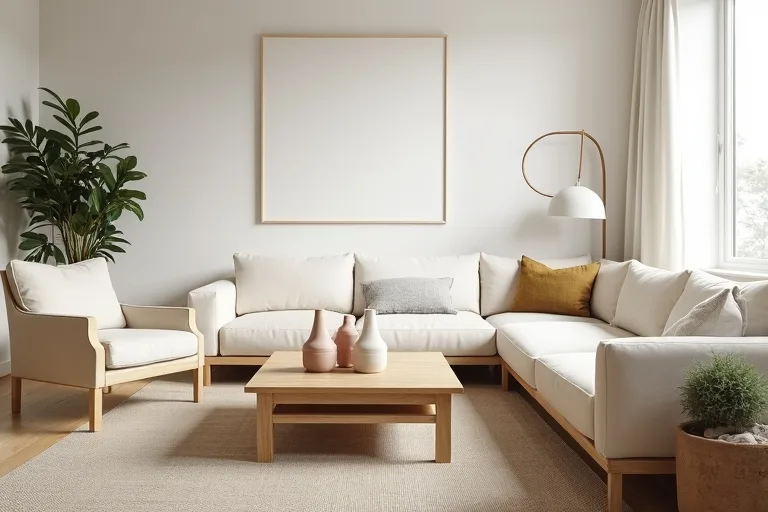
Organic modern style works well when you want a home that feels calm, not empty. It combines clean shapes with natural materials, which makes it easier to live with than a style that depends on constant styling.
If you are trying to update one room or make sense of a whole-home direction, this style gives you a useful starting point. It can guide layout, furniture choices, and the kind of finishes that make a room feel settled.
Organic modern style blends clean lines with natural materials, soft textures, and a calm, lived-in feel.
What organic modern style really means
Organic modern style sits between minimalism and warmth. The modern side brings simple lines, uncluttered furniture, and clear function. The organic side brings wood, stone, linen, boucle, ceramic pieces, and shapes that feel softer and more natural.
The result is not highly decorative. It is usually more about proportion, texture, and restraint. A room can feel complete without looking crowded, as long as the larger pieces are chosen with care.
That is why this style suits people who want a practical room that still feels welcoming. It does not depend on lots of accessories. It depends on the right basics and enough breathing room around them.

If a room feels cold, the fix is not automatically more decor. First check the room plan, furniture scale, and material mix. Organic modern style works best when the layout is calm enough for the textures to be noticed.
How to build the look room by room
The easiest way to use this style is to start with the room you spend the most time in and make the largest pieces do the work. In the living room, that usually means the sofa, rug, coffee table, and one accent chair. In the bedroom, it often means the bed, bedside tables, lighting, and bedding.
You do not need every piece to match. You need them to agree. A light oak table can sit comfortably beside a cream sofa. A boucle accent chair can add softness if the shape stays simple. A plain ceramic lamp or modern candle holders can finish the room without making it feel overdone.
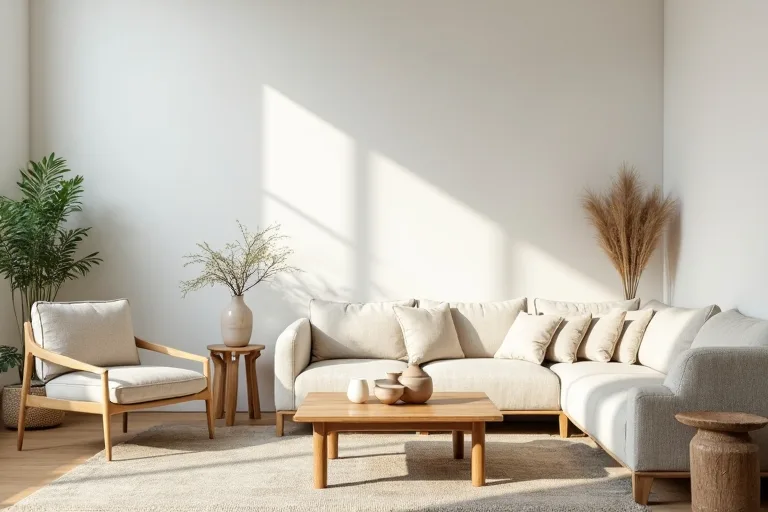
A useful order for planning is:
- Choose the function of the room first.
- Set the biggest furniture pieces according to the available space.
- Add one or two natural materials, such as oak, rattan, linen, or stone.
- Use soft textiles to reduce harshness.
- Finish with a few simple objects rather than many small ones.
If you are working on a living room, a room-planning tool can help you test whether the furniture will actually fit before you start buying. That matters more than chasing the right mood board.
Color, texture, and layout choices that make it work
Organic modern rooms usually stay in a quiet color range. Warm white, soft beige, muted clay, pale sand, and gentle gray are common because they let the textures stand out. Strong contrast can still work, but it is usually used sparingly.
Texture is where the style gains depth. A linen sofa, a boucle chair, a wool rug, a matte ceramic vase, and light wood all create subtle variation without visual noise. If everything is smooth and shiny, the room can lose the calm, grounded feeling that makes this style appealing.
Layout matters just as much as materials. A room with too much furniture will feel heavier than the style should. Leave space around major pieces, keep walkways clear, and avoid arranging every surface with decor. Negative space is part of the look.
For planning purposes, ask whether the room needs more softness, better flow, or better scale. Those are different problems, and each one points to a different solution.
What to buy, what to plan, and what to skip
When you are trying to achieve organic modern style on a realistic budget, start with the decision that affects the room most. Usually that is the furniture size and placement, not the accessories.
If the room already works well, a few finishing pieces may be enough. A pair of modern candle holders can help a side table feel finished. A boucle accent chair for the living room or bedroom can add the soft texture this style needs, especially if the rest of the room is fairly plain. Those are finishing moves, though, not the foundation.
If the room does not yet function properly, put your effort into layout, circulation, and scale first. A style choice cannot fix a sofa that is too large, a rug that is too small, or a room that has no clear focal point.
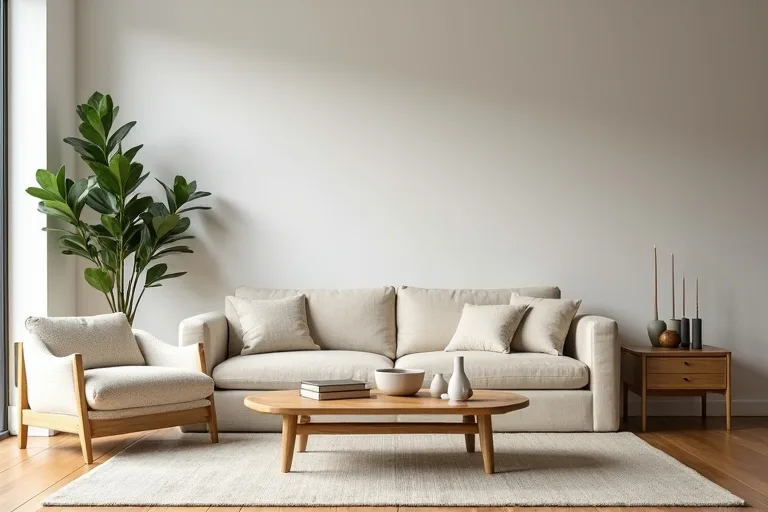
For a simple next step, use a planning tool or a room system before you shop. If you want help organizing the whole process, a digital home planning bundle can also be useful for keeping track of room goals, measurements, and budget decisions in one place.
Best next step
If you are still deciding whether this style suits your home, start with a simple check of your room goals and layout. That will tell you whether you need furniture, styling, or a full reset.
- Buying decorative pieces before the room plan is clear.
- Using too many finishes, which makes the room feel fragmented.
- Choosing furniture that is visually right but too large for the space.
- Keeping everything neutral but forgetting texture, so the room feels flat.
- Adding too many small accessories instead of a few useful, simple ones.
Organic modern style is easiest to get right when you treat it as a planning style, not just a decorating style. Start with flow, scale, and function. Then add natural materials, soft texture, and a small number of well-chosen finishes. That approach gives you a room that feels calm, practical, and easy to live in.
Helpful next tools and planners
If you want to make the decision easier before you buy
These are simple, practical options if you want to confirm the style fit, organize the room plan, or add a restrained finishing touch after the layout is clear.
FAQ
Is organic modern style the same as modern farmhouse?
No. Organic modern style is usually cleaner and less rustic. It leans on simple forms, natural texture, and a calmer finish, while modern farmhouse often includes more country-inspired detail.
Can organic modern style work in a small room?
Yes, especially if you keep the layout open and choose fewer, better-scaled pieces. Small rooms often benefit from the restraint built into this style.
What materials work best in organic modern interiors?
Light wood, linen, boucle, wool, ceramic, stone, and matte finishes are common because they add softness without clutter.
What should I plan first if I want this look?
Start with the room function and furniture size. Once the layout is right, the style is much easier to achieve.
Three sensible next steps
Some links in this article may be affiliate links. Read more in the Affiliate Disclosure.