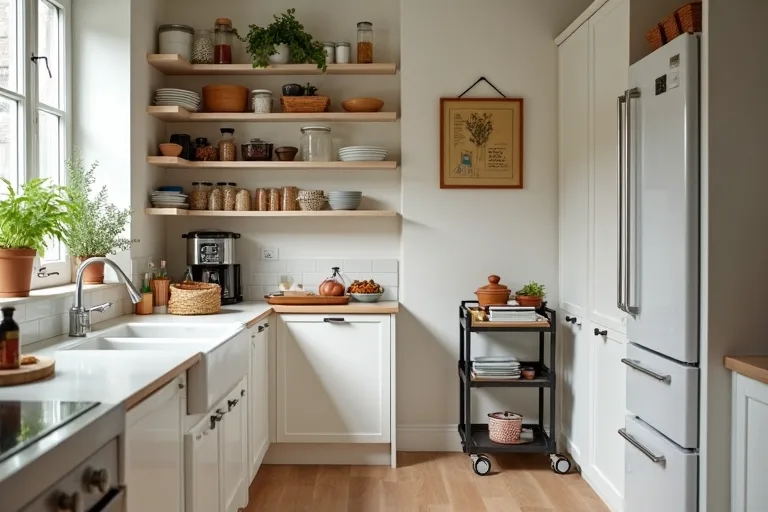
Pantry organization often goes wrong for a simple reason: the shelves are trying to do too much at once. When every item has a different container, label, height, and place, the pantry starts to feel busy even if it is not especially full.
The goal is not a picture-perfect pantry. It is a system that helps you see what you have, reach it quickly, and keep the shelves from turning into visual noise again.
The biggest pantry mistake is mixing too many container types, sizes, and zones without a clear system. A calmer pantry usually comes from fewer container styles, less overfilling, and clearer groupings by use.
Why mixed containers make a pantry look busier than it is
One of the fastest ways to create visual mess is to use too many different storage pieces at once. Clear canisters, opaque bins, open baskets, cereal boxes, jars, and leftover packaging all have a place, but together they can make a shelf feel crowded before it is actually full.
The issue is not only style. Mixed containers often create uneven lines, different heights, and awkward gaps that make the eye keep moving. That makes the pantry feel harder to read, especially in a kitchen where the pantry is open to view.
A more restful approach is to choose a small number of container types and repeat them. If you want more uniform storage, airtight pantry food storage containers set can help create a cleaner visual rhythm for dry goods and staples.
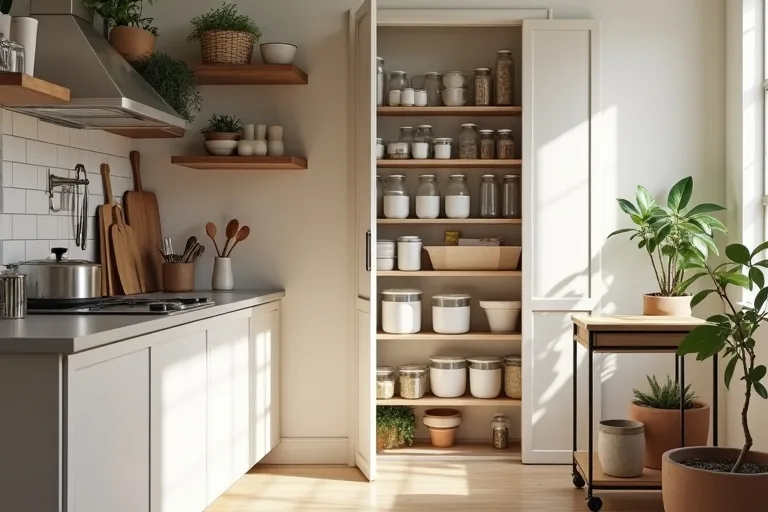
If the pantry looks cluttered even after tidying, do not start by buying more bins. First check whether the problem is too many container styles, too many product packages left open, or too many categories competing on one shelf.
How overfilled shelves disrupt both access and appearance
Overfilling is one of the most common pantry mistakes because it hides the real problem. When shelves are packed edge to edge, the pantry may seem efficient, but it becomes harder to read, harder to clean, and harder to restock without shuffling everything around.
That visual pressure matters. Tight shelves make labels harder to see, lids harder to grab, and smaller items more likely to disappear behind larger ones. The result is usually the same: you buy duplicates because you cannot see what is already there.
A better system leaves a little room between groups so each category has a clear edge. If shelf space is limited, a rolling kitchen cart with storage can give overflow items a separate home without crowding the pantry shelves.
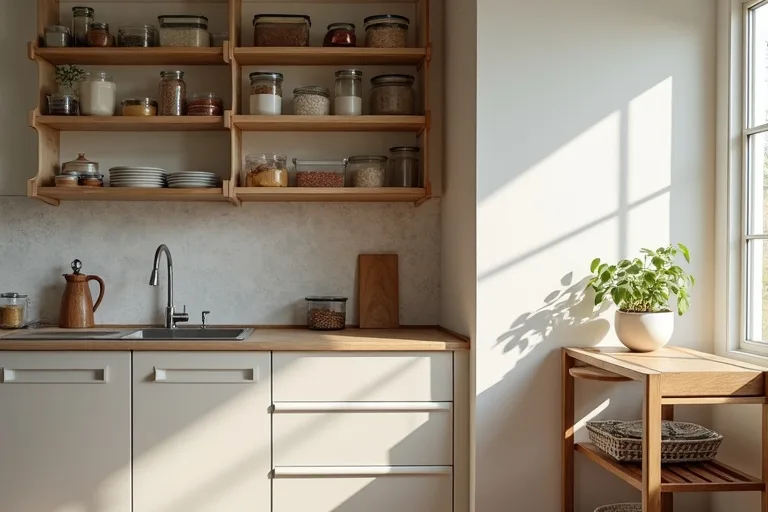
- Remove anything expired, duplicated, or rarely used.
- Group what remains by how often you reach for it.
- Leave breathing room where items need to be seen at a glance.
- Move overflow or bulky items to a cart, lower shelf, or nearby utility zone.
Why poor zones and labels make even tidy shelves feel confusing
Pantries often become visually messy when every item looks placed, but nothing is organized by use. Breakfast foods end up beside baking supplies, snacks sit behind cleaning refills, and labels do not match the way the pantry is actually used.
The fix is to create zones that reflect real habits, not ideal ones. Keep morning items together, group baking ingredients together, and separate everyday snacks from backup stock. The pantry feels calmer when each shelf or basket has one clear purpose.
Labels help most when they remove doubt, not when they decorate. Use them to make it easier for everyone in the home to return items to the right place. That is especially useful in a shared kitchen where people will not remember a complicated system.
If you are planning a wider reset, the ideas in Kitchen & Dining can help you think beyond the pantry and make the full storage setup feel more consistent.
Simple fixes that make the pantry easier to keep neat
Once the categories are clear, the best next step is usually to simplify the storage itself. Use bins for loose items, airtight containers for dry goods that you reach for often, and stack only when it still leaves the contents easy to access.
Small changes often matter more than a full overhaul. Swapping a few mismatched containers for coordinated ones, keeping heavier items lower, and moving awkward backup stock out of the main shelf area can quickly reduce the sense of clutter.
This is also the point where a planner can help if the pantry is only one part of the problem. A simple layout budget sheet makes it easier to decide what storage you actually need before you buy more pieces. For broader planning, the Room Makeover Planner, Home Layout Budget Spreadsheet (Digital Download) can be useful when you want to map the room first and shop second.
Best next step
If your pantry feels busy, start with the storage decision that creates the biggest difference: whether you need a few airtight containers, a separate utility cart, or a simple plan for grouping items by use. The right next step is usually the one that makes the shelves easier to read, not the one that adds more pieces.
- Using too many different container styles on the same shelf
- Letting shelves become so full that labels and contents are hard to see
- Grouping items by container shape instead of by daily use
- Stacking too high just to fit more in, even when access becomes awkward
- Adding bins before removing expired food and duplicate stock
- Keeping bulky overflow in the main pantry instead of giving it a separate home
A calmer pantry usually comes from fewer visual decisions, not more storage products. When containers repeat, shelves are not overfilled, and zones match how the kitchen is actually used, the space looks tidier and works better every day.
Helpful next tools and planners
If you want to make the decision easier before you buy
These options are useful when you want a clearer system for pantry storage, a way to manage overflow, or a simple planning tool before spending on new containers and carts.
FAQ
What makes a pantry look cluttered even when it is organized?
Usually it is a mix of container styles, uneven shelf heights, and too many visible labels or packages competing on the same shelf.
Should I decant everything into containers?
No. Decant the items you use often or the ones that are visually noisy in their original packaging. Leave some items in their original containers if they are easier to manage that way.
What is the best way to organize a small pantry?
Keep the system simple: group similar foods, reserve the easiest shelves for daily items, and use a cart or nearby storage for overflow.
Are labels really necessary?
They help when multiple people use the kitchen or when bins hold similar items. The goal is clarity, not decoration.
Three sensible next steps
Some links in this article may be affiliate links. Read more in the Affiliate Disclosure.